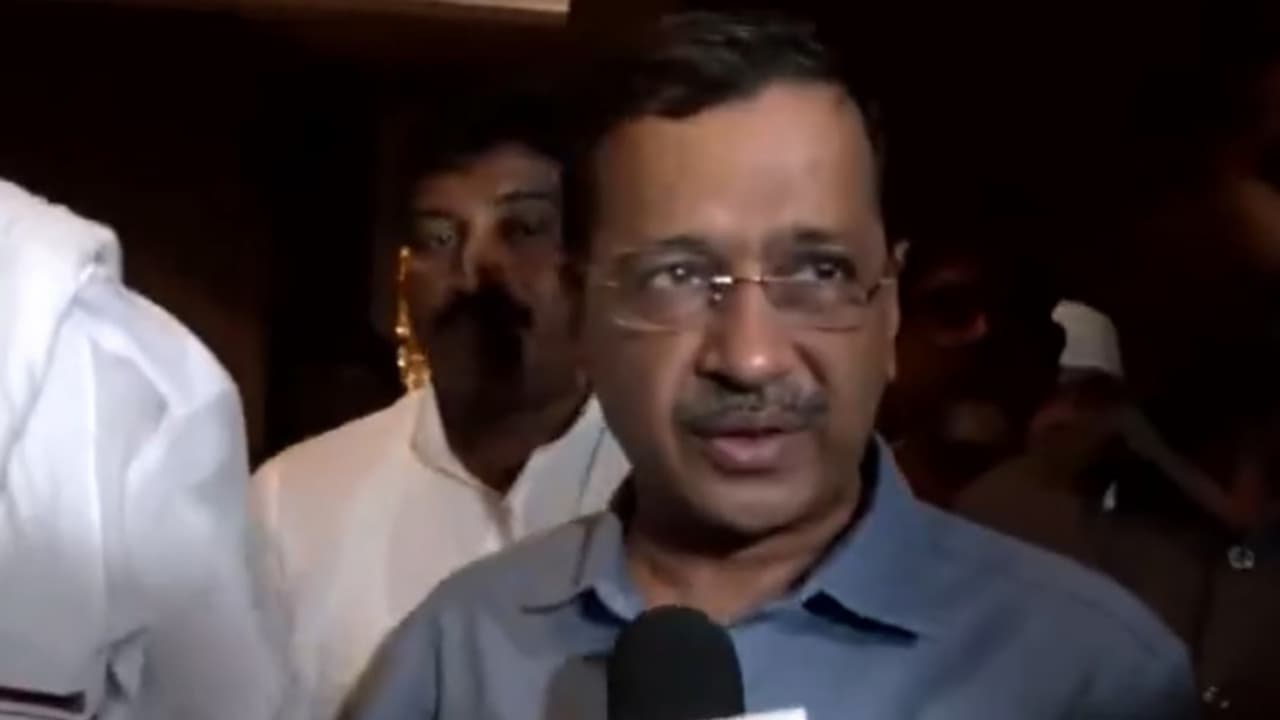
Arvind Kejriwal refused to comment on the Delhi HC’s dismissal of his plea for a judge’s recusal in the excise policy case, citing his campaign in Tamil Nadu. The BJP accused him of pressuring the judiciary, as the court rejected his plea.
Kejriwal Non-Committal on Court Order
Aam Aadmi Party chief Arvind Kejriwal on Tuesday refused to comment on the Delhi High Court’s dismissal of his plea seeking recusal of Justice Swarana Kanta in the excise policy case. Speaking to reporters in Chennai, Kejriwal said that he has not read the court order due to his engagements in Tamil Nadu. He is campaigning for Chief Minister MK Stalin ahead of the polls. “I was here yesterday. I have to go back and read the order. I made my submissions in the court, so I would not like to comment beyond that,” he said.
Kejriwal had filed a plea seeking recusal of Justice Swarana Kanta in the excise policy case Sharma, alleging a perceived conflict of interest arising from the empanelment of the judge’s children as Central Government counsel and argued that this creates a reasonable apprehension of bias.
BJP Slams Kejriwal for ‘Pressurising Judiciary’
Meanwhile, BJP MP Bansuri Swaraj launched a scathing attack on Kejriwal, alleging that the AAP chief tried to “pressurise a female member of the judiciary”. “Arvind Kejriwal is a bully. He tried to pressure a female member of the judiciary of this country. Rejecting his politics of creating pressure on the judiciary, the Delhi HC dismissed his plea for transfer (of the case). It is now proven that AAP is a drama company and Arvind Kejriwal is the director of this company,” she said.
Delhi High Court’s Strong Observations
The Delhi High Court dismissed Kejriwal’s plea, holding that the allegations were based on conjecture and failed to meet the legal standard of a reasonable apprehension of bias. Leading with sharp observations, the Court emphasised that “the courtroom cannot become a theatre of perception” and cautioned that even a powerful political figure cannot be permitted to cast aspersions on a sitting judge without material evidence.
It held that the same standard of fairness applies when allegations are made against the judiciary and warned that entertaining such pleas would erode institutional credibility. Justice Sharma noted that the applicants’ case was built on “insinuations and aspersions” rather than proof, and that accepting such arguments would set a dangerous precedent. The Court observed that a judge cannot be asked to recuse merely because a litigant apprehends an unfavourable outcome, stating that “justice cannot be managed through perception.” (ANI)
(Except for the headline, this story has not been edited by Asianet Newsable English staff and is published from a syndicated feed.)