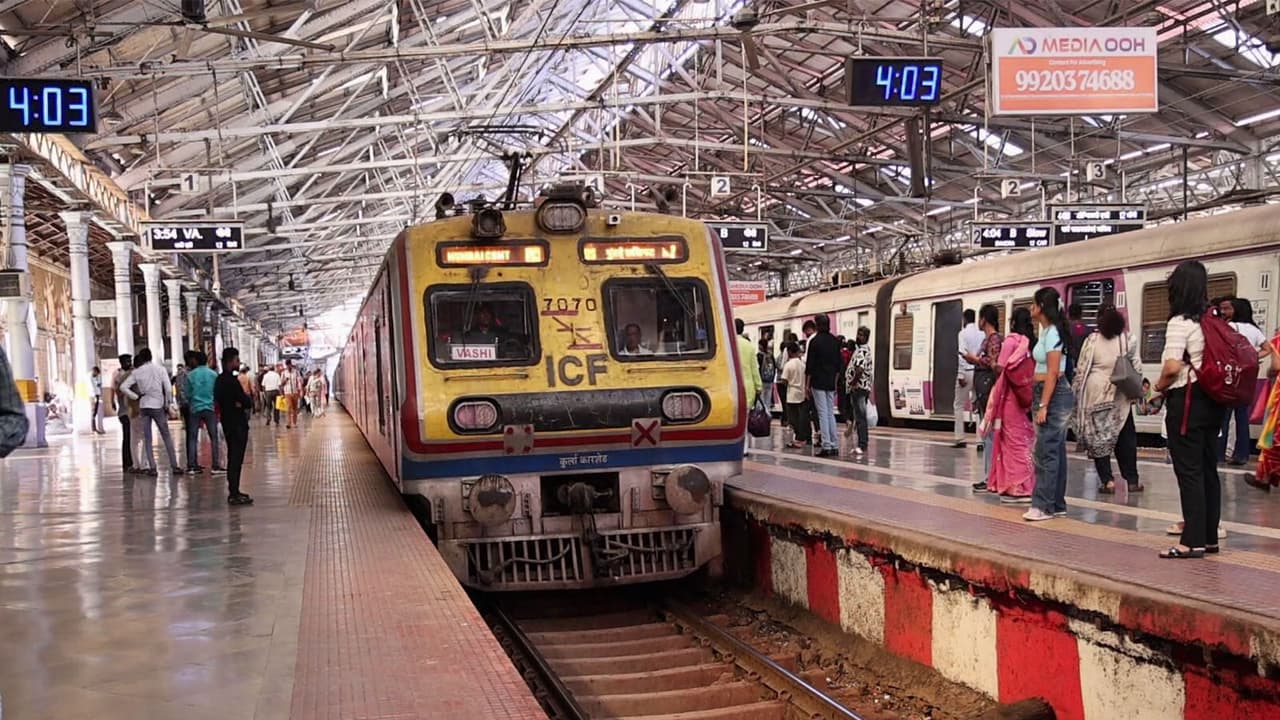
Mumbai’s CSMT is more than a transit hub; it’s a UNESCO World Heritage site that moves 1.2 million passengers daily. This architectural marvel blends Victorian Gothic style with modern efficiency, standing as a timeless symbol of the city’s history and culture.
Most railway stations are designed for one purpose–to move people from one place to another. But in Mumbai, the Chhatrapati Shivaji Maharaj Terminus (CSMT) does something far greater. It doesn’t just move people–it moves history, culture, and the very identity of the city along with them.
A Hub of Daily Life
At dawn, as the first light touches its grand dome, the station begins its daily transformation. What starts as a quiet architectural marvel soon turns into a sea of motion. More than 1.2 million passengers pass through its corridors every day, their footsteps blending into a rhythm that feels uniquely Mumbai. Dr. Swapnil Dhanraj Nila, Chief Public Relations Officer of Central Railway, captures its significance, “Even today, over 1.2 million passengers travel through this station daily, whether by suburban services or long-distance trains. It is not just vital for Mumbai, but for the entire state of Maharashtra.”
A Symbol of History and Heritage
Yet, in the middle of this relentless pace, CSMT invites you to pause. Lift your eyes above the crowd, and the station reveals its quieter, timeless side. Built in the 19th century in the Victorian Gothic style, it stands adorned with intricate carvings, sweeping arches, stained glass windows, and a commanding dome–each detail echoing stories of a bygone era.
For many, the station is not just a piece of infrastructure–it is a symbol. Dr. Nila explains: “This building reflects our history and heritage. It has become an identity in itself. Whenever Mumbai is portrayed–especially in films–the iconic facade of CSMT is often used to represent the city.”
Modern Efficiency in a Historic Setting
Despite its historic legacy, the station is firmly rooted in the present. Advanced digital signalling systems, upgraded infrastructure, and continuous maintenance ensure that it functions as efficiently as any modern transit hub–without losing its old-world charm.
A Destination in Itself: Visitor Perspectives
Visitors often arrive expecting a station but leave having experienced something far more memorable. A tourist, Aditi, said, “We came to explore nearby attractions, but the moment we saw CSMT, it felt like the destination itself. Its architecture has such a distinct old-world charm that it draws you in instantly. It’s the kind of place people would travel miles just to see.”
Another visitor, Abhishek, reflects on its enduring appeal: “The architecture is strikingly beautiful. Considering it was built during the British era, the level of maintenance is remarkable. It is truly a matter of pride for Mumbai.”
A Living UNESCO World Heritage Site
In 2004, CSMT earned recognition as a UNESCO World Heritage Site–a title that acknowledges not only its architectural brilliance but also its role as a “living heritage.” Unlike monuments that stand still in time, this station breathes, evolves, and remains deeply woven into everyday life.
More than just a railway station, CSMT is a story unfolding every day–a place where the past stands tall, the present rushes forward, and the future quietly takes shape.
(Except for the headline, this story has not been edited by Asianet Newsable English staff and is published from a syndicated feed.)