Image Credit source: Anton Petrus/Moment/Getty Images
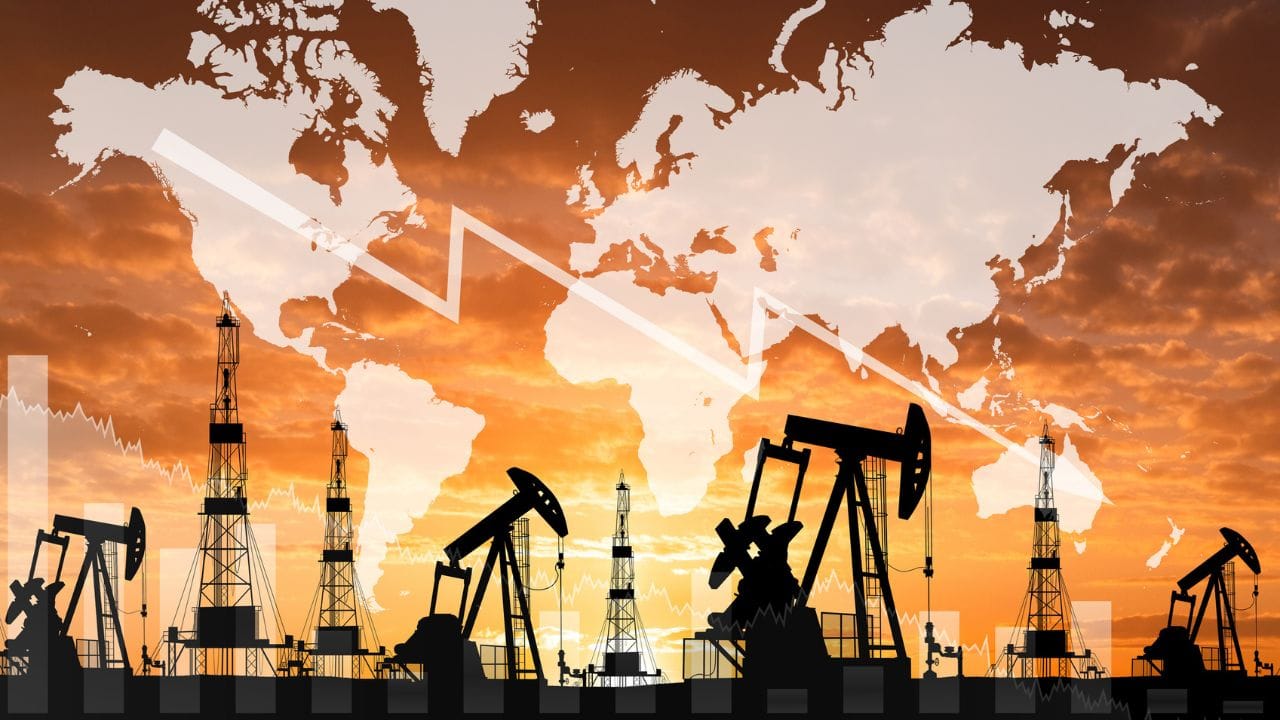
Oil prices continued to fall on Monday. Behind which is believed to be an important reason. OPEC Plus, a group of about 21 countries, has decided to increase production for the 5th consecutive month. On the other hand, exports from the Strait of Hormuz continue to improve. Due to which the possibility of long-term supply disruption in one of the world’s most important energy corridors was reduced. The price of benchmark Brent crude fell below $72 per barrel, while West Texas Intermediate was trading around $68 per barrel. Traders believe that global oil supply will exceed demand in the coming months. Due to which further decline may be seen in the prices of crude oil.
On the other hand, there has been no change in the prices of petrol and diesel in India also. The last time any change was seen in the prices of petrol and diesel was on May 25. Since then no movement has been seen in their prices. Recently, Oil Minister Hardeep Singh Puri had said that there is no possibility until cheap oil reaches the country’s oil refineries. He indicated that a reduction in the prices of petrol and diesel may not be seen until the end of August or beginning of September. Let us also tell you what the prices of crude oil have become at present. Also, what have been the prices of petrol and diesel in the metropolitan cities of the country…
OPEC+ increased production again
On Sunday, OPEC+ agreed to increase the production target by 1,88,000 barrels per day (bpd) from August. The move follows similar quota increases announced for June and July, as the group of producing nations gradually withdraws voluntary production cuts imposed in 2023 to support oil prices. The seven countries that led the way in increasing production — Saudi Arabia, Russia, Iraq, Kuwait, Algeria, Kazakhstan and Oman — have now restored output by about 800,000 bpd between April and July. If similar increases are approved at the group’s next meeting in August, most of the production cuts planned for 2023 would be reversed.
Situation returns to normal in the Strait of Hormuz
Another reason for the recent fall in crude oil prices is the improvement in oil movement through the Strait of Hormuz. The vital shipping route was hit by disruptions when several tankers were forced to divert or delay their journeys due to military tensions in the area. Following a ceasefire and diplomatic efforts to ease tensions, oil and gas shipping through US-protected sea lanes has gradually resumed.
This is also very important because big oil exporting countries like Saudi Arabia, Iraq and Kuwait depend on the Strait of Hormuz to send crude oil to the global market. As the risk of prolonged supply disruptions has reduced, the geopolitical premium included in oil prices has also reduced.
Why are prices falling despite less production?
At first glance, the price decline may seem surprising as OPEC’s own data shows production remains below levels seen before the war. The group’s output fell to 33.13 million barrels per day in May, compared with 42.77 million barrels per day in February, reflecting the impact of disruptions caused by fighting in the region. However, commodity markets value future expectations as much as current supply.
Investors are increasingly confident that production will continue to improve in the coming months as exports normalize and OPEC+ continues to increase production. A memorandum of understanding between Washington and Tehran aimed at ending the fighting has further strengthened hopes that oil supplies will eventually return to normal.
Pressure is increasing due to weak demand
The supply story is just one side of this equation. Demand has also been weaker than expected by many traders. Oil imports from China, the world’s largest crude importer, have declined in recent months as economic growth remains volatile and industrial activity slows.
Also, oil production outside OPEC+, especially from countries in the Americas, remains strong, which has increased competition in the global market. The International Energy Agency (IEA) has also released a record amount of oil from the Strategic Petroleum Reserve, which has further increased the available supply. Taking all these things together, these things outweigh the concerns of geopolitical risk in West Asia.
Oil returned to pre-war level
At the height of the conflict, the price of Brent crude soared above $120 a barrel as traders feared the Strait of Hormuz could remain closed for a long time. Now those fears have diminished. Prices have now largely returned to pre-conflict levels, reflecting optimism that global supply will remain adequate despite regional tensions. Experts say that the immediate focus of the market has shifted from geopolitics to the balance between supply and demand.
Challenges remain before OPEC+
Although this organization is continuously increasing production, it is also facing internal pressure. The United Arab Emirates (UAE) had separated itself from the production agreement earlier this year, so that it could maintain the production level as per its production capacity. At the same time, Iraq has indicated that it wants higher production quota, which has led to differences among the members regarding future supply policy.
Despite this, OPEC+ has so far maintained its strategy of gradually restoring production while keeping an eye on market conditions. If this trend continues, lower crude oil prices could ultimately mean lower fuel costs for consumers. However, for oil-producing countries, continued weakness in prices could put pressure on government revenues, especially if demand does not grow as expected.
Therefore the coming few weeks will be important. If oil exports from the Strait of Hormuz continue to normalize and OPEC+ continues to increase production despite reduced demand, crude oil prices may remain under pressure for the rest of the summer.
Petrol and diesel prices in India
There has been no change in the prices of petrol and diesel in India for 43 days. The last increase in the prices of petrol and diesel was seen on May 25. According to experts, the way crude oil prices are falling, it is estimated that the freeze button will remain pressed on the prices of petrol and diesel. The price of petrol and diesel in Delhi is Rs 102.12 and Rs 95.20 per liter respectively.
The price of petrol in Kolkata is Rs 113.51 and the price of diesel is Rs 99.82 per liter. In Mumbai, the prices of petrol and diesel are seen at Rs 111.21 and Rs 97.83 per liter respectively. Whereas in Chennai the price of petrol has come to Rs 107.77 and diesel to Rs 99.55 per liter. However, in the month of May, there was an increase of 7 to 8 percent in fuel prices.