Melbourne: Cricket Australia (CA) has reported record revenue of A$601.1 million (approximately US$423 million) for the 2025-26 financial year, driven by lucrative media rights deals for the men’s Ashes series against England and the limited-overs series against India.
However, two Ashes Tests that ended inside two days cost the governing body an estimated A$20 million in revenue.
Cricket Australia also recorded a net surplus of A$81.8 million (around US$57 million), a significant turnaround from the net loss of A$11.3 million (US$7.95 million) reported in 2024-25.
Announcing its financial results on Wednesday, CA attributed the strong performance to record audiences, commercial partnerships and a successful international season. Despite the impressive figures, the governing body is preparing for two consecutive years of projected losses in 2026-27 and 2027-28.
The expected downturn reflects the international cricket calendar, with CA forecasting lower revenue from media rights and matches as part of what it described as a “cyclical decline”.
Ashes and India series drive record revenue
The men’s home Ashes series and Australia’s white-ball matches against India played a major role in generating record media, commercial and match-day revenue during the financial year.
The Ashes series attracted substantial interest from spectators, broadcasters and commercial partners. Australia retained the coveted urn with a 4-1 series victory over England, reinforcing the commercial appeal of one of cricket’s most prominent rivalries.
The series drew a total of 859,580 spectators across 18 days of play, averaging 47,754 attendees per day. The Melbourne Cricket Ground (MCG) was among the major attractions, with 94,000 spectators attending the Test there, according to outgoing CA chair Mike Baird.
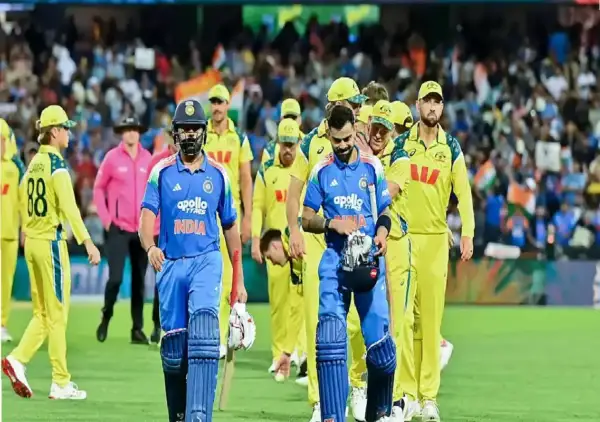
Australia’s international programme against India also contributed to the financial performance. During October and November 2025, Australia won the three-match ODI series 2-1, while India claimed the T20 International series by the same margin.
Matches involving India remain an important commercial property for cricket administrators because of the team’s large following and the value of broadcasting and sponsorship opportunities associated with the Indian market.
CA said the results reflected the strength of its commercial operations and the public interest generated by the international season.
Two-day Ashes Tests cost A$20 million
Despite the record revenue, the unusually short duration of two Ashes Tests dealt a substantial financial blow to Cricket Australia.
The Melbourne Test initially carried an estimated revenue loss of A$10 million. The final impact was higher than first anticipated, while the Perth Test, which also ended before a third day, added to the shortfall.
Together, the two matches cost CA an estimated A$20 million in revenue.
Test cricket is generally scheduled across five days, with ticket sales, hospitality, food and beverage services, and other match-day activities contributing to the host board’s income. When a Test ends early, the governing body may lose revenue from scheduled sessions that do not take place.
The effect can be particularly significant at major venues, where large crowds and premium hospitality arrangements generate considerable income.
At Cricket Australia’s annual general meeting on Wednesday, Baird made a light-hearted reference to the need for Tests to last the full five days while addressing his successor, former Australia batter David Boon.
“We’ve had a record Ashes crowd at the MCG, 94,000, only going two days there,” Baird said. “Let’s mark it down that five-day Tests are a good thing, Boonie.”
The remark highlighted the financial tension between the unpredictability of Test cricket and the commercial expectations associated with hosting major international matches.
Although short Tests can provide compelling results, they can also reduce the number of sessions available for spectators and commercial operations.
Two years of projected losses ahead
Cricket Australia’s record surplus comes as the organisation prepares for a more challenging financial period.
The governing body expects to record deficits in both 2026-27 and 2027-28, citing a cyclical decline in media rights and match revenue linked to the international touring schedule.
The projections reflect the changing composition of Australia’s home cricket calendar. Revenue can fluctuate substantially depending on which international teams tour Australia, the number and type of matches played, and the commercial value of the series.
Major contests such as the Ashes and home series against India tend to attract significant broadcasting and sponsorship interest. When the schedule includes fewer high-value fixtures, income can decline even if the organisation continues to operate successfully.
CA’s current financial outlook does not include anticipated proceeds from the sale of stakes in some Big Bash League (BBL) franchises.
The potential transactions could affect the organisation’s future financial position, but the extent of any impact will depend on the terms and completion of the proposed sales.
The projected deficits underline the importance of financial planning across cricket’s commercial cycle, particularly as CA balances investment in domestic competitions, international cricket and grassroots development.
Strong performances on the field
Australia’s results during the 2025-26 period also helped sustain interest in the national teams.
The men’s side retained the Ashes with a 4-1 series win at home, while the women’s team won its seventh ICC T20 World Cup title after defeating England in the final at Lord’s.
The women’s triumph added to Australia’s standing in international cricket and provided another major sporting achievement during the year.
Strong performances by national teams can support audience engagement and commercial partnerships, although the financial returns depend on factors such as broadcasting agreements, ticket sales and sponsorship arrangements.
The ODI and T20I series against India also delivered competitive cricket, with both teams winning one of the two formats. Australia’s 2-1 ODI series victory was followed by India’s 2-1 win in the T20I series.
Together, these events formed part of a busy international season that Cricket Australia credited for its record financial performance.
Commercial strength faces a changing calendar
Cricket Australia’s A$601.1 million revenue and A$81.8 million surplus mark a substantial improvement on the previous year’s loss. Yet the A$20 million shortfall from the two shortened Ashes Tests demonstrates how the duration of matches can affect the economics of hosting international cricket.
The projected losses for the next two financial years also suggest that the latest surplus should be viewed in the context of a fluctuating international schedule rather than as a guarantee of continued growth.
For CA, the challenge will be to manage the expected decline in match and media revenue while maintaining investment in the game and maximising the commercial value of its major competitions.
The financial results underline both the earning potential of high-profile series such as the Ashes and the risks that come with a calendar in which revenue can vary sharply from one season to the next.