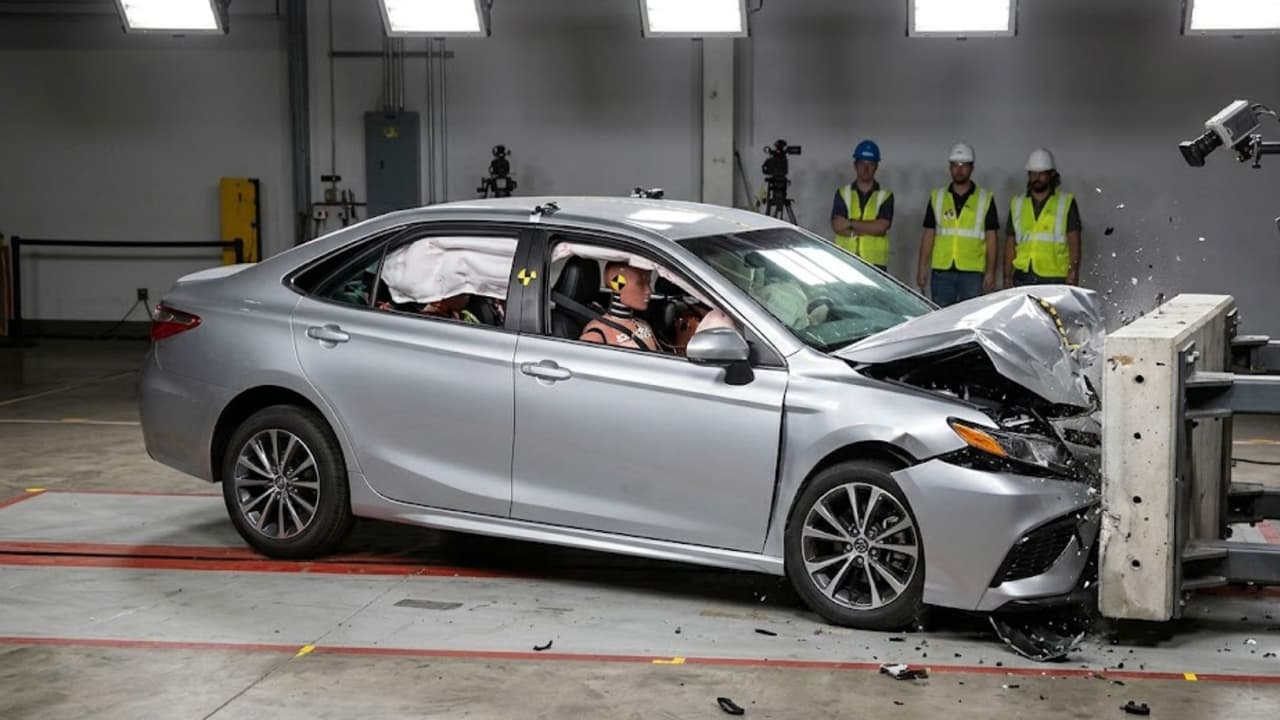
Whenever a new car hits the market, everyone’s first question is about its safety rating. To get this rating, cars go through a crash test. But have you ever thought about what happens to these cars, worth lakhs, after the test is over?<img>Organisations like Bharat NCAP in India and Global NCAP internationally conduct these tests. They crash a new car into a concrete wall or a barrier at a fixed speed. This helps them check how safe passengers would be in a real accident.<img><p>During a crash test, the car smashes into the barrier with great force. The airbags pop open, and the bonnet, doors, and front section get badly damaged. Sometimes, the damage is so severe that the car’s entire structure gets twisted out of shape.</p><p><strong>E20 Fuel Cleared for Older Vehicles as Experts Dismiss Damage Concerns, Read Details!</strong></p><img>A car used in a crash test can never be sold or driven on the road again. After all the legal formalities, it’s sent to a scrapyard. There, a huge hydraulic crusher flattens the car completely. The metal is then sent for recycling.<img><p>Right after the test, a team of experts inspects the car. They analyse how well the passenger cabin held up during the impact. They also check the test dummies to see what kind of injuries a person might have got. They collect data on everything—from how the seatbelts worked to how quickly the airbags deployed.</p><p><strong>CNG Cars: Save Big On Fuel With These 7 Seaters For Families!</strong></p><img>Car companies use this data to make their future models safer. Some companies even keep the wrecked cars for months to study them in detail. This analysis helps them improve safety features in upcoming cars. This is why these test cars are never seen on the road again; they are turned into scrap.