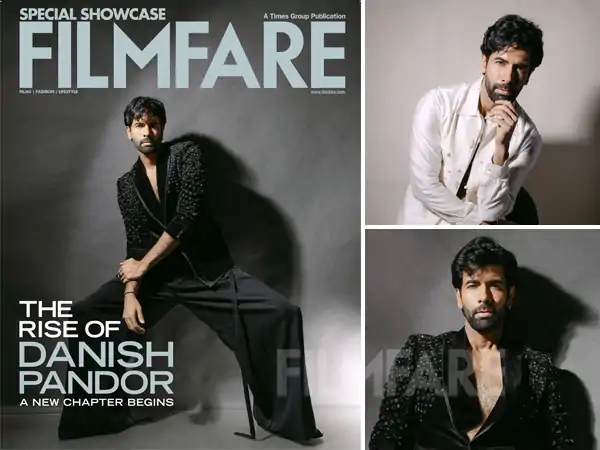
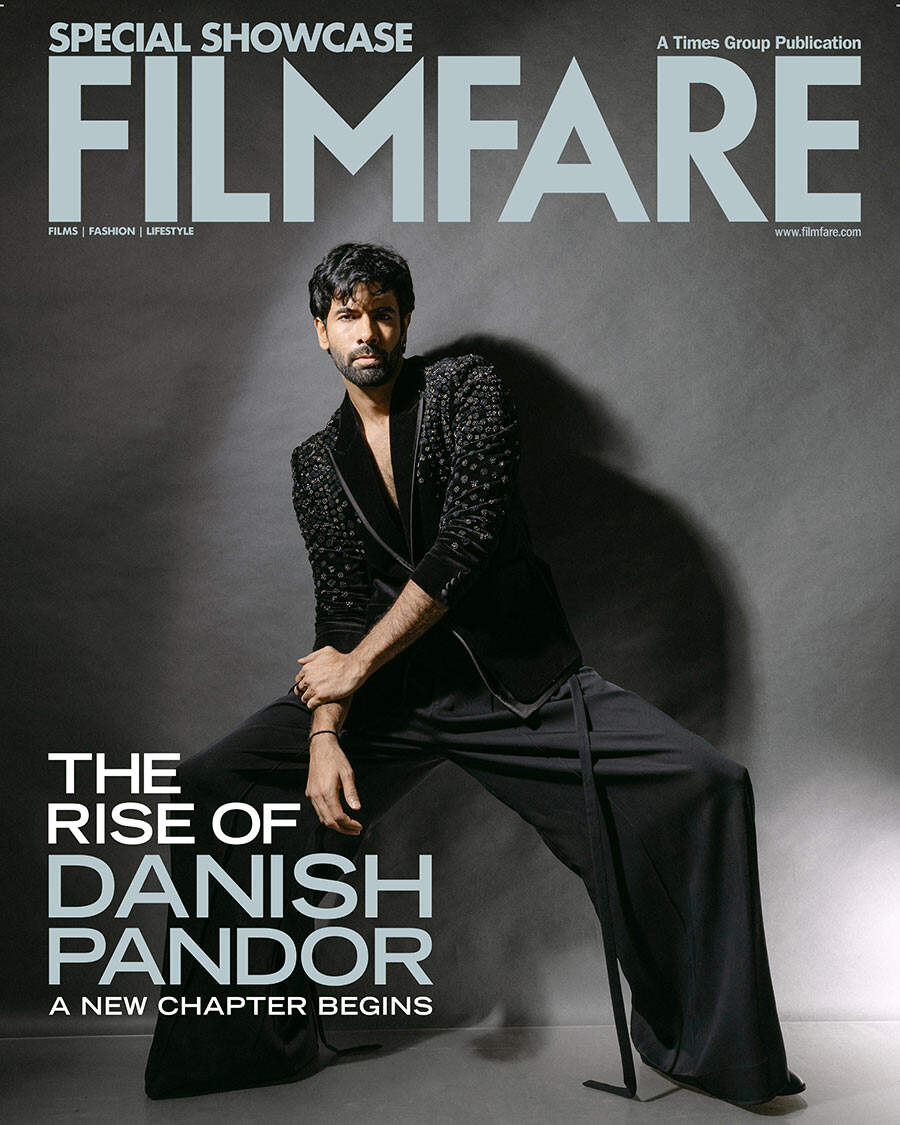
Danish Pandor’s journey in showbiz is a testament to patience, perseverance and an unwavering belief in his craft. From years of auditions and navigating the uncertainties of the industry to steadily carving a space for himself, the actor has learnt that success rarely follows a straight path. Every experience, every setback and every opportunity has shaped his approach to acting and strengthened his resolve to go further. In this candid conversation with Filmfare, Danish opens up about his journey so far, the lessons that have stayed with him, the people who inspire him and his ambitions for the road ahead…
You’ve spent years auditioning and working towards this moment. What has the journey taught you about patience and perseverance?
This journey has taught me the importance of continuing to show up, even when it feels like nothing is happening. After so many years of hard work, there are moments when you constantly question where your life is heading. Of course, doubts creep in, but at some point, you have to learn to trust the process. That, to me, is imperative.
I’ve realised that patience is not simply about sitting around and waiting for things to happen. It’s about continuing to work towards your goals and, more importantly, working on yourself while you wait for the right opportunity. You have to keep growing, keep learning, and keep believing, even when you cannot see the results immediately.
With Dhurandhar, you’ve finally received widespread recognition. How does it feel to see years of hard work translate into this breakthrough?
Dhurandhar has indeed brought me widespread recognition, and I feel extremely happy, proud, and grateful for all the love people have showered on me. It’s a beautiful feeling. When you’ve been working for 15 years, you learn to appreciate even the smallest opportunities because you understand how much goes into getting them.
When a magnum opus like Dhurandhar reaches such a wide audience and people begin recognising your work, it is incredibly fulfilling as an actor. However, I don’t look at it as though these 15 years of struggle have suddenly been justified. I value those years for what they taught me and how they shaped me into the actor I am today. This recognition is special, but the journey itself has been equally important.
Uzair Baloch has struck a chord with audiences. What went into building the character and getting his intensity just right?
For me, the key was understanding Uzair’s world and psychology rather than simply trying to look intense on screen. Sometimes, in the pursuit of appearing intense, actors tend to overdo things, and usse raita bhi phail jaata hai! I didn’t want to go down that route.
Intensity doesn’t always come from being loud or doing something dramatic. Sometimes, it lies in stillness, in the eyes, or in the way you respond to another character. I wanted Uzair to feel like a real person who belonged to that world, rather than someone performing for the camera.
The workshops were an important part of the process, and Aditya sir was very clear that we needed to make our characters as human and believable as possible. His vision, his understanding of the story, and the clarity with which he communicated what he wanted from each character helped me immensely. Ultimately, my job was to serve the story and make Uzair believable. Nothing else mattered more.
Were you prepared for the kind of popularity Uzair’s scenes and fan edits would receive?
Not at all. I never anticipated anything like this. While working on the film, my only focus was to give it my 100 per cent without thinking about anything else. For me, it was almost a make-or-break situation, so I wanted to put everything I had into the opportunity.
You always hope that people will connect with your work, but you can never predict how that connection will unfold. The fan edits, comments, conversations, and the number of Reels people have created around certain scenes have been wonderful to watch. Sometimes, audiences pick up on things you may not even have realised would stand out.
As actors, we work on a scene and then move on to the next one. But once a film reaches the audience, they make it their own, and that is the most exciting part. I’m extremely grateful that Uzair has found a place in people’s minds and hearts.
How has the success of Dhurandhar changed your confidence and the way you approach new roles?
It has strengthened my belief in the process rather than changed who I am. I’m still the same person I was before Dhurandhar. When you’ve been in this profession for a long time, there are inevitably moments when you question yourself. Having your work reach a wider audience gives you a certain reassurance that what you’re doing is connecting with people.
However, I don’t want to become complacent or start believing that I’ve figured everything out, because that will never happen. The moment I start thinking, “Okay, I’ve understood everything, and this is how I’m going to navigate my career,” I’ll know I’m heading in the wrong direction.
There will always be ups and downs, periods of consolidation, and new challenges. Every character has something different to offer. If anything, this experience has made me hungrier to learn, experiment, and take on roles that push me beyond what I’ve already done.
How important is it for you to establish an identity through your performances rather than be defined by industry associations?
For me, ultimately, the work has to speak for itself. The film industry is a collaborative space, and the people you work with, the directors who trust you, and the actors you share the screen with are all important. But an actor’s identity should ultimately be defined by what they bring to a character and, through that character, to the story.
I want people to watch my performances and feel that I’ve contributed something meaningful to the narrative. I would rather build a body of work that people remember me for than have my identity defined by my associations. At the end of the day, I want the work to speak louder than anything else.
When choosing a role, what matters more to you: screen time or the impact your character leaves on the audience?
Impact, without a doubt. Screen time is a number; impact is what stays with the audience. A character can have limited screen time and still serve a very important purpose in the story.
I look for roles that give me something meaningful to contribute.
If I’m part of a project but my character isn’t making even the slightest difference to the story, then what’s the point? I don’t want to be there just for the sake of being there, like a tree standing in the background!
I want the audience to travel with my character, understand their perspective, and feel something through their journey. Even if the screen time is limited, I want the character to leave a lasting impression and make the audience resonate with my performance.
What was your biggest takeaway from working with Aditya Dhar on Dhurandhar?
The biggest takeaway for me was the clarity and conviction with which Aditya sir approaches his work. He knows the world he wants to create, understands how every character fits into it, and communicates his vision with remarkable clarity. That gives an actor a very strong foundation to work from.
I also learned the importance of looking at the larger story rather than focusing only on my individual role. But beyond filmmaking, Aditya sir has been a tremendous source of inspiration for me as a person. He is genuinely amazing. There is so much you can learn simply by spending time with him. The kind of aura he carries, his personality, and the way he conducts himself leave a lasting impression on you. I honestly can’t put into words how beautiful a soul he is.
I’m extremely grateful to have worked with him and to have spent one-and-a-half years being part of his magnum opus. I feel truly blessed.
I remember an incident at a screening of Haq. Yami ma’am was posing for the paparazzi, and Aditya sir was standing there, clicking her pictures himself. It was such a beautiful sight. To see them supporting each other, holding hands, and growing together as a couple was genuinely heartwarming. You learn so much from these little moments, and seeing that kind of companionship is incredibly inspiring.
Sharing screen space with Ranveer Singh and Akshaye Khanna must have been a learning experience. What did you observe about their craft?
You learn a great deal by observing actors who take their craft seriously. Ranveer bhai brings tremendous energy and instinct to the set, whereas Akshaye sir has a remarkable sense of control and calmness. Watching them reminded me that there is no single formula for delivering a good performance.
Every actor has their own process, and what matters is finding your own way while remaining honest to the character. When you share the screen with such accomplished actors, you naturally observe, absorb, and learn from them. Their commitment to the craft is something I deeply respect, and being around performers who take their work so seriously is always an invaluable learning experience.
Your role as Afzal in Imtiaz Ali’s Main Vaapas Aaunga is another interesting addition to your filmography. What drew you to the character?
I’ve grown up watching Imtiaz sir’s films, and working with him was a dream come true for me. I’m extremely grateful to have been given that opportunity.
For me, it was not just about the character; it was also about the opportunity to work with one of the finest directors in our country. What particularly attracted me to Afzal was that, despite having limited screen time, he plays a very impactful role. He is single-handedly responsible for setting off the chain of events that leads to all the chaos in the second half. That, in many ways, connects to what I was saying earlier about screen time versus impact.
The role also gave me an opportunity to explore a character with different attributes and a different perspective on things. As actors, we are always looking to experiment, explore different shades, and step into worlds that are unlike our own. That is what excites me about this profession.
I’m really glad that people appreciated my part. I still remember that many people weren’t even aware I was in the film. When I went to the cinema hall and suddenly appeared on screen, people reacted with, “Uzair! What is Uzair doing here?” In a way, that was a victory for me as an actor. It meant that the audience was seeing the character rather than simply expecting to see me.
You’re now part of Guru, a psychological thriller starring John Abraham and directed by Ribhu Dasgupta. What excited you about this project?
Guru is an intriguing psychological thriller that explores human behaviour, suspicion, and the secrets people carry. What drew me to the film was the strength of the story and Ribhu Dasgupta’s distinctive approach to the genre. He creates an atmosphere in which every character and every detail feels important.
Working with John sir is a wonderful opportunity. I’ve grown up watching his films and haven’t missed any of them, from Jism, Paap, Saaya, Aetbaar, and Dhoom to Water. You name it, and I’ve watched it! He is an amazing personality, a beautiful person, and a fantastic co-actor to work with.
I’m really excited for audiences to experience the world of this film. More than anything, I was drawn to the opportunity to be part of a story that keeps the audience thinking and questioning what they see. It’s going to be one hell of a ride! The script has so many layers, and it is genuinely intriguing. I can’t divulge too much at this stage, but you’ll have to wait and watch.
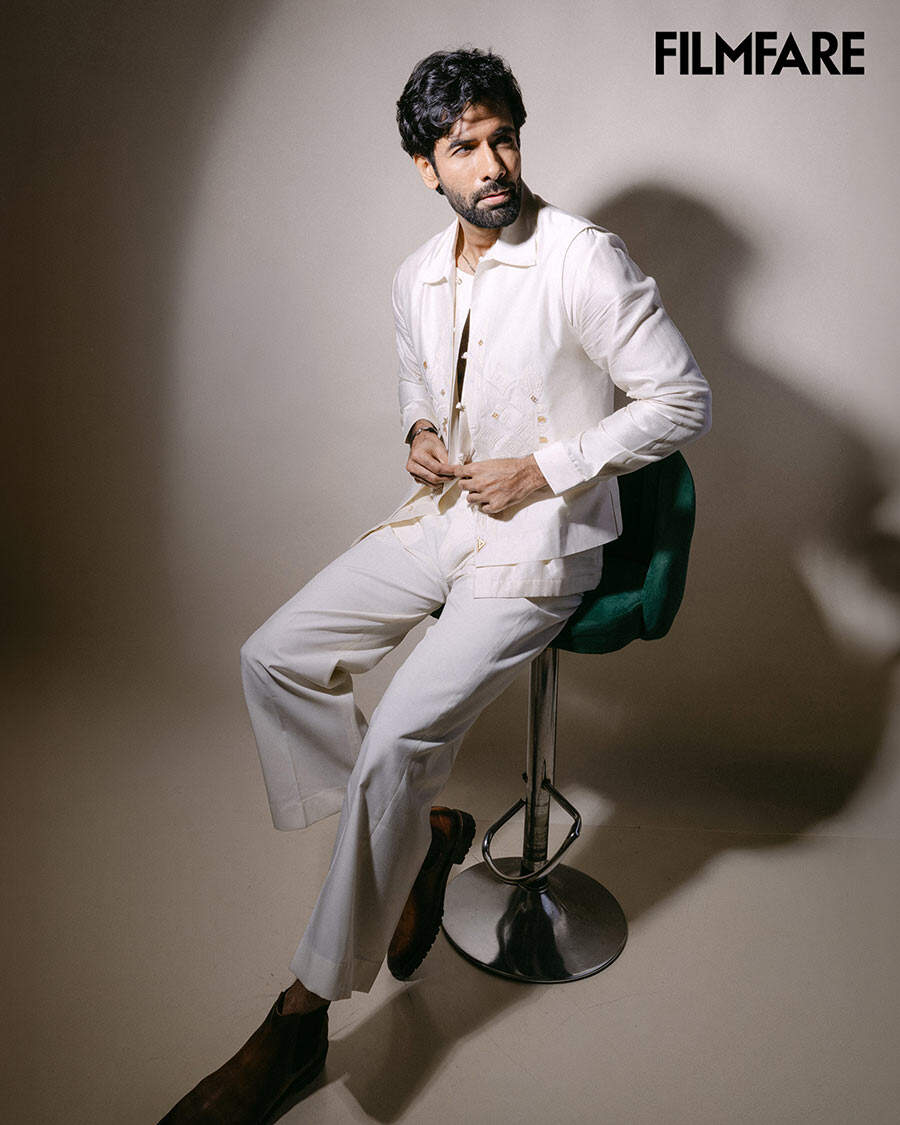
After the attention Dhurandhar brought your way, how do you ensure that you choose roles for the right reasons rather than chase momentum?
It’s a difficult balance, but I keep reminding myself that attention comes from the work. I don’t want to choose roles simply because they are popular or because I’m afraid of missing out on an opportunity. As an actor, you do experience FOMO because we know that the supply of actors is enormous while the number of opportunities is relatively limited. So, you can’t always afford to be too picky, but you still have to learn to take calculated chances.
I ask myself whether a role excites me, whether I can bring something meaningful to it, and whether it challenges me as an actor. If the answer is yes, I’m willing to explore it. Of course, practical considerations matter too, but I want to build a long career by making thoughtful choices rather than chasing every opportunity that comes my way.
I am also a very simple person and not particularly materialistic. I don’t believe in splurging on expensive things, and I find contentment in the little things in life. Perhaps that simplicity gives me the freedom to focus more on the kind of work I want to do. Ultimately, I want to keep striving for good roles and meaningful opportunities.
How have the quieter years of your career shaped the actor and person you are today?
Those years have given me a much better understanding of life. The most important lesson has been learning how to deal with uncertainty, how to keep working without constant validation, and how not to tie my self-worth entirely to my career.
Fifteen years in this industry have also made me more observant. You meet people from different walks of life, listen to their stories, and begin to understand their nuances, behaviours, and motivations. All of that eventually finds its way into your work as an actor.
I’ve realised that there is so much to learn simply by observing the world around you. The quieter years may not always bring recognition, but they give you experiences, perspectives, and a deeper understanding of human nature. In hindsight, all of that has contributed to the actor and the person I am today.
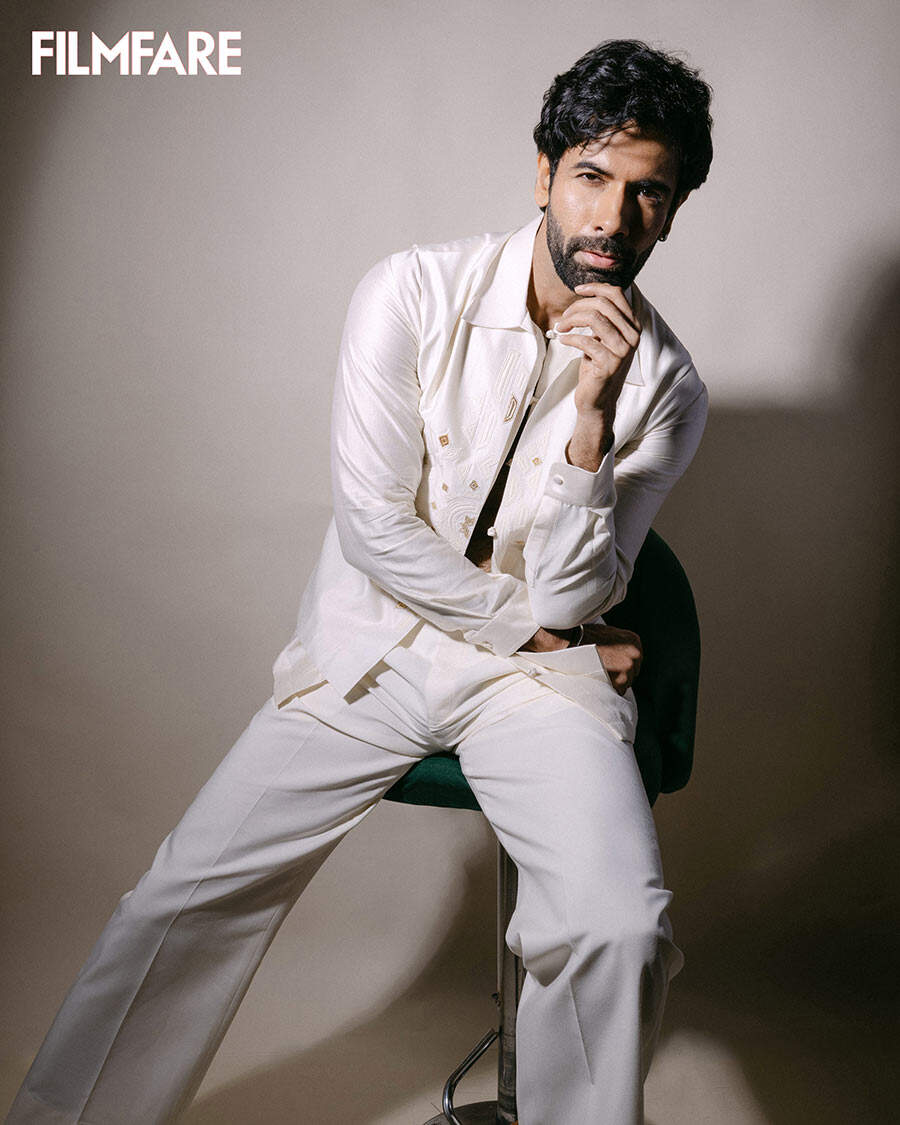
Has your definition of success changed over the years, especially now that audiences are beginning to recognise your work more widely?
Earlier, success meant getting an audition, landing a role, or simply getting the opportunity to be on a film set. It felt like a gradual process, almost like building a graph, one opportunity at a time. Those milestones are still important to me, but my understanding of success has evolved.
Today, I also think about the kind of work I want to be known for and the kind of actor I want to become. Recognition feels wonderful, but it isn’t the only measure of progress. What you are being recognised for is equally important.
For me, success means continuing to work, being able to support the people I love, and feeling proud of what I create. As long as I’m happy and content with what I’m doing, both professionally and in my personal life, I believe I’m in a good place. As they say, all’s good in the hood!
Ten years from now, what would you like your filmography to say about Danish Pandor as an actor?
Ten years is a long time! Honestly, I don’t even know what the next moment holds for me. I believe a lot of it is in the hands of the Almighty, who has brought me into this world and blessed me with the opportunities I’ve had. So, I don’t want to make predictions about where I’ll be a decade from now. I’m someone who prefers to live in the present.
Having said that, I don’t want to limit myself as an actor. I want to take risks, explore different worlds, and inhabit characters that challenge me in different ways. If, ten years from now, I’m hale and hearty and still doing the work I love, I hope people will have the confidence that Danish can play all kinds of characters. I want filmmakers to be able to close their eyes and bet on me, knowing that I’ll give a role everything I have.
I hope my filmography reflects variety, honesty, and dedication, rather than being defined by a single role or one successful film. If my journey can inspire even one young actor to keep going through difficult times and believe in themselves when things aren’t working out, that would mean a great deal to me.
Ultimately, I want to build a body of work that stands the test of time and continues to speak for itself long after the present momentum has passed.