With rising pollution levels in New Delhi on Wednesday, the Commission for Air Quality Management (CAQM) has invoked Stage 1 measures under the Graded Response Action Plan (GRAP) across the National Capital Region (NCR) today.
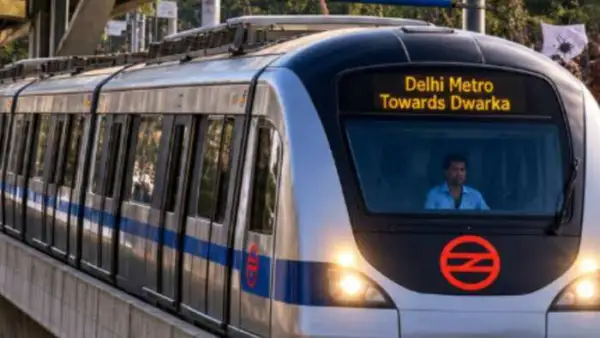
Commuters in the national capital will get more Metro trains from Thursday, October 22, 2026, onwards.
The Delhi Metro Rail Corporation (DMRC) announced earlier today that it will be running 20 additional train trips on weekdays after stage 1 of the Graded Response Action Plan (GRAP) came into force in Delhi, IANS reported. Let’s dive in to find out more about DMRC adding more train trips here.
Delhi Metro extra trips: Why DMRC is running more trains
The move comes as the city’s air quality slipped into the poor category for the first time this season. Alongside the extra trips, the DMRC will step up anti-pollution measures at its construction sites and the roads around them.
These additional services are aimed at taking private vehicles off the road, which are one of the biggest contributors to winter smog in Delhi. More frequent trains mean shorter waits and less crowding, which makes the Metro a more practical choice for daily office-goers.
“From tomorrow, Delhi Metro will be running 20 additional trips on its network on weekdays to encourage more and more people to use public transport instead of their personal vehicles,” the DMRC said in a statement.
The extra trips will run only on weekdays, when commuter traffic is at its peak.
DMRC steps up dust control at Metro construction sites
Construction dust is a key source of particulate pollution in the capital, and the DMRC has several Metro projects under way across the city. As part of its intensified drive, the corporation will reduce dust levels at construction sites, clear road dust from surrounding stretches, and remove garbage from footpaths and road medians, according to the statement.
DMRC engineers will also carry out thorough inspections of construction sites and adjoining roads. They will check that construction materials are properly covered and that wheel-washing facilities for outgoing vehicles remain in working order. These drives will add to the pollution-control measures the DMRC already has in place.
Anti-smog guns, road repairs and daily inspections
Around 31 km of city roads are currently under the DMRC’s temporary jurisdiction to facilitate Metro construction work. The corporation said most of these stretches have already been repaired so that damaged roads do not add to dust pollution.
More than 250 anti-smog guns and mist guns have been installed at construction sites, Metro stations, and office buildings to keep dust levels in check. The DMRC’s Environment Department is also conducting daily inspections to ensure compliance with environmental norms.
Delhi AQI enters ‘poor’ category as GRAP stage 1 is enforced
Authorities in Delhi enforced GRAP-1 on Wednesday as air quality worsened in the national capital. According to the Central Pollution Control Board (CPCB), the Air Quality Index (AQI) climbed to 238 on Wednesday morning, entering the ‘poor’ category for the first time this season.
GRAP is a set of emergency measures that are rolled out in stages as pollution levels rise, with stage 1 being the first tier of curbs. The sudden spike in pollution ahead of winter has raised concerns. Authorities are preparing steps to curb emissions from road and construction dust, vehicles, and industrial units, and air quality will be closely monitored in the coming days.
For commuters, the message from the DMRC is simple: leave the car at home and take the Metro.