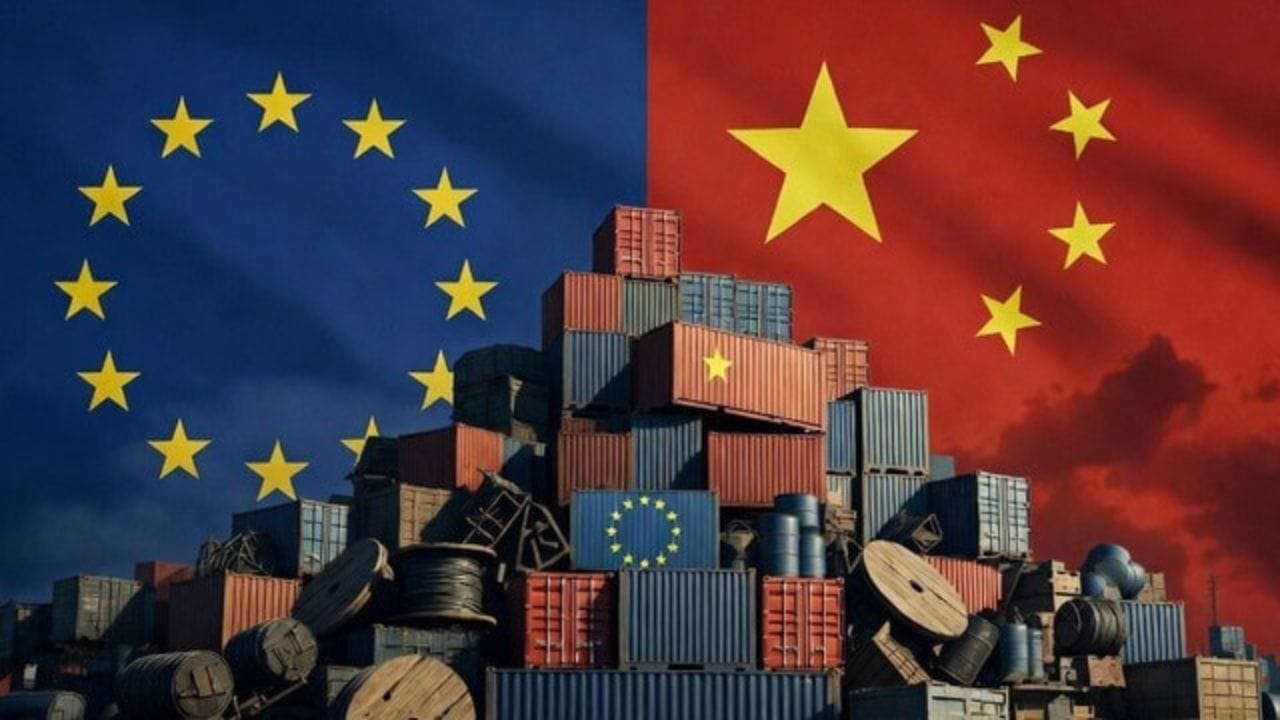
industrial competition
The European Union (EU) is preparing to change the rules of industrial competition, which may further intensify the economic conflict with China. Under the new framework named Made in Europe, government money will be used to promote domestic production and dependence on foreign suppliers will be reduced.
This step is being taken because factories are closing in Europe, jobs are being lost and dependence on foreign countries is increasing. Calling it discriminatory, China has warned of retaliatory action, which could create new tensions in global trade.
What is the new EU law?
At the center of this entire controversy is the Industrial Accelerator Act, which was introduced by the European Commission in March 2026. Under this, Made in Europe rules will be applicable, that is, to get government funds, companies will have to produce in Europe only up to a certain limit. For example, 70% of the materials in electric vehicles must be from Europe (although some battery parts are exempt). 25% local content is mandatory for aluminum and cement companies.
Apart from this, companies from countries which have 40% or more global share in any sector will have to give half of their earnings to EU workers. Foreign stake will have to be kept less than 49%. Companies will have to form joint ventures with European partners, share technology, spend money on research and do at least 30% production in Europe. According to EU Industry Commissioner Stéphane Séjourné, this step is necessary for safety, so that Europe can rebuild its industrial strength.
Strategy targeting China
This law especially focuses on those sectors which are important for Europe in the future. Like electric vehicles, green technology, steel and aluminium. China has a strong presence in all these. In the last few years, Chinese companies have expanded rapidly in electric vehicles, solar panels and industrial materials, which has increased the pressure on European companies. Now instead of keeping the market open, EU is giving entry into the market with conditions. That means subsidies and government contracts will now become policy weapons.
Why is the EU doing this?
Nearly 2 lakh jobs could be lost in Europe after 2024, especially in the auto and energy-based industries. There is a danger of losing 6 lakh more jobs in the auto sector in the coming time. The reasons behind this are high energy prices, slow innovation and tough competition from cheap goods from China. Also, the EU fears that it has become more dependent on outside countries for essential technology. Therefore, this law is also being brought to secure the supply chain and reduce risks.
China’s warning
China has expressed strong opposition to this. He says that this is against the rules of the World Trade Organization and discriminates against Chinese companies. China has said it will take retaliatory measures, which could include increasing tariffs, banning European companies or complaining on international forums.
Will a new trade war start?
This step of the EU shows that the world’s major economies are now adopting the policy of domestic production first. America has already done this and China has been doing the same for a long time. If local regulations continue to increase like this, global free trade may weaken and disputes between countries may increase. This policy can bring both advantages and disadvantages for Europe. On the one hand, jobs will be saved, but on the other hand, costs may increase and there will be a danger of retaliatory action.
At present this law is awaiting the approval of EU member countries and Parliament. But it is clear that Europe is now moving towards making its economy more self-reliant and secure. In future, this clash between Made in Europe versus Made in China can completely change the way the world trades.