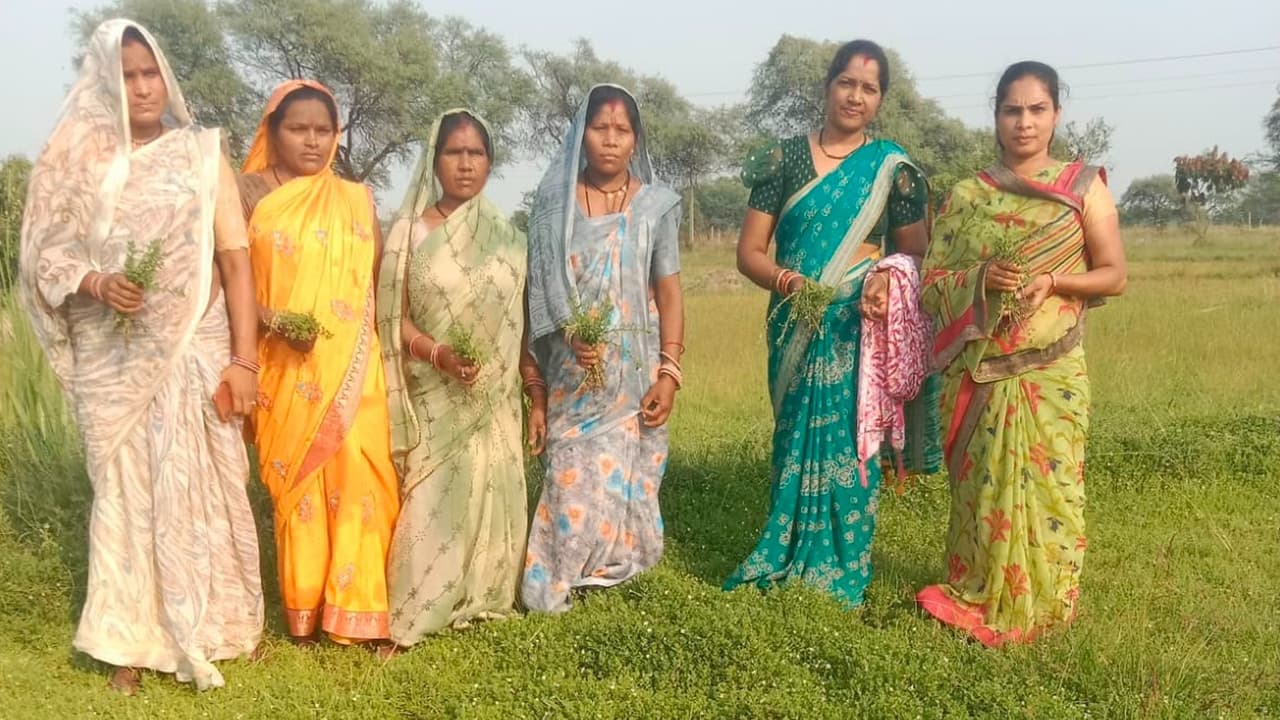
Medicinal farming has changed the lives of women in Dhamtari, Chhattisgarh. Barren land is now becoming a source of income and this model has become an inspiration for the entire country.
Raipur. In Chhattisgarh, a unique initiative is progressing rapidly towards making women self-reliant and strengthening the rural economy. Chhattisgarh Tribal, Local Health Traditions and Medicinal Plants Board is running such a scheme in many rural areas including Raipur, under which women are being provided free saplings of various medicinal plants including Sindoori, Satavar, Ashwagandha in the vacant yards and unused lands of their houses. Due to this, women are earning additional income sitting at home.
The most successful example of this initiative has been seen in Dhamtari district. Here women started cultivating medicinal plants by using not only the vacant land but also the water from waste drains. The result is that where earlier there was barren land, greenery is now visible and women are getting better health benefits along with regular income.
Medicinal cultivation of Dhamtari became an inspiration for the country.
This success of Dhamtari district is not limited to farming only. It has become an example of women empowerment, rural development, better utilization of natural resources and agricultural innovation, which is being discussed at the national level. Today this district has become one of the leading models of the country in the field of cultivation of medicinal and aromatic crops. Here such coordination of agriculture, environmental protection, employment and rural economy is seen, which strengthens the thinking of self-reliant villages and developed India.
Journey from paddy based farming to medicinal farming
Dhamtari is mainly an agricultural district and most of the farmers here have been dependent on paddy cultivation for a long time. Although paddy production has been the main identity of the district, problems like limited income, dependence on weather and unusable land remained a constant challenge for the farmers.
The sandy areas present on the banks of Mahanadi, the lands affected by erosion and the vacant lands of Gram Panchayats were not being used economically. At such a time, the district administration decided to convert this challenge into an opportunity. The objective of the scheme was clear that if low cost and high profit giving medicinal crops are grown on such land, which have constant demand in the market, then a big change can be brought about in the economic condition of farmers and rural families.
Innovation campaign started under the leadership of Collector
In the year 2025, under the guidance of the then Collector Mr. Abinash Mishra, the district administration started a big campaign for medicinal and aromatic crops in collaboration with the National Rural Livelihood Mission (BIHAN) and the State Medicinal Plants Board. This initiative was not limited to farming only, but was given the form of a comprehensive campaign by linking it to women’s economic self-reliance and rural livelihood.
Before the program started, a detailed survey of the district was conducted. In this, those areas were identified where the land was lying vacant for a long time, was sandy or gave low production. With the help of scientists and experts, the possibilities of medicinal cultivation in these areas were evaluated.
Women self-help groups became the biggest strength of this campaign
The responsibility of the entire campaign was handed over to women self-help groups. With the help of the State Medicinal Plants Board, quality saplings of high value medicinal and aromatic crops like Khus, Brahmi, Bach, Lemongrass, Palmarosa and Patchouli were provided to the women. Along with this, experts also provided training, technical guidance and assistance by visiting the fields from time to time so that women can do farming in a modern way. The most important feature of this scheme was the 100% buy-back system. That is, women and farmers did not have to worry about selling their produce, because the purchase of the product was ensured in advance.
Change started from 150 acres, earning of lakhs from vacant land started
In the first phase of the scheme, medicinal farming was started on about 150 acres of land. About 200 women self-help group members participated in it. During this period, khus was cultivated in about 80 acres, Brahmi in 20 acres, bach in 10 acres and lemongrass, palmarosa and patchouli were cultivated in about 40 acres.
Within some time, positive results of this experiment started emerging. The land which was earlier considered worthless, now started earning income of up to Rs 1 lakh per acre. Women used this additional income to support children’s education, family needs, purchasing agricultural equipment and starting small businesses. This not only strengthened their financial position but also increased their confidence in family and society.
Medicinal farming has brought a big change in the lives of hundreds of women in Dhamtari district. Women who were earlier limited to only traditional farming, today are strengthening the economic condition of their families through modern farming and entrepreneurship.
Satya Dhimar, a member of the Model Women Farmers Group of Kandel village, says that earlier her entire dependence was on paddy cultivation. He had very little knowledge about the cultivation of medicinal plants. Their confidence increased when the administration and experts provided training, provided quality plants and ensured arrangements for purchasing the produce. Today their income from medicinal farming has increased many times as compared to before.
Group members Poona Sahu and Kunti Dhimar say that this scheme has not only increased income but has also given women confidence in taking decisions. Now they are playing an active role in banking, group operations, financial management and running small enterprises. Not only this, she is also inspiring other women around her to join this farming.
Farmers also got better profits at lower costs
The benefits of this initiative were not limited to women self-help groups only. Many farmers of the district have also significantly increased their income by adopting medicinal and aromatic crops. Farmer Ashok Netam says that in lands with less water, crops like lemongrass and poppy have proved to be more profitable than expected. The cost of these crops is relatively low and there is constant demand in the market. This is the reason why many farmers of the district are now making medicinal farming along with traditional farming as their new source of income.
‘Lakhpati Didi’ campaign gets new base
Chhattisgarh government is continuously making efforts to strengthen the economic self-reliance of women. Under the leadership of Chief Minister Vishnudev Sai, many schemes are being implemented towards self-employment, value addition and connecting women self-help groups with the market. The state government’s ‘Lakhpati Didi’ campaign is also a part of this thinking, under which emphasis is being laid on increasing the annual income of women by connecting them with agriculture, forest produce, animal husbandry and rural entrepreneurship.
Dhamtari’s medicinal farming model has emerged as an effective example to give new momentum to this campaign. This initiative has not limited women only to farming, but has also given them the opportunity to become successful entrepreneurs. The state government aims to develop a strong and self-reliant rural economy based on local resources. Expansion of medicinal and aromatic crops is being considered an important step in this direction.
Focus on creating the entire value chain, not just farming
The biggest feature of the Dhamtari model is that instead of being limited to crop production only, work is being done to develop the entire value chain. Nurseries of medicinal plants are being prepared in Kotgaon and Pachpedi of Kurud development block, so that quality plant material can be easily available at the local level to the farmers and women groups.
Along with this, work is also being done in a planned manner in the future towards processing of medicinal plants, extraction of essential oil, packaging and value addition. If small processing plants are established at the local level, it will help farmers get better prices for their produce, reduce transportation costs and also create new employment opportunities in rural areas. This is also expected to give new impetus to rural industrialization.
Dhamtari model got recognition at national level
This innovative initiative of Dhamtari district has also been appreciated at the national level. During the Mahakumbh-2025 program held in New Delhi on 9 December 2025, on the joint platform of Indian Council of Agricultural Research (ICAR) and Krishi Jagran, the district was awarded the National Honor for its excellent work in the cultivation of medicinal and aromatic crops.
After this achievement, farmers, agricultural experts, administrative officers, voluntary organizations and various organizations from many states of the country reached Dhamtari and started studying this model. Interest is also being shown in adopting this model in many states including Hyderabad, Bihar, Madhya Pradesh. Today this initiative of Dhamtari has become a matter of inspiration for the entire country.
Preparation to expand to 500 acres, 500 women will get benefits
After the success of the first phase, now the district administration and the state government have planned to expand this model. In the next phase, a target has been set to increase the area of medicinal and aromatic crops to 500 acres. Along with this, a target has also been set to prepare ‘Lakhpati Didi’ by making more than 500 women financially self-reliant.
To fulfill this objective, the State Medicinal Plants Board, Agriculture Department, Horticulture Department, Bihan Mission and other related departments are jointly providing training, workshops and technical assistance in the four development blocks of the district, so that more and more farmers and women self-help groups can join this campaign.
Medicinal farming will also benefit environmental protection and health.
The importance of medicinal and aromatic crops is not limited only to increasing the income of farmers. These crops also strengthen environmental protection and health protection. Brahmi, Bacha, lemongrass and other medicinal plants play an important role in enhancing biodiversity, land conservation, developing green cover and making agriculture adapt to the impacts of climate change.
Today, when the whole world is emphasizing on promoting natural farming, sustainable agriculture and environmental protection, then this model of Dhamtari successfully presents all these objectives in practical form.
Dhamtari becomes the new identity of developed Chhattisgarh and self-reliant villages
This success of Dhamtari district proves that if there is a right combination of visionary leadership, effective administration, scientific technology, women power and local resources, then new possibilities of development can be created in rural areas. This model is not limited to medicinal farming only, but has become a strong example of women entrepreneurship, rural innovation, self-reliance and inclusive development.
Under the leadership of Chief Minister Vishnudev Sai, the state government is continuously working towards increasing the income of farmers, economically empowering women, making better use of local resources and strengthening the rural economy. Dhamtari’s medicinal farming model is an effective result of these efforts. This initiative has proved that development is possible not only through big industries but also by giving new opportunities to village women.
Today, this greenery of medicinal plants is not limited to the fields only, but has become the new identity of self-reliant villages, empowered women, prosperous farmers and developed Chhattisgarh. This model has the potential to become a source of inspiration for other states of the country in the coming years.