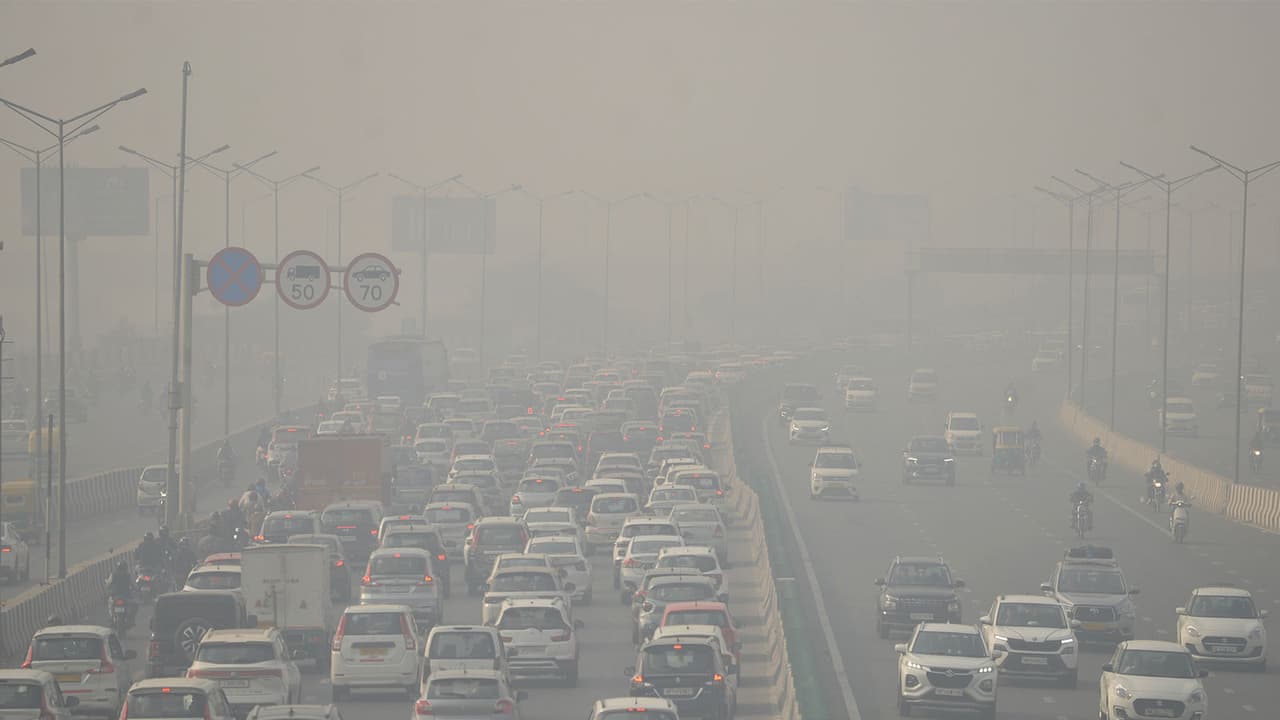
The Commission for Air Quality Management (CAQM) reviewed preparedness across the NCR to tackle winter air pollution, emphasizing curbs on stubble burning, vehicular emissions, and road dust, and reviewing state action plans and enforcement measures.
The Commission for Air Quality Management (CAQM) has reviewed the state of preparedness across the National Capital Region (NCR) to tackle air pollution ahead of the upcoming winter season, with a strong emphasis on curbing stubble burning, vehicular emissions, and road dust.
According to a press release, the Sub-Committee on Safeguarding & Enforcement of the Commission for Air Quality Management in NCR and Adjoining Areas (CAQM) convened its 26th meeting under the Chairmanship of Rajesh Verma, Chairperson, CAQM. The meeting comprehensively reviewed the status of preparedness, enforcement and compliance measures being undertaken by the concerned NCR State Governments/ GNCTD and implementing agencies for targeted abatement of air pollution across the National Capital Region (NCR).
Focus on Stubble Burning
During the meeting, detailed deliberations were held on sector-specific measures and implementation of various statutory directions issued by the Commission. The Sub-committee took stock of the preparedness of Punjab, Haryana and Uttar Pradesh for implementation of Direction No. 99 dated May 15, 2026 and the respective action plans for prevention and control of paddy stubble burning during 2026, with the objective of complete elimination of such incidents. The review also covered measures for crop diversification, promotion of Direct Seeded Rice (DSR), utilisation of crop residue and strengthening of awareness and IEC activities among farmers.
Measures to Control Vehicular Emissions
The Sub-Committee further undertook a comprehensive review of measures for abatement of vehicular pollution, including actions envisaged under Direction No. 88 dated April 23 2025, as amended on October 17 2025, relating to restrictions on entry of BS-IV and below transport and commercial goods vehicles into Delhi.
The implementation of Direction No. 93 dated June 3 2025 concerning migration of buses entering Delhi, including buses operating under All India Tourist Permit and other service regimes, towards cleaner modes was also reviewed.
The meeting further examined the preparedness of NCR State Governments/ GNCTD for installation of Automatic Number Plate Recognition (ANPR) systems at Fuel/ CNG stations, in accordance with Direction No. 101 dated May 15 2026, for enforcement of restrictions on fuelling of vehicles without valid Pollution Under Control Certificate (PUCC) in NCR with effect from 01.10.2026.
The Sub-Committee also reviewed enforcement of Direction No. 94 dated June 3 2025, as amended on December 23 2025, for fast-tracking cleaner mobility in services provided by motor vehicle aggregators, delivery service providers and e-Commerce entities, including compliance verification through surprise checks.
The status of enforcement against older End-of-Life (EoL) vehicles, in compliance with the Supreme Court of India’s order dated December 17 2025 was also deliberated upon, with emphasis on intensifying action for impounding and scrapping of such vehicles.
Further, the sub-committee reviewed progress towards complete phasing out of diesel auto-rickshaws from NCR Districts by December 31 2026 in accordance with Direction No. 70 dated November 30 2022.
Measures for identification and decongestion of traffic congestion hotspots or intersections in Delhi and NCR towns were also reviewed, including deployment of Integrated Traffic Management Systems (ITMS) with ANPR-based automated challaning.
Controlling Industrial and Dust Pollution
The Sub-Committee reviewed the status of implementation of Direction No. 103 dated August 19 2026 regarding prevention and control of air pollution from stone crushing units in NCR.
Implementation of Direction No. 98 dated February 2026 relating to stringent emission standards for industries across Delhi-NCR was also reviewed.
With the winter season approaching, the meeting accorded focused attention on procurement of additional Mechanical Road Sweeping Machines (MRSMs) and their deployment before commencement of the winter season, particularly for removal of dust from identified dust hotspots.
The Sub-Committee further took stock of the Action Taken Report on incognito/surprise inspections of C&D sites, industries and DG sets, as part of strengthened compliance monitoring and enforcement of the commission’s statutory directions.
Strengthening Enforcement and Compliance
The release stated the meeting also reviewed the status of timely resolution of complaints received through social media platforms and tagged by CPCB to the concerned agencies in GNCTD and NCR States, in accordance with the Directions of the Supreme Court of India.
The concerned implementing agencies were emphasised upon to ensure strict, coordinated and time-bound implementation of the commission’s statutory directions, with particular focus on preparedness for the forthcoming winter season, effective enforcement in the vehicular and industrial sectors, prevention of stubble burning, mitigation of road and C&D dust and strengthening of inspection and compliance-monitoring mechanisms across NCR.
The Sub-Committee reiterated the importance of sustained and coordinated efforts by all concerned agencies to ensure effective implementation of sector-specific measures and to strengthen enforcement mechanisms. Further, all implementing agencies reaffirmed their commitment to undertake strict, targeted and time-bound actions for effective implementation of the Commission’s Directions, the release said. (ANI)
(Except for the headline, this story has not been edited by Asianet Newsable English staff and is published from a syndicated feed.)