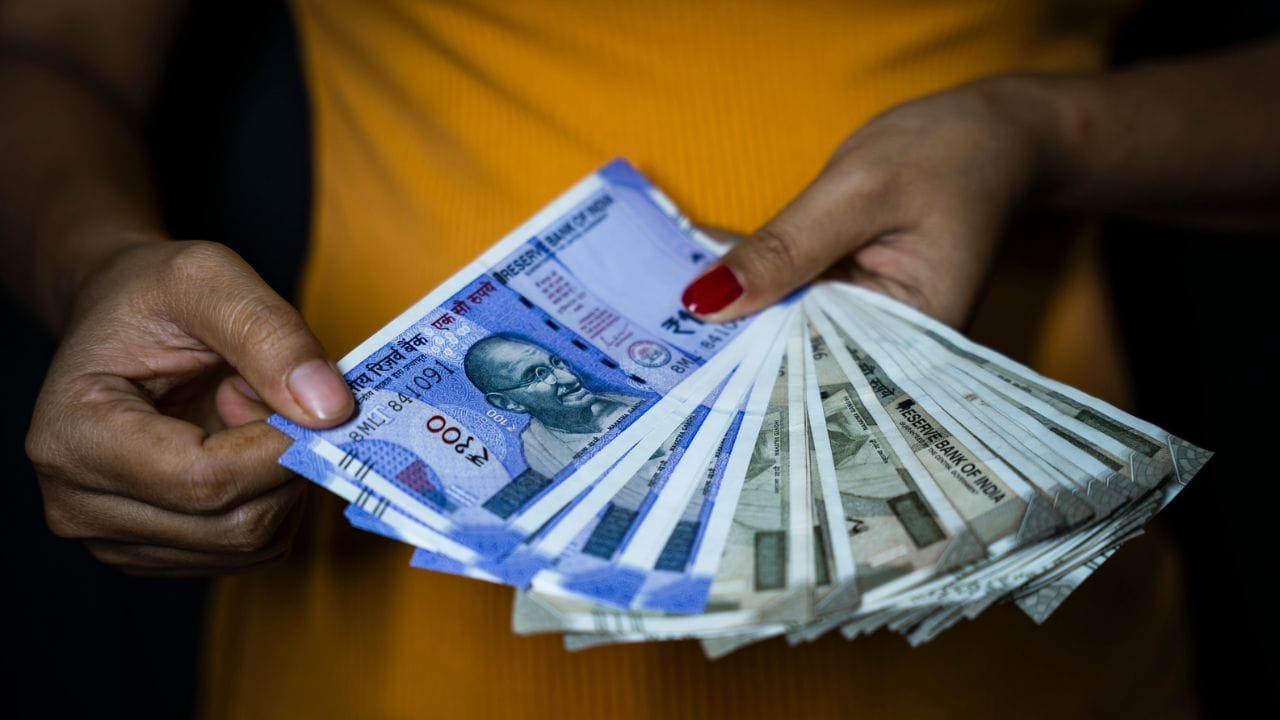
The number of people earning Rs 100 crore annually in the country has increased 4 times.Image Credit source: getty
Finance Minister of State (MoS) Pankaj Chaudhary told Parliament that the number of billionaires in India has increased 4 times in the last five years. He was answering the question whether the government is aware of the increasing number of billionaires in India, and whether the country is at the forefront in the world in this matter.
In a written reply in the Lok Sabha on July 27, Choudhary said income-tax return (ITR) filings revealed that 576 people reported gross total income of ₹100 crore or more in AY26. He further said that neither the earlier Income-Tax Act 1961 nor the new ITA 2025 gives a legal definition of the term billionaire.
Number of people reporting Rs 100 crore income increased
According to Pankaj Chaudhary’s answer, the number of ITRs declaring gross total income of Rs 100 crore or more for assessment year 2026 was 576, which is 4 times more than 142 people for assessment year 2022. Additionally, the number of people with gross total income of Rs 100 crore and above was 301 in assessment year 2023, decreased to 284 in assessment year 24 and increased again to 415 in assessment year 25.
Concentration of wealth, inequality in income
- In the second part of the reply, the minister also answered questions on whether the Center has conducted a study on the impact of rising wealth concentration and income inequality on investment, employment generation and even economic growth.
- Chaudhary said the government’s Annual Periodic Labor Force Survey (PLFS) report showed that the labor markets in both urban and rural areas have expanded beyond pre-COVID levels. The unemployment rate for people aged 15 years and above has decreased from 3.6 percent in 2022 to 3.1 percent in 2025.
- According to the recent Household Consumption Expenditure Survey 2023-24, the Gini coefficient for rural and urban areas is 0.237 and 0.284, respectively, down from 0.266 and 0.814 in 2022-23. This shows that the rural-urban gap is reducing.
- According to the National Multidimensional Poverty Index: A Progress Review 2023 released by NITI Aayog, the share of the population in multidimensional poverty declined from 24.85 percent to 14.96 percent between 2015-16 and 2019-21, which shows that about 13.5 crore people have come out of poverty during this period.
- Moreover, according to the discussion paper on Multidimensional Poverty in India since 2005-06 published by NITI Aayog, multidimensional poverty in India is estimated to decline from 29.17 percent in 2013-14 to 11.28 percent in 2022-23, which shows that 24.82 crore people have come out of poverty during this period.
have taken many steps
He said the government has taken several steps to reduce inequality in income and wealth, generate large-scale employment and promote inclusive economic growth, including a progressive income-tax structure and higher spending on food, health, education, housing and social security. The MoS further said that India had abolished the Wealth Tax Act 1957 in April 2016 and the government does not have data on the total wealth of taxpayers. However, those with very high incomes are subject to a surcharge on top of the fixed income-tax slab.