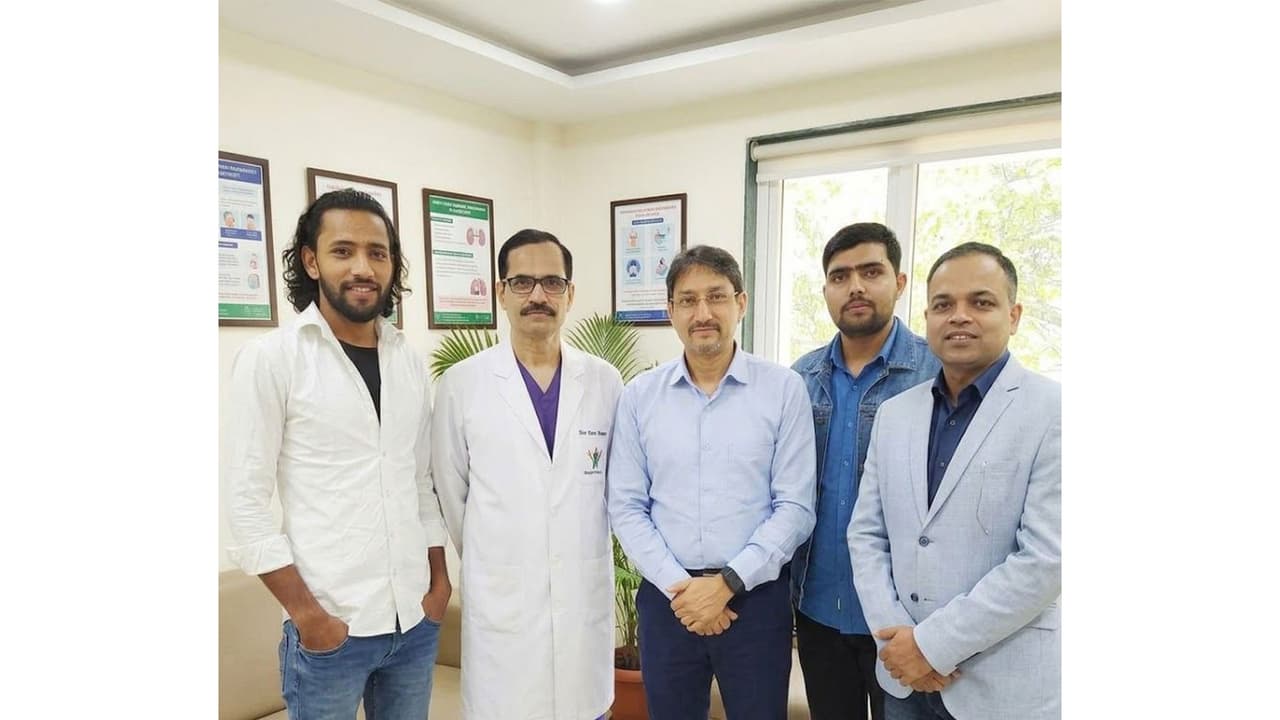
Two brothers underwent successful life-saving heart transplants 11 years apart after both were diagnosed with advanced Dilated Cardiomyopathy, a progressive heart condition. The rare case highlights a shared genetic risk in the family.
In a rare and remarkable medical case, a family witnessed two of its sons undergoing life-saving heart transplants 11 years apart after both were diagnosed with advanced Dilated Cardiomyopathy (DCM), a progressive condition that weakens the heart muscle and leads to severe heart failure. The brothers underwent a heart transplant under Dr ZS Meharwal, Chairman and Head of Adult Cardiac Surgery, Heart Transplantation and VAD Programme at Fortis Escorts, Okhla, New Delhi.
The elder brother first developed symptoms at the age of 16, beginning with unexplained fatigue that later progressed to severe breathlessness, swelling in the legs and repeated heart failure episodes. Medical evaluation revealed advanced Dilated Cardiomyopathy (DCM), a condition in which the heart muscle becomes enlarged and weak, eventually losing its ability to pump blood effectively. Despite intensive medical therapy, his condition deteriorated, and he underwent a heart transplant at Fortis Escorts Okhla in the year 2015.
More than a decade later, the younger brother, aged 27, who had previously been healthy, began experiencing strikingly similar symptoms, including progressive breathlessness, reduced exercise capacity, and recurrent hospital admissions for heart failure. Clinical evaluation confirmed the same diagnosis, end-stage Dilated Cardiomyopathy. As his condition progressed to end-stage heart failure, heart transplantation remained the only viable treatment option. The heart transplant presented several technical challenges due to differences in the size of the donor and recipient blood vessels, requiring specialised surgical techniques during transplantation. However, the transplant was completed successfully within the critical time window required for donor heart implantation. The deceased donor in this case was a 37-year-old male from Rohtak who had succumbed to an intracranial haemorrhage. Following the transplant, the younger brother recovered steadily and was discharged in stable condition after comprehensive post-operative care and monitoring.
Expert Commentary on the Landmark Case
Dr ZS Meharwal, Chairman and Head of Adult Cardiac Surgery, Heart Transplantation and VAD Programme at Fortis Escorts, Okhla, said, “Fortis Escorts Okhla has successfully performed 23 heart transplants, reflecting the institute’s growing expertise and advanced capabilities in managing complex end-stage heart failure cases. With every transplant, our commitment remains the same: to save lives and offer patients a renewed chance at healthy living through excellence in cardiac care and transplantation.”
Dr Meharwal further added, “Following the diagnosis of the younger sibling, doctors advised cardiac screening for other family members. Their journey underscores both the devastating reach of genetic heart disease and the extraordinary advances in modern heart transplantation that can offer survival and renewed life even in the most complex cases.”
Understanding Familial Cardiomyopathy
However, Dr Vishal Rastogi, Director, Cardiology, Fortis Escorts, Okhla, said, “This pattern is strongly suggestive of familial cardiomyopathy, where an inherited genetic mutation can remain silent for years before gradually weakening the heart muscle. What appears to be unexplained heart failure in one individual may, in fact, reflect an underlying family-wide risk that can affect multiple relatives at different stages of life.”
A First for India
Dr Vikram Aggarwal, Facility Director and Vice-President, Fortis Escorts, Okhla, “To our knowledge, this is the first reported case in India of two brothers who were suffering from familial cardiomyopathy and underwent successful heart transplantation 11 years apart. It is also interesting that both brothers were operated on at the same hospital by the same surgical team. The second transplant changed the way the entire family viewed the illness. What once seemed like an isolated tragedy became clear evidence of a shared genetic risk.”
(ANI)
(Except for the headline, this story has not been edited by Asianet Newsable English staff and is published from a syndicated feed.)