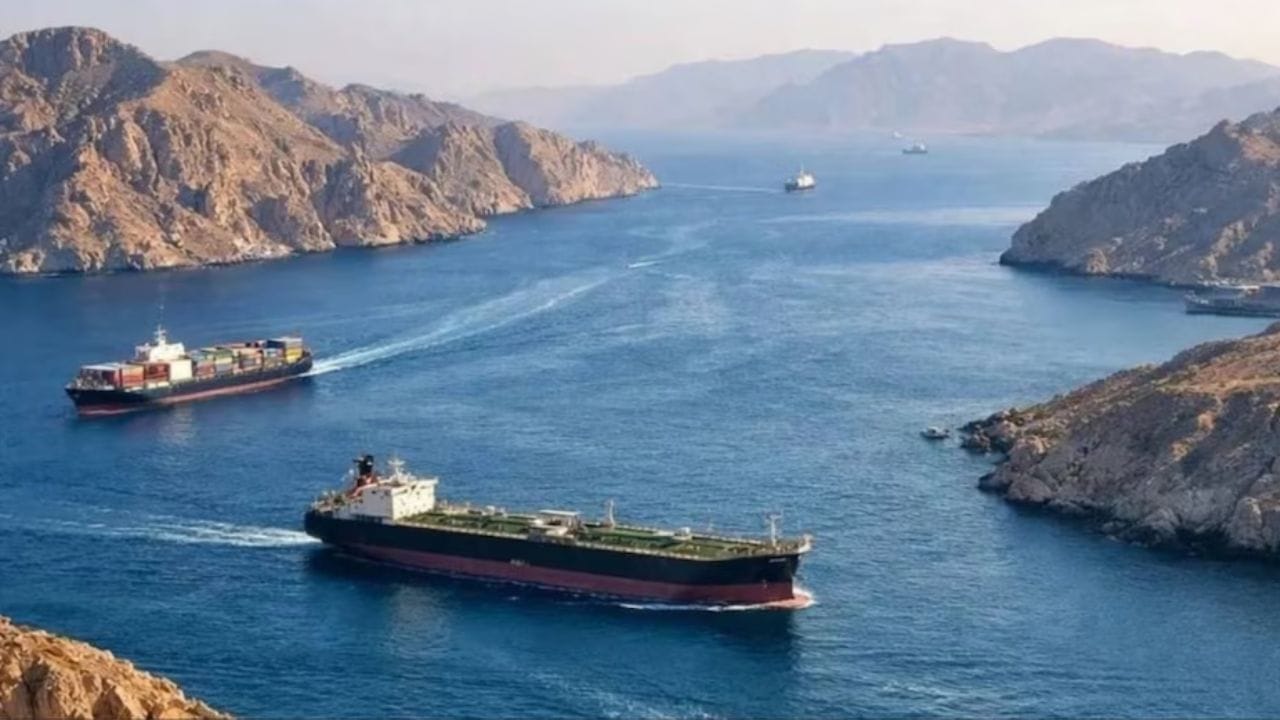
To avoid Hormuz blockade, tankers are turning off their signals and moving in the sea.
The war that broke out in Western Asia since February 28 has changed the face of global sea-borne trade. Giant ships supplying oil and gas around the world are now forced to hide from radar. Especially the oil tankers passing through the Strait of Hormuz are switching off their Automatic Tracking System (AIS) so that they cannot be attacked.
Why were ships forced to hide in the sea?
Earlier, only countries like Iran or Russia used to switch off the tracking systems of their ships to avoid international sanctions. In the language of shipping it was called ‘Shadow Fleet’. But now the situation has completely changed. According to a report in the Indian Express, the Strait of Hormuz, which connects the Persian Gulf to the Arabian Sea, has become a very sensitive area due to the war. The attacks on merchant ships have alerted companies. Now, for their safety, big ships of non-restricted countries are also crossing this area by hiding themselves from radar. According to Vortexa data, 57% of the ships passing through this route from March to the end of May had kept their systems off.
Energy supply reaching Indian markets safely
Amidst this entire global crisis, the matter of relief is that the essential consignments of crude oil, LNG and LPG are continuously reaching India without any interruption. India imports 40% of its oil needs, 60% of LNG and about 90% of LPG from this region. Data shows that along with crude oil, ships carrying clean products (petrol, diesel) and cooking gas are also reaching Indian shores safely using this dark-mode.
How dangerous is this game of disappearing from the radar?
According to international maritime rules, AIS of ships should always be operational. By turning off the system the ships become completely invisible. The risk of collision with other ships increases manifold on a heavily trafficked route like Hormuz. The fear of war has left this danger behind. According to the data, along with crude oil, petrol, diesel, jet fuel, ships carrying LNG are also traveling in the same manner.
Now this new strategy has become a compulsion
Experts associated with the shipping industry believe that dark shipping is no longer an exception but has become a new way of working. Ships of national companies of big oil producing countries like UAE, Qatar, Saudi Arabia are also following the same strategy. In the month of May, these countries had 67% share in the ships secretly passing through this strait, of which UAE alone had 27% share. The economy of these Gulf countries is completely dependent on energy export. In such a situation, they cannot let their supply chain stop at any cost. The ships are now reaching their destination, albeit secretly, due to which the global oil market is able to take a sigh of relief.