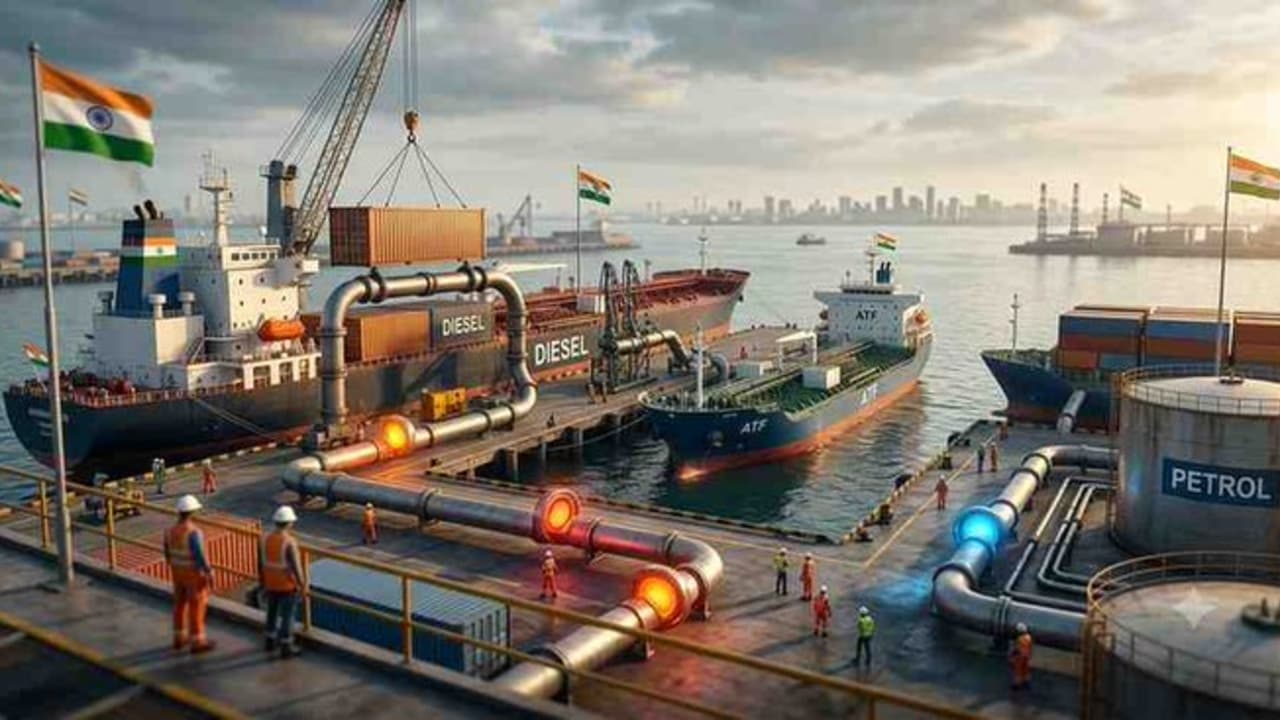
Government’s big bet amid surge in crude oil! Windfall tax increased on diesel and ATF, relief on petrol. Do US-Iran tensions signal major changes in India’s fuel policy and energy strategy?
New Delhi: When missiles are fired in one corner of the world, its echo is heard in the economies of countries across the seven seas. The war (US-Iran War) between America and Iran has taken the tension in the Middle East to its peak. The fire of this war has directly engulfed the international crude oil market, causing a sudden surge in oil prices. Amidst this global panic, the Indian government has taken a shocking decision which has sent the country’s energy sector and big exporters into a tizzy. Modi government has made a huge and unexpected change in the tax on petrol, diesel and aviation fuel (ATF).
Midnight decree: ‘Windfall’ clampdown comes into effect from Thursday
An official order issued by the government has created a stir in the industry. In view of the steep rise in crude oil prices globally, the government has significantly increased the windfall tax on the export of diesel and aviation fuel (ATF). The government has clearly stated that it was extremely necessary to take this strict step to prevent unexpected profits in the international market and to protect the domestic market. This new tax structure has become effective across the country from Thursday, July 16.
How much did the windfall tax increase?
According to the notification issued by the government, the windfall tax on export of diesel has been increased from Rs 8.5 per liter to Rs 15.5 per liter. At the same time, this tax on export of Aviation Turbine Fuel (ATF) has been increased from Rs 7.5 per liter to Rs 14.5 per liter. Interestingly, while the tax on diesel and ATF has been increased, the windfall tax on export of petrol has been reduced by Rs 4 per liter. This change has been made in view of global crude oil prices and current market conditions.
The tax mathematics that surprised everyone: relief somewhere, trouble somewhere
According to a Reuters report, the changes made in the tax rates this time by the government are really surprising. On one hand, the government has directly doubled the tax burden on two major fuels, while on the other hand it has also given major relaxations on one front:
- Double hit on diesel: The tax of Rs 8.5 per liter applicable till now on export of diesel has been directly increased to Rs 15.5 per liter.
- Screws on air fuel (ATF): This windfall tax on aviation turbine fuel used in aircraft has been increased from Rs 7.5 per liter to Rs 14.5 per litre.
- Relief to petrol exporters: However, amidst this dreadful equation, a big relief has been given by reducing the windfall tax on petrol by Rs 4 per litre.
Why did America-Iran tension increase concern?
Due to increasing military conflict in the Middle East, uncertainty regarding the supply of crude oil in the international market has increased. Increasing tension on strategic sea routes like the Strait of Hormuz has also increased the concern of investors and oil traders. This is the reason why there was a sharp rise in the prices of crude oil in the global market. In such circumstances, big oil importing countries like India have to maintain the balance of both their energy security and domestic supply. The latest decision of the government is being considered a part of this strategy.
Biggest suspense: Will it cost the common man’s pocket?
As soon as the news of increasing the tax was flashed, fear spread among the general public that whether the daily prices of petrol and diesel will start touching the sky? But the answer to this suspense is a relief. This decision will not have any direct impact on the common man’s pocket. Actually, Windfall Tax is imposed on the unexpected profits of companies which they get without any extra effort due to any global crisis. The main objective of the government is to ensure that oil companies do not send all the fuel abroad in the greed of higher profits and there is no shortage of oil within the country. Therefore, there will be no increase in the retail prices of petrol and diesel at the domestic level.
What are the latest fuel prices in the four metros?
Amidst this big decision, the prices of petrol and diesel remain completely stable in the major metros of the country. Today’s prices in the four big cities are as follows:
| City | Petrol (Rs/Litre) | Diesel (Rs/Litre) |
| New Delhi | 102.12 | 95.20 |
| Mumbai | 111.21 | 97.83 |
| Kolkata | 113.48 | 99.82 |
| Chennai | 107.78 | 99.56 |
If this ongoing conflict between America and Iran in the Middle East prolongs further, then in the coming days, even bigger fluctuations can be seen in the global energy market, on which Indian policy makers are keeping a close eye.
What will be the impact going forward?
Energy experts believe that if the US-Iran tension prolongs and crude oil prices remain at high levels, the government may review the windfall tax again in the future. At present, the government has indicated that its objective is to secure domestic fuel supply and maintain market balance. Now everyone’s eyes are on the global crude oil market and the situation in the Middle East, because from there it will be decided what will be the direction of the fuel market in the coming days.