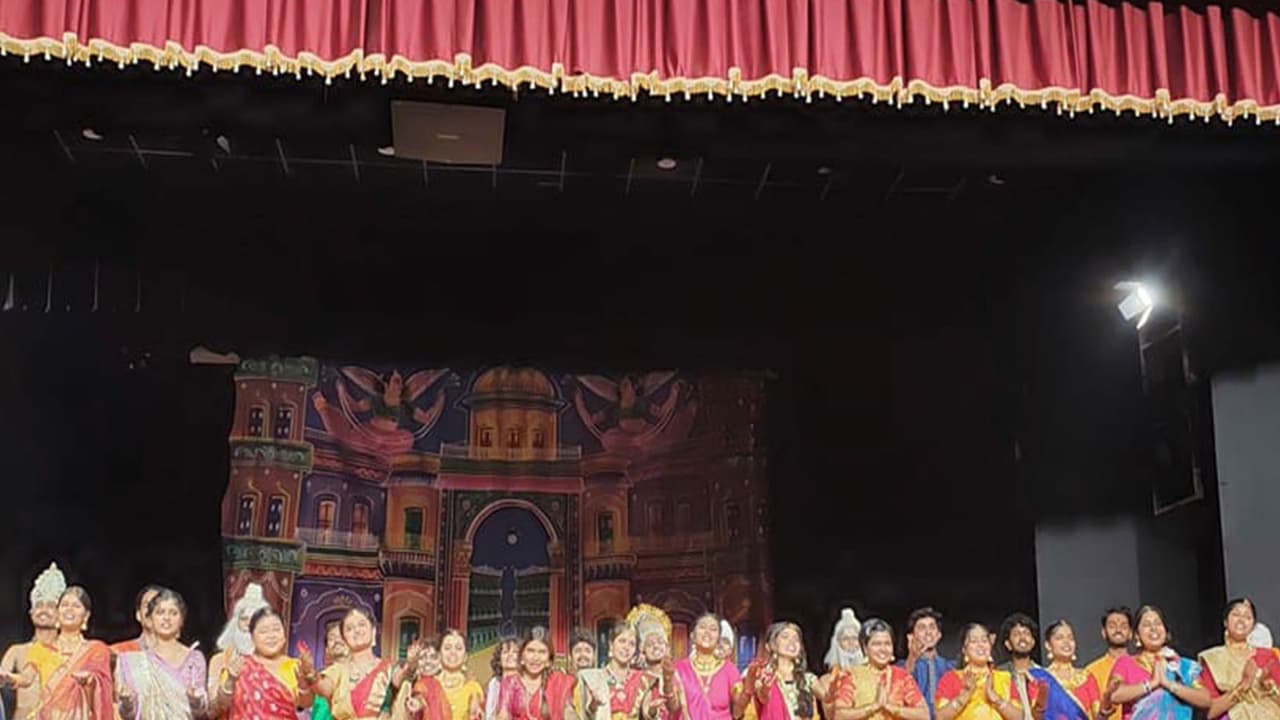
BHU’s Rangshala, with California State University, Fresno, staged ‘Satya Harishchandra’. Directed by Prof Devendra Sharma, the play on Independence Day eve aimed to revive the Nautanki tradition for a new generation of audiences.
Rangshala, the University Theatre Cell of Banaras Hindu University (BHU), in collaboration with the Faculty of Performing Arts, BHU, and California State University, Fresno, USA, presented the musical play Satya Harishchandra at the Pandit Omkarnath Thakur Auditorium on Thursday.
Staged on the eve of Independence Day, the production was directed by Prof. Devendra Sharma, Professor of Communications at California State University, Fresno, and a seventh-generation Saangeet performer.
Connecting Ideals to Nation-Building
The programme began with Pushpanjali offered to Goddess Saraswati, Pandit Omkarnath Thakur and the bust of the founder, Mahamana Pandit Madan Mohan Malaviya, followed by the ceremonial lighting of the lamp. Addressing the gathering, Vice-Chancellor Prof Ajit Kumar Chaturvedi highlighted the contemporary relevance of Satya Harishchandra, particularly in the context of its presentation on the eve of Independence Day. He spoke of the ideals embodied by Harishchandra – integrity, moral courage, sacrifice and steadfastness in the face of adversity- and connected them with the larger values of freedom and nation-building.
About the Director
Devendra Sharma also shared his opening remarks on the production. He has presented more than 1,000 Saangeet theatrical performances across the world. He established a Nautanki troupe in the United States and has directed numerous productions. The world-renowned Theatre du Soleil in Paris has also invited him to train its artists in Nautanki. He regularly visits the National School of Drama (NSD) to train students in the traditional form.
Revitalising the Nautanki Tradition
In his welcome address, Prof Sanjay Kumar highlighted the rich tradition of Saangeet, Swang and Nautanki, a form of Indian folk theatre that brings together music, poetry, acting, dance and folk language. He noted that although it was once a vibrant and popular part of everyday cultural life, the tradition has gradually receded with changing times and the emergence of new forms of entertainment. He emphasised that Rangshala’s initiative seeks to familiarise the younger generation with this theatrical heritage, encourage them to engage with it, and inspire them to carry the tradition forward in new ways.
The production brought together music, acting, dialogue, movement, and the traditional Saangeet style, retaining the distinctive features of Nautanki while giving the form a renewed stage expression for contemporary audiences. This reimagining highlighted the vitality and narrative potential of Nautanki and its continuing relevance in the present context.
Through the story of Harishchandra, the production foregrounded the timeless values of truth, courage, sacrifice, and freedom, while making a meaningful effort to revitalise the Nautanki tradition and connect it with a new generation of audiences. The characters were portrayed by a talented ensemble of performers. (ANI)
(Except for the headline, this story has not been edited by Asianet Newsable English staff and is published from a syndicated feed.)