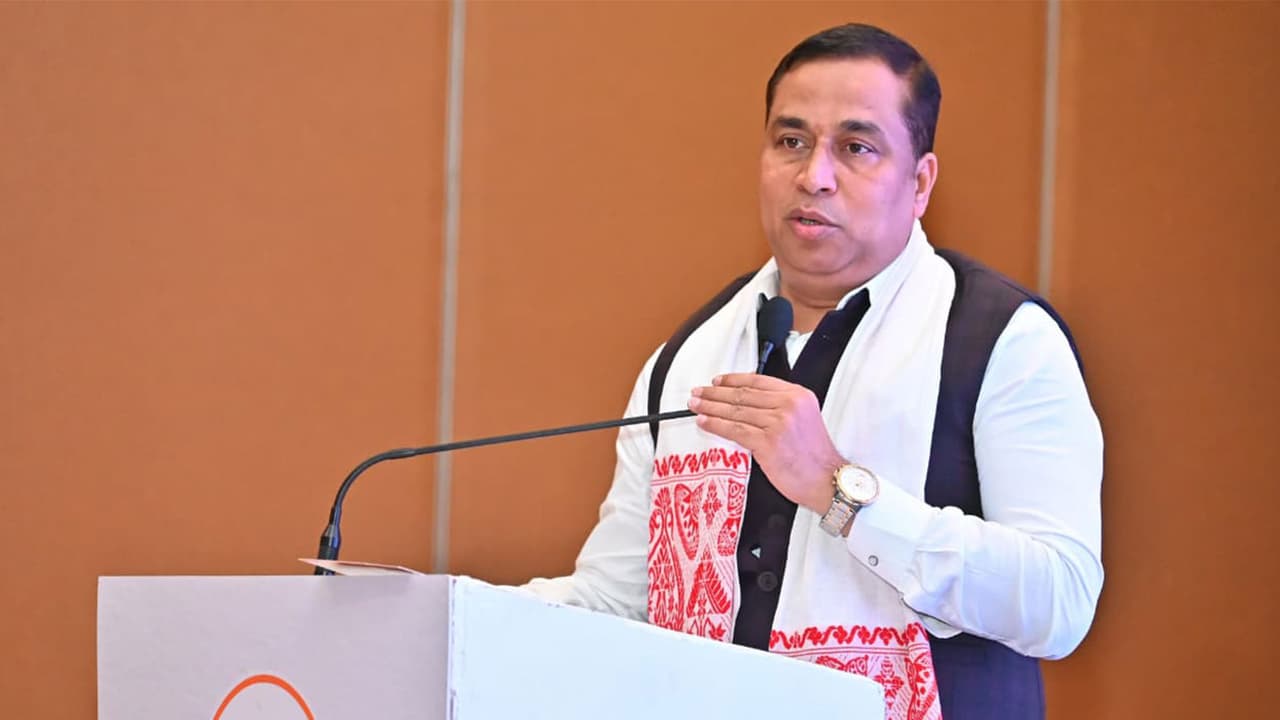
The Assam government plans to amend service rules to dismiss government employees found practicing polygamy. Finance Minister Jayanta Mallabaruah announced that polygamists would also be ineligible for benefits under government welfare schemes.
Proposed Penalties for Government Employees
The Assam government on Saturday proposed to amend the Assam Services (Discipline and Appeal) Rules, 1964, to dismiss any government employee or government servant found to have practised polygamy. In his budget speech, Assam Finance Minister Jayanta Mallabaruah said, “In keeping with our Government’s unwavering commitment to women empowerment, gender justice and responsible family values, the Government proposes to amend the Assam Services (Discipline and Appeal) Rules, 1964 to provide that any Government servant found to have practised polygamy shall be liable for dismissal from service, in accordance with law.”
The Assam Finance Minister also said that any male practising polygamy shall not be eligible to avail benefits under any government welfare scheme. He further said that any person convicted of an offence under any criminal law shall not be eligible to avail benefits under notified government welfare schemes.
Broader Legislative Action: UCC Bill
Earlier in May, the Bharatiya Janata Party (BJP)-led National Democratic Alliance (NDA) government in Assam, led by Chief Minister Himanta Biswa Sarma, passed the Uniform Civil Code (UCC) Bill 2026 in the first session of the 16th Assam Legislative Assembly, primarily to ban polygamy and criminalise child marriage. The Assam government had introduced the Bill in the Assembly in May and soon after received Cabinet approval on May 13.
The legislation proposes a single civil legal framework governing marriage, divorce, succession and live-in relationships for all residents of the state. The draft Bill mandates registration of marriages within 60 days and live-in relationships within 30 days, while also proposing penalties for non-compliance. It also includes provisions banning polygamy.
Specific Provisions and Penalties
With the aim of preventing exploitation, fraud and unlawful practices in personal relationships, the UCC bill proposed to have upto 7 years of imprisonment under Section 82 of Bharatiya Nyaya Sanhita (BNS), 2023, for any instances of polygamy or bigamy.
Similarly, for child marriages and marriages done through force or deception, the statement added, “Child marriage and marriage without valid consent shall attract imprisonment up to two years or fine or both, as per the Prohibition of Child Marriage Act, 2006. Fraudulent or deceptive marriages through force, coercion or concealment shall be punishable with imprisonment up to seven years, along with a fine.” (ANI)
(Except for the headline, this story has not been edited by Asianetnews Editorial staff and is published from a syndicated feed.)