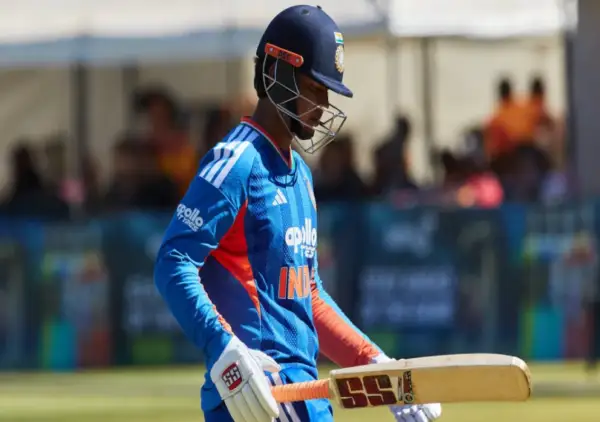
Christchurch: Former India spinner Ravichandran Ashwin has questioned the Indian team management’s decision to send teenage batter Vaibhav Sooryavanshi in at No. 3 during the second T20 International against New Zealand, saying the position appeared unfamiliar to the youngster.
Ashwin believes that if India want to accommodate Sooryavanshi alongside established openers Abhishek Sharma and Sanju Samson, the team should consider moving Samson down the order instead.
Sooryavanshi made his long-awaited appearance in the playing XI during the Christchurch match on October 24, 2026, after wicketkeeper-batter Ishan Kishan was ruled out with an injury. However, the 15-year-old could manage only four runs from eight deliveries before being dismissed, as India pursued New Zealand’s target of 181.
Speaking after the match, Ashwin described the youngster as looking like a “fish out of water” in the unfamiliar role. He also stressed that Sooryavanshi should not be judged harshly on one innings, particularly when he was required to bat in a position that did not suit his usual approach.
Ashwin says No. 3 role did not suit Sooryavanshi
Ashwin discussed the teenager’s performance while analysing the hits and misses from the second T20I. Although he categorised Sooryavanshi’s outing as a miss in the context of the match, he cautioned that it was too early to draw conclusions about the youngster’s ability.
The former India international felt Sooryavanshi appeared determined to attack but struggled to find his timing during his eight-ball stay. Ashwin suggested that the batter needed time to settle into the innings rather than continuing to force attacking shots.
He also pointed out that a senior batter at the other end could have helped calm the teenager and encouraged him to watch the ball more closely.
According to Ashwin, a young batter entering the middle during the sixth over faces a different situation from an opener who begins an innings from the first delivery. The change in circumstances can influence shot selection, tempo and confidence, especially when the player is still adapting to international cricket.
Ashwin’s assessment was not a rejection of Sooryavanshi’s talent. Instead, it focused on the importance of placing the teenager in a role that allows him to use his strengths effectively.
Ashwin suggests moving Sanju Samson to No. 3
The former spinner’s principal message to the team management was about finding a suitable batting combination if all three players are to feature in the same XI.
India have preferred Abhishek Sharma and Sanju Samson as their opening pair. With both occupying the top two positions, Sooryavanshi was asked to bat at No. 3 against New Zealand.
Ashwin noted that India had previously used a combination in which Samson moved down the order. He suggested that the team could revisit that arrangement rather than asking Sooryavanshi to adapt immediately to a middle-order role.
“If they are going to go with this combination, I am not too sure Vaibhav has got to bat at number three,” Ashwin said during his post-match analysis.
The suggestion presents the management with a selection question. Keeping Samson and Abhishek as openers preserves an established combination, but it also leaves Sooryavanshi needing to adjust to a different position if all three batters play.
Moving Samson to No. 3 could give Sooryavanshi the opportunity to open, where his attacking style is more familiar. However, any such change would require the management to consider the balance of the side, the roles of other batters and the team’s broader plans for the series.
Ashwin’s comments are therefore a recommendation rather than an indication that the team management has decided to change its batting order.
Sooryavanshi finally gets an opportunity
Sooryavanshi’s inclusion against New Zealand came amid growing public discussion about why the teenage prospect had remained on the sidelines. The left-hander has attracted considerable attention for his aggressive batting and performances in domestic and franchise cricket.
India had continued to back Samson and Abhishek at the top of the order during the opening match of the series. Kishan’s injury created an opportunity for Sooryavanshi to enter the side for the second T20I, although his batting position was different from the opening role many supporters had expected.
India’s batting coach Sitanshu Kotak had previously urged fans to be patient with the teenager, warning that persistent demands for his selection could create unnecessary pressure. Kotak said selection decisions could not be based solely on a player’s popularity and highlighted the importance of allowing a young cricketer to develop at the right pace.
The coach also praised Sooryavanshi’s attitude in training, saying the youngster continued working on his batting, fielding and fitness despite not being selected.
Ashwin’s latest remarks add another dimension to the debate. While Kotak has emphasised patience and the need to protect the teenager from excessive expectations, Ashwin has focused on the tactical question of where Sooryavanshi should bat when selected.
Both viewpoints highlight the challenge of managing a young player who has attracted significant attention before establishing a regular place in the international side.
India’s middle order earns Ashwin’s praise
Ashwin also praised India’s middle order for its contribution to the successful chase in Christchurch. India were set a target of 181 after New Zealand scored 180 for five in 20 overs.
New Zealand captain Mitchell Santner caused problems for the Indian batting line-up, taking four wickets for 21 runs. India nevertheless recovered through important contributions from the lower middle order and completed the chase with four wickets to spare.
Tilak Varma remained unbeaten on 51 from 26 deliveries, while Nitish Kumar Reddy and other middle-order batters provided valuable support during the closing stages. India reached 181 for six in 19.5 overs to win the match.
Ashwin described India’s middle order, particularly the batters operating at positions six, seven and eight, as a dangerous unit because of its power-hitting ability. He singled out Ramandeep Singh’s hitting against both pace and spin and praised Tilak’s temperament under pressure.
The former spinner said the ability of these batters to attack quality bowling gave India a potentially formidable finishing combination. He also noted that the performances of the middle order had helped India overcome a difficult position in the chase.
Selection decision remains with team management
India’s four-wicket victory gave them a 2-0 lead in the five-match T20I series against New Zealand. The third T20I is scheduled for Wellington on October 27, leaving the management to consider its options for the next match.
Sooryavanshi’s first outing in the series may not have produced the result he wanted, but one short innings is not enough to determine his long-term prospects. His age, experience and preferred batting role will remain relevant factors as India decide how best to use his talent.
Ashwin’s argument is that the team should consider the batting order carefully if it wants to include three players who can contribute at the top. Giving Sooryavanshi a role closer to his strengths, he suggested, could help the teenager play with greater freedom.
Whether India make a change remains to be seen. For now, the discussion centres on how to balance a promising young batter’s development with the demands of winning international matches and maintaining a settled team combination.