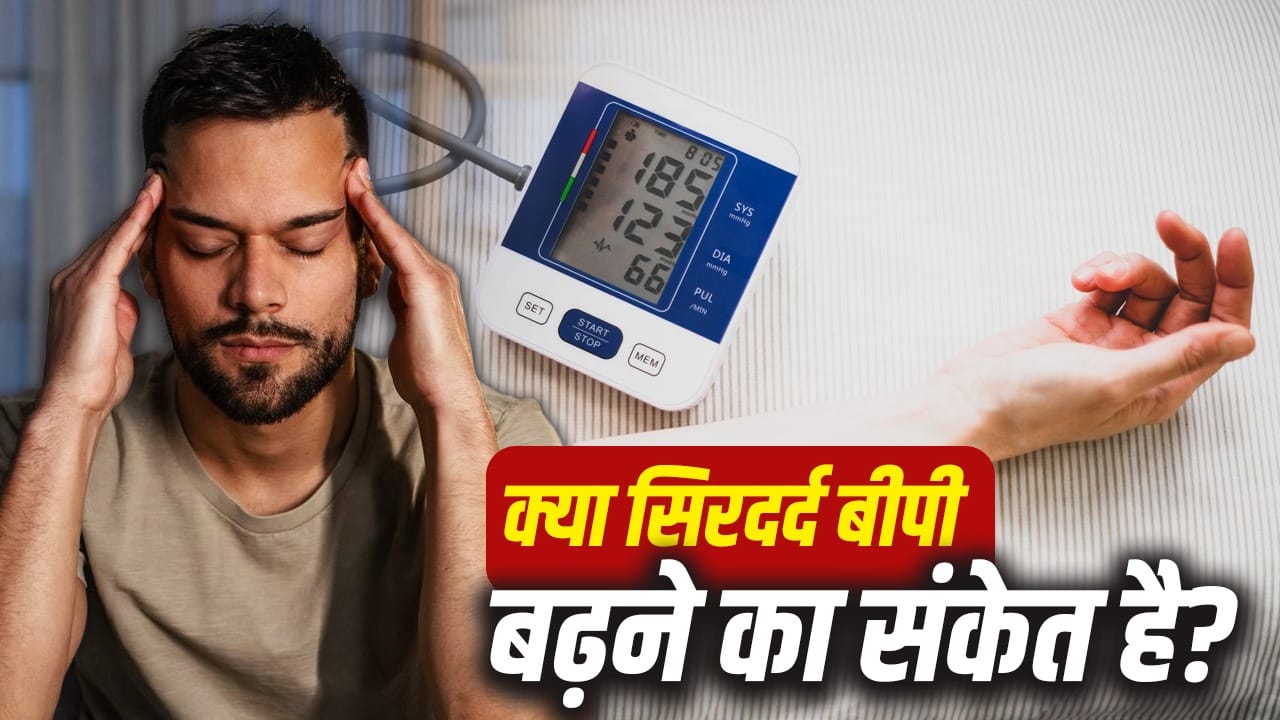
headache and blood pressure Image Credit source: Getty Images
In today’s time, the problem of high blood pressure is increasing rapidly. Many times people ignore headache considering it to be a result of normal fatigue, stress or lack of sleep. However, in some cases, frequent headaches can also be a sign of some health problem. High BP is often called a silent killer, because its symptoms are not always obvious. Many people do not realize that their blood pressure is high for a long time.
Poor eating habits, stress, lack of physical activity, obesity and wrong lifestyle are counted among the main causes of high BP today. If it is not identified in time, this heart, kidneycan affect the health of eyes and brain. In such a situation, a question arises in the minds of many people whether frequent headache can be related to increased blood pressure. Let us know what is considered to be the relationship between headache and high BP and which signs should not be ignored.
Can frequent headaches be a sign of high BP?
World Health Organization (WHO) According to, not every headache is caused by high blood pressure. Stress, migraine, lack of sleep, dehydration and many other reasons can be behind headache. However, in some cases, extremely high blood pressure may be associated with headaches. If a person is having frequent headaches and also finds increased blood pressure, then it should be taken seriously. High BP cannot be predicted on the basis of headache alone. To know the correct condition, it is necessary to check blood pressure. Therefore, in case of frequent headaches, it is better to consult a doctor instead of trying to figure out the results yourself.
In which symptoms should one get BP checked immediately?
If you experience dizziness, blurred vision, chest pain, difficulty breathing or extreme fatigue along with frequent headaches, then your BP should be checked.
Apart from this, people who have a history of high BP in their family or who have diabetes, obesity or heart disease, should get their blood pressure checked regularly. The risk of complications can be reduced by timely identification.
What to do to control high BP?
To control high BP, take a balanced diet and limit salt intake. Try to get regular exercise, adequate sleep and reduce stress.
Maintain distance from smoking and alcohol and get your blood pressure checked from time to time. If the doctor has prescribed medicine, it is important to take it regularly.