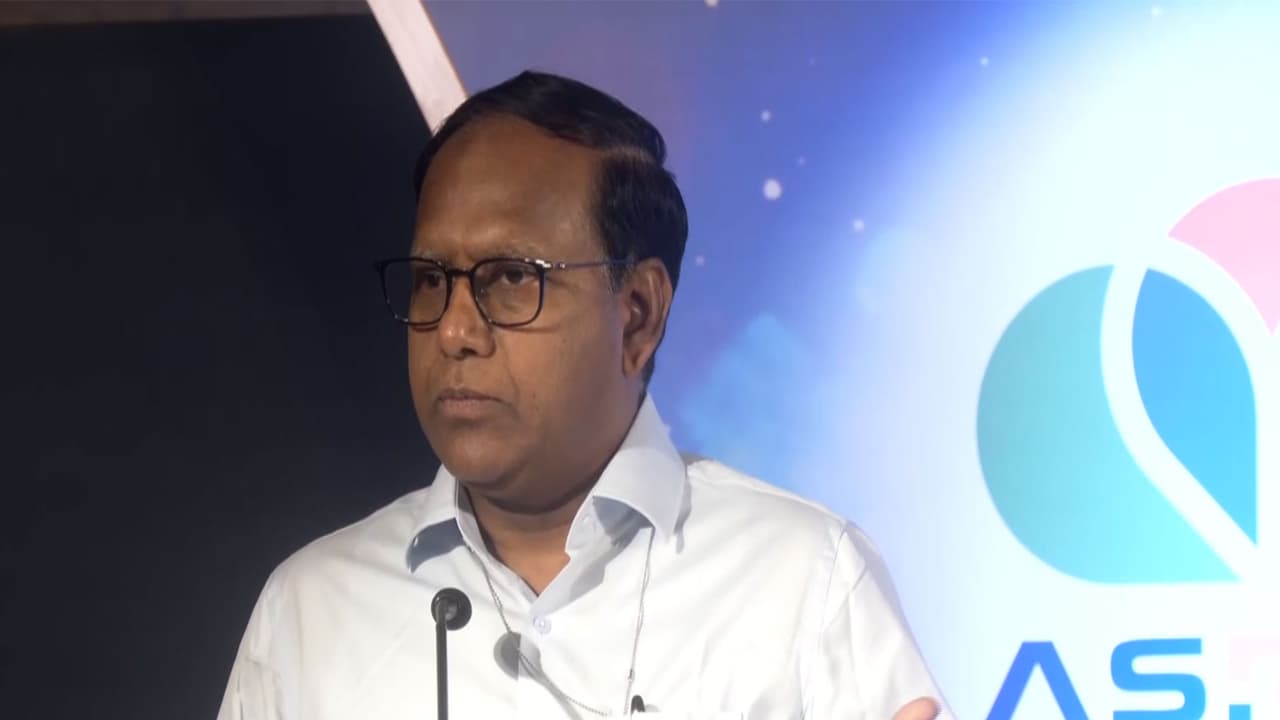
DFS Secretary M Nagaraju said ARCs face major challenges like limited capital, legal delays, and valuation mismatches. He noted regulatory overlaps also create delays, though ARCs are vital for managing NPAs and strengthening bank balance sheets.
Asset Reconstruction Companies (ARCs) continue to face major operational and regulatory challenges, including limited capital availability, prolonged legal delays, borrower resistance and valuation mismatches with banks in resolving stressed assets, Secretary, Department of Financial Services (DFS), Ministry of Finance, M Nagaraju said today.
“I am also aware ARCs face multiple hurdles in acquiring and resolving NPAs. Limited capital often restricts their ability to buy large volumes of distressed assets, especially when banks demand higher prices,” he said while addressing a formal launch of ASREC India Limited logo in the national capital.
He further added that the regulatory overlaps between the Securitisation and Reconstruction of Financial Assets and Enforcement of Security Interest Act (SARFAESI) Act, RBI guidelines and the IBC create delays and confusion. “Legal challenges including prolonged court cases, borrower resistance further slow recovery. Additionally, valuation mismatches between the banks and ARCs also reduce transactions as banks hesitate to sell at steep discounts,” he said.
ARCs’ Vital Role in Financial Ecosystem
Despite these challenges, Nagaraju said ARCs continue to play a vital role in India’s financial ecosystem by enabling banks and financial institutions to manage non-performing assets (NPAs) and strengthen balance sheets.
“By acquiring stressed loans, ARCs in fact help banks to clean up their balance sheets and to concentrate on fresh lending. This strengthens liquidity, supports economic growth and enhances overall financial stability,” he said.
The DFS Secretary said ARCs provide flexible mechanisms for resolution and recovery, including debt restructuring, enforcement of security interests and debt-to-equity conversion. “Their presence complements IBC, offering an alternative and often faster route to resolving distressed assets,” he added.
Government and RBI Reforms
Nagaraju highlighted that the government and the Reserve Bank of India (RBI) have introduced several reforms to strengthen the ARC ecosystem and broaden investment participation in the sector.
“FDI norms were liberalized to permit 100 per cent FDI in ARCs through automatic route. In addition, foreign portfolio investors have been allowed to invest up to 100 per cent of each tranche in security receipts issued by ARCs, broadening the investor base for security receipts,” he said.
He further noted that governance norms have also been strengthened through enhanced disclosure requirements and fit-and-proper criteria for sponsors to improve transparency and accountability in the sector. RBI has streamlined operational guidelines and empowered ARCs to act as resolution applicants under the Insolvency and Bankruptcy Code (IBC) framework.
The DFS Secretary said recent amendments to the IBC have further strengthened the stressed asset resolution process through faster timelines, stronger creditor protections and improved procedural clarity.
“These amendments have also introduced group insolvency framework enabling coordinated resolution of interconnected corporate entities to avoid fragmented resolutions and better preserve enterprise value,” he said.
He added that the framework for cross-border insolvency has also been introduced to deal with the resolution of corporate debtors having assets across multiple jurisdictions.
Catalysts for Economic Renewal
Nagaraju said ARCs are not merely financial entities but institutions that help revive distressed enterprises and restore economic value.
“They are catalysts of renewal, ensuring that distressed assets are transformed into engines of growth,” he said.
He also referred ASREC India Limited, one of the earliest RBI-registered ARCs, and notes its role in resolving stressed MSME accounts, which are often difficult for banks to handle independently. (ANI)
(Except for the headline, this story has not been edited by Asianet Newsable English staff and is published from a syndicated feed.)