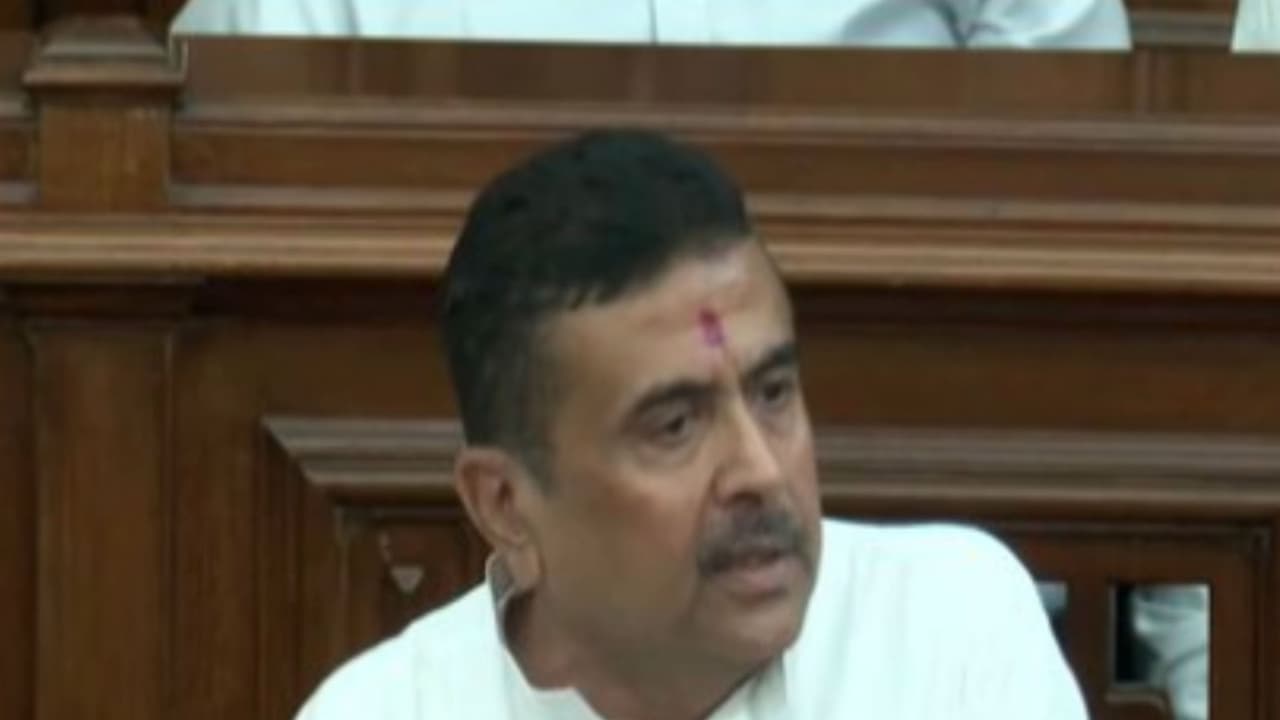
West Bengal Assembly passes ‘Public Safety Bill’ to curb organized crime. CM Suvendu Adhikari announced the implementation of Uniform Civil Code (UCC) in the state. Major changes have also been made in the OBC reservation list.
New law to curb organized crime in Bengal
Kolkata (West Bengal) [भारत]June 30 (ANI): The West Bengal Assembly on Monday passed some important bills including the ‘Public Safety and Control of Anti-Social Activities Bill, 2026’. ‘The West Bengal Public Safety and Control of Anti-Social Activities Bill, 2026’ was passed after 176 members voted in favor and 41 against it. Introduced along with ‘The West Bengal Maintenance of Public Order (Amendment) Bill, 2026’, the bill gives sweeping powers to the state administration to curb organized crime, “syndicate raj” and “hooliganism”.
‘The West Bengal Maintenance of Public Order (Amendment) Bill, 2026’ was also passed by the Assembly. The government said it felt the need for a new legal framework as existing provisions were “ineffective and inadequate” to deal with nefarious activities. The bill specifically targets individuals or groups involved in illegal mining, unauthorized sand extraction and activities that create fear or panic among the public. A key provision of the bill is preventive detention, which allows district magistrates and police commissioners to issue detention orders if a person’s activities pose a threat to public safety. Under this bill the offense will be cognizable and non-bailable.
Preparation to implement Uniform Civil Code
Apart from public safety measures, Chief Minister Suvendu Adhikari announced that the Uniform Civil Code (UCC) will be implemented in the state, similar to the framework adopted in Gujarat, Uttarakhand and Assam. Addressing the House, the Chief Minister said that the state government has started the process of framing a Uniform Civil Code and is committed to taking the legislation forward after completing the necessary procedural steps.
“The draft of the Uniform Civil Code (UCC) will be placed before the state cabinet on July 2. After cabinet approval, the bill will be introduced in the assembly in August,” the official said in the House.
Committee headed by Justice Ranjana Prakash Desai
The Chief Minister also announced the formation of a committee headed by former Supreme Court judge, Justice (retd) Ranjana Prakash Desai, which will draft the UCC Bill for Bengal. According to the Chief Minister, the committee comprises experts from various fields, including legal luminaries and academicians, who will examine various aspects of the proposed law before submitting their recommendations. He further informed the Assembly that the panel has been given one month’s time to submit its report to the government.
“The committee has been given one month’s time to submit its report. After receiving the committee’s report, the bill will be introduced in the Assembly in August,” he said. Reiterating the government’s commitment to implement the proposed law, the Chief Minister stressed that the state administration will move forward with the Uniform Civil Code after completing the legislative process. “The government is committed to bringing the UCC bill, and the Uniform Civil Code will be implemented in Bengal under any circumstances,” the official said.
Big change in OBC reservation
The Assembly also passed two important bills related to OBC reservation. These two bills are the ‘West Bengal Backward Classes (other than Scheduled Castes and Scheduled Tribes) (Reservation of Vacancies in Services and Posts) (Amendment) Bill, 2026’ and ‘West Bengal Backward Classes Commission (Amendment) Bill, 2026’.
These bills were introduced by Backward Class Development Minister Gaurishankar Ghosh. He said the government is reorganizing the OBC categories of the state in line with the directions issued by the Calcutta High Court. “The core of the bill is the 113 communities that have been left out of the OBC list, which was improperly added by the previous government,” Ghosh told ANI. “Now 66 communities have been included in the OBC reservation list without any category,” he said. As he said, the previous category system had been dissolved; Now only one category works, that is, OBC. Even the percentage of reservation quota has been reduced from 17% to 7%. Also, the 1993 law applicable to the West Bengal Backward Classes Commission has also been amended.
Addressing the Assembly, Ghosh said, “As per the direction of the High Court, all the communities included in the OBC list by the previous government have been removed without any survey. This was pure appeasement politics. After the completion of the survey, 66 communities have been added. The bills will also ensure that fake OBC certificates are not issued. The West Bengal Backward Classes Commission will conduct a survey on the actual status of OBCs.”
After discussion on both the bills, during the voting process, rebel TMC MLAs including LoP Ritabrata Banerjee staged a walkout and boycotted the vote, but 5 to 6 MLAs from their group participated in the voting process. A total of 186 MLAs voted in favor of the bills, while 17 voted against them and six members abstained.
The State Government, in consultation with the West Bengal Backward Classes Commission, shall determine the percentage of posts to be reserved for candidates belonging to Other Backward Classes. Provided that the State Government may, from time to time, by notification in the Official Gazette, increase the percentage in such a manner that the total reservation for the Scheduled Castes, Scheduled Tribes and Other Backward Classes does not exceed fifty per cent. The Backward Classes Commission will investigate, and if it feels that any community should be included, it may also make recommendations for the consideration of the State Government. (ANI)
(Except for the headline, this story has not been edited by Asianetnews Editorial staff and is published from a syndicated feed.)