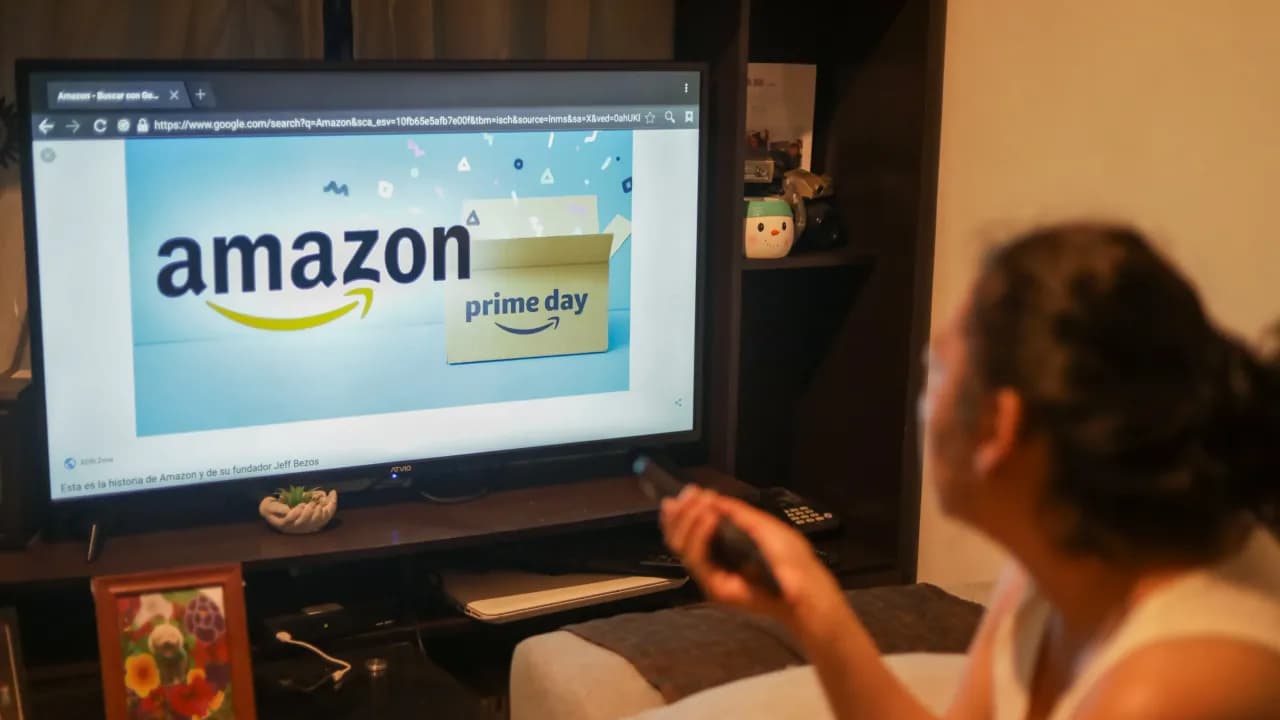
AMZN stock dropped on Monday after a Wall Street Journal report said the FTC plans to sue the company over how it prices ads on its retail site.
- According to WSJ, the FTC and a bipartisan group of more than 20 state attorneys general intend to file in Seattle federal court.
- Amazon is the world’s third-largest digital-ad platform, behind Google and Meta, and earned $68.6 billion from ads in 2025.
- The case would be the FTC’s third major action against Amazon.
Shares of Amazon.com (AMZN) fell over 3% on Monday following reports that the Federal Trade Commission planned to sue the company the same day over how it priced ads on its retail site.
The Wall Street Journal, citing agency officials, said the case would accuse Amazon of manipulating what businesses paid to promote products and of collecting tens of billions of dollars for itself over seven years. Amazon did not immediately respond to Stocktwits’s request for comment.
AMZN stock is now on track for its worst day since late July.
The Planned Case
According to WSJ, the FTC and a bipartisan group of more than 20 state attorneys general intend to file in Seattle federal court. Officials said Amazon deceived advertisers by secretly lifting the minimum price they had to pay to place product ads.
WSJ named New York, California and Florida among the states expected to join. States can seek civil penalties and may try to recover some of the extra costs advertisers allegedly paid.
The case would be the FTC’s third major action against Amazon. The company paid $2.5 billion last year to settle claims that it misled shoppers into Prime and made cancellation difficult. That September 2025 deal split $1.5 billion for consumer refunds, capped at $51 per eligible member, and a $1 billion civil penalty. Amazon did not admit wrongdoing.
A separate monopolization lawsuit is headed for trial next year. That 2023 case is now set for 2027 in Seattle.
Merchants bid for ads that push their brands higher when shoppers search. WSJ said Amazon long used an auction common in Silicon Valley, meant to draw more bids and keep winners from overpaying. That design usually lowered the price a merchant paid.
Officials told WSJ that Amazon began changing the system in 2018. To raise prices, the company inserted its own bid — a “soft reserve” — above the runner-up, which under the auction rules increased what the winner paid. Amazon knew merchants’ competing bids and did not disclose the new practice, officials said.
Ad executives tracked the “surcharge” and tried to keep the tactic quiet, WSJ reported. They first used it on busy shopping days, when sellers might blame higher rates on fierce competition. Officials said Amazon’s aim was to keep more of the value from sales that ads produced.
In recent years, officials told WSJ, Amazon raised the minimum price in 70% to 80% of auctions. On major shopping days, the strategy allegedly lifted pay-per-click costs by 50%. Amazon’s public advertiser page, last updated in April as per WSJ, says it uses “reserve pricing” that “may affect the cost of your ad” and that some reserves set a bid threshold.
Why It Matters
Amazon is the world’s third-largest digital-ad platform, behind Google and Meta, and earned $68.6 billion from ads in 2025. In the second quarter of 2026, ads brought in $19.8 billion, up 26% from a year earlier. Sponsored product listings are the core of that business and a high-margin profit engine for sellers who treat visibility as the price of competing on Amazon.
The planned FTC suit fits a wider government push on digital advertising. The Justice Department has sued Google over its ad practices. A federal judge in 2025 found Google a monopolist in publisher ad markets, and a Virginia court is weighing whether Google must sell parts of that business.
While GOOG traded 2.2% lower at the time of writing, META was down 1%. Shares of advertising technology company Trade Desk (TTD), however, rose 2.4% on the report.
How Did AMZN Retail Traders React?
On Stocktwits, retail sentiment around AMZN stayed within ‘bearish’ territory over the past 24 hours, while message volume stayed at ‘low’ levels.
A Stocktwits user said they are buying the dip in AMZN.
View this Stocktwits post
Another user opined that it’s “about time somebody stands up to them.”
View this Stocktwits post
AMZN stock has gained 12% year-to-date.
For updates and corrections, email newsroom[at]stocktwits[dot]com.<