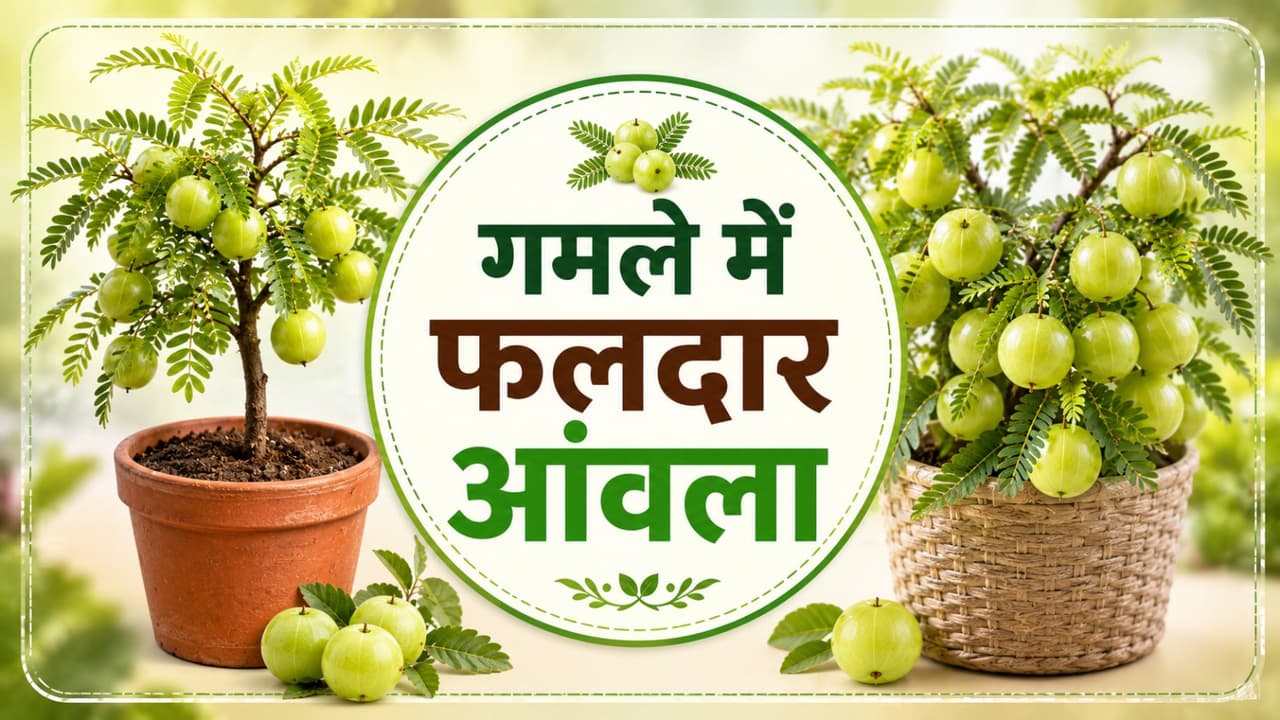
How to Grow Amla at Home: Want to grow Amla in a pot at home? Know the right variety, pot size, soil, water, sunlight and the golden rule of cross-pollination necessary to get fruits.
The internet is full of information about the benefits of Amla. If you also like to eat it but do not have time to bring it from the market, then it should be grown at home. Many people think that a garden is required to plant Amla but it is not so at all. It can be grown in the right variety, adequate depth and appropriate pot. If you plant a grafted or budded plant, it starts bearing fruits in 3-5 years, whereas if grown from seeds, it takes up to 10 years. Know by which technique you can get Amla fruits.
Which pot to choose for growing Amla?
- 6-8 inch small pot
- 12-16 inch big pot
soil for gooseberry plant
- 2 parts normal soil
- 1 part vermicompost
- 1 part coarse river sand
Which varieties to choose for home?
If you want early fruit, it is better to grow a grafted or budded plant rather than from seed. It is not necessary that plants grown from seeds always bear fruit. Apart from this, you can grow varieties like NA-7, Krishna NA-5, NA-10 Balwant, Francis at home.
Read this also- Make simple kurti glamorous, get 7 stylish back designs stitched on Rakshabandhan
When to water Amla plant?
- New plant requires water every 4-5 days in summer
- Watering only when the soil is dry
- Water just enough to drain off excess water.
- Maintain consistency and balance in irrigation
Read this also- From tea leaves to banana peel, make free fertilizer for plants with these 4 things
What to do if Amla plant does not bear fruit?
It is easy to plant Amla plant but the biggest problem is for the fruit. People often complain that it does not bear fruit even after proper care. In such a situation, never plant one plant, plant two plants together. This is the golden rule of growing Amla.
Benefits of planting two trees
- Cross pollination proves to be very beneficial for better pollination of Amla plant. When two plants are present nearby, pollen grains easily reach each other through wind, insects and bees.
- At the same time, when the pollination process is completed, the falling of flowers stops. Due to this almost every flower turns into fruit.
Tips for growing Amla
- Grow grafted plants instead of seeds
- Choose a big pot for a fruit plant
- Provide 6-8 hours of direct sunlight daily
- Do not allow water to accumulate in the soil
- Use different types of plants for cross pollination
- Remove dry leaves from time to time
- Use insecticides to protect against insects