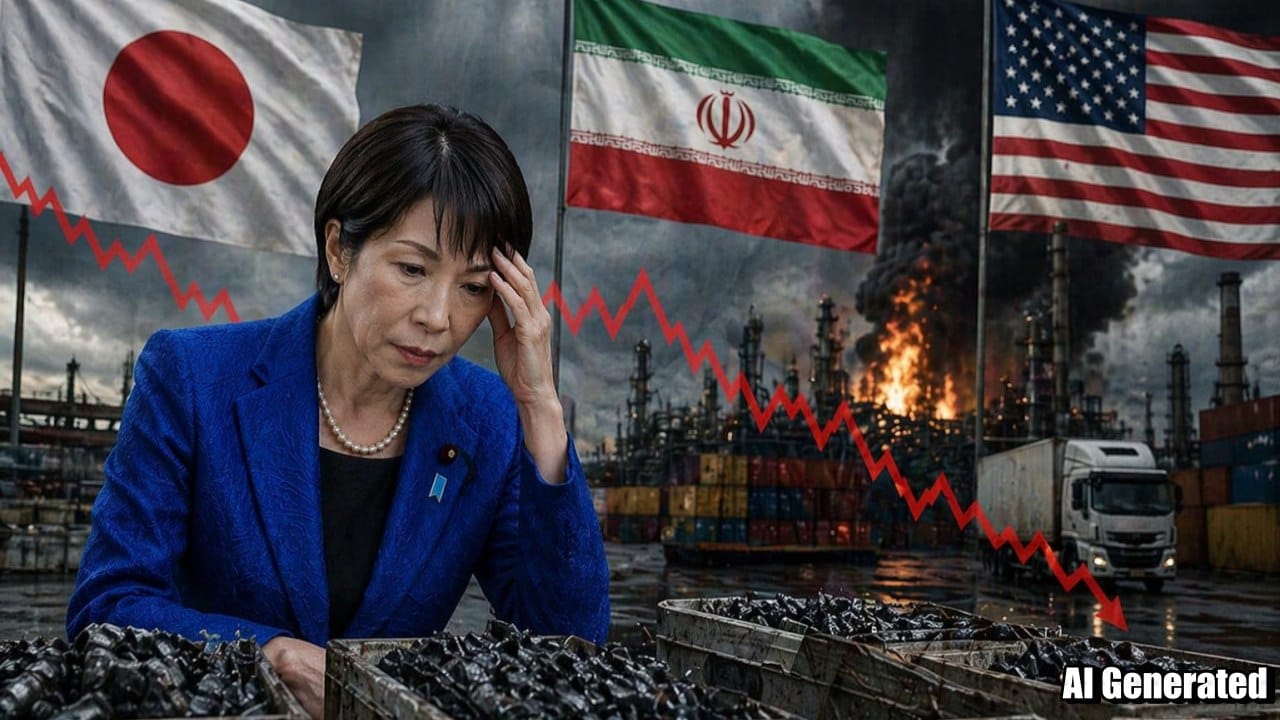
The tension between Iran and America is not only being seen in the entire Middle East, its effect is also visible on the developed country of the world, Japan. Due to the ongoing tension in the Middle East, Japan’s trade deficit has reached 1700 billion yen (about Rs 1 lakh crore) in the financial year 2025-26. Giving this information on Wednesday, the government said that trade deficit has been recorded for the fifth consecutive financial year.
Not only has the trade deficit increased, its impact has also been seen on its export-import figures. According to Finance Ministry data, exports increased by four percent compared to last year while imports increased by only 0.5 percent.
Impact of American tariff visible
US President Donald Trump’s high tariffs on imports from Japan and other countries have proved to be a major blow to global automotive manufacturers and other industries. According to the data, Japan’s total exports to the US declined by 6.6 percent this fiscal year, while motor vehicle exports declined by 16 percent. Japan’s trade surplus in March, however, increased by 26 percent compared to a year earlier, indicating recovery of the export sector from previous shocks. In March, exports increased by about 11.7 percent and imports by about 10.9 percent.
The Iran war left the right stone unturned
Japan had not even been able to bear the brunt of America’s tariffs, but the Iran war added fuel to the fire. The possibility of disruption in oil supplies from West Asia due to the Iran war also remains a matter of concern for Japan. Japan imports almost all of its oil and gas needs. Apart from energy, oil shortages could also affect the production of naphtha-based products that are important for medical supplies and other plastics.
How many days of oil is left with Japan?
However, the Japanese government has assured the public that the country has 254 days of oil reserves for such an emergency. To keep the supply stable, the government can supply some from this stock. Apart from this, Japan is also looking for an alternative to the Strait of Hormuz, the main route for supplying most of Asia’s oil and gas.