Security forces and civil admin are conducting intense mock drills across J&K to test preparedness for the Amarnath Yatra. The drills, involving multiple agencies, aim to ensure foolproof, multi-layered security for the 57-day pilgrimage.
Security forces and the civil administration have intensified mock drills across Jammu and Kashmir ahead of the annual Shri Amarnath Ji Yatra, scheduled to commence on July 3, to test their preparedness and ensure foolproof security arrangements for the pilgrimage.
The exercises are being conducted to assess the preparedness, coordination and emergency response capabilities of security forces and civil agencies to ensure the safe and smooth conduct of the annual pilgrimage.
Comprehensive Preparedness Exercises
The mock drills are being carried out at various locations along both the Pahalgam and Baltal routes, besides major transit camps, base camps and other sensitive locations associated with the pilgrimage.
Personnel from the Central Reserve Police Force (CRPF), Jammu and Kashmir Police, Army and other sister security agencies, along with health services, fire and emergency departments and the civil administration, are participating in the exercises.
The drills are designed to test the response of security forces and civil agencies to a range of emergencies, including terror attacks, improvised explosive device (IED) threats, medical emergencies, fire incidents, natural disasters and crowd management scenarios.
Officials said the exercises are also aimed at evaluating inter-agency coordination, communication systems, evacuation procedures and response time during emergencies.
Security personnel have been rehearsing rescue operations, casualty evacuation, traffic management, emergency medical response and disaster management protocols to ensure a swift and coordinated response in the event of any contingency.
Authorities said the objective of the mock drills is to identify operational gaps, strengthen coordination among agencies and reinforce the overall security grid before the arrival of pilgrims.
Multi-Layered Security Grid
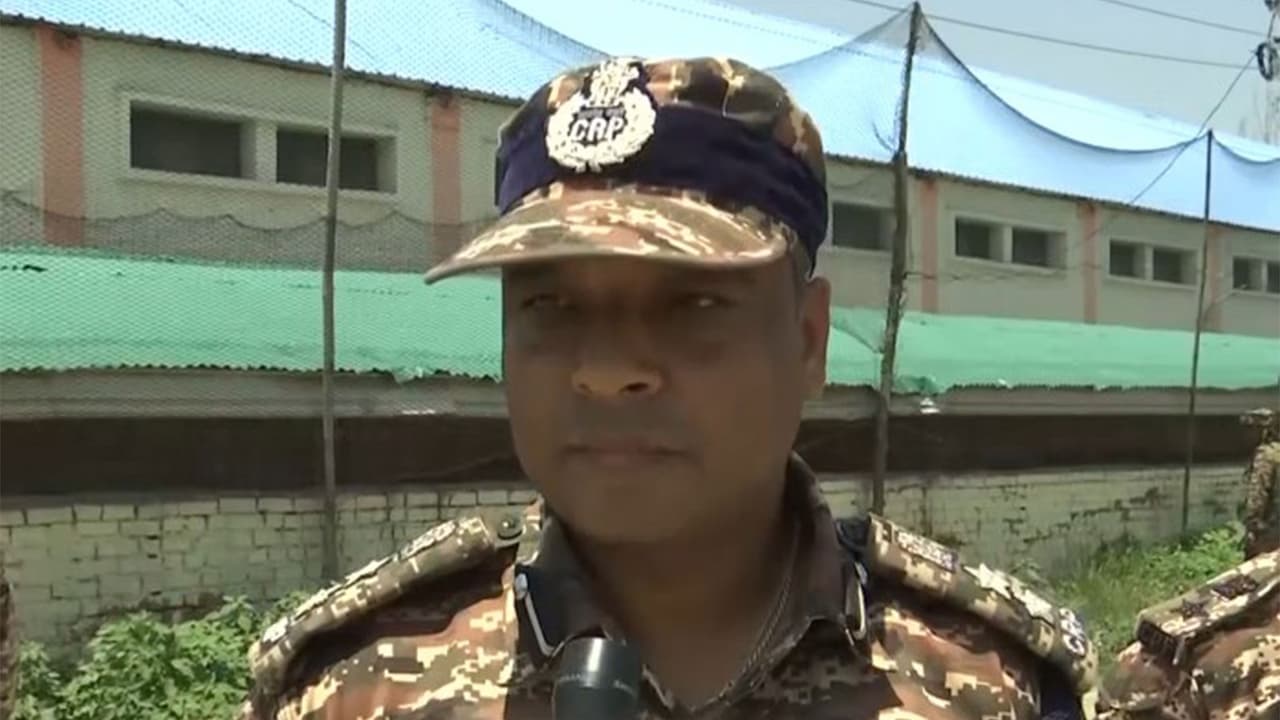
Speaking to ANI, Devendra Pal, Commandant of the 46th Battalion of the CRPF, said, “Look, this time the Amarnath Yatra is of 57-58 days. Overall, if seen, it is an affair of more than 60 days. Different intelligence agencies have analysed all the threats related to this yatra. Their feedback has been received, and our own assessment has also been taken into account. All agencies, including the CRPF, Jammu and Kashmir Police, and other sister agencies, have put in place a multi-layered security arrangement. The security has been planned in three tiers: Tier-1, Tier-2, and Tier-3. In Tier-1, our lifelines, the National Highways from Jammu to Pahalgam and Baltal, along with other linked roads, have been secured. In Tier-2, the hinterland has been secured. In Tier-3, the Tactical Operating Bases (TOBs) operating on the higher ridges have also been integrated into the security grid with proper coordination. Overall, this year’s security arrangement involves multiple layers and multiple agencies working with full coordination and cooperation. Therefore, we can say that the security level is top-notch.”
Purpose of Mock Drills
“Yes, the purpose of mock drills is to ensure that our jawans and all our teams are as prepared as possible for real-life situations. Since multiple forces are involved, it is important to strengthen mutual coordination among them. Mock drills help us understand and respond effectively to real-time ground situations. They also enable us to identify any shortcomings in our preparedness so that they can be rectified promptly. As you mentioned, mock drills are being conducted smoothly at different levels–in various camps, along the National Highway, and in the hinterland. They are being carried out across all key locations to ensure comprehensive preparedness.”
About the Annual Pilgrimage
The annual pilgrimage to the holy Amarnath cave shrine, situated at an altitude of around 3,880 metres in the Himalayas of south Kashmir, is one of the country’s most significant religious pilgrimages. Devotees undertake the yatra to pay obeisance to the naturally formed ice Shivling, believed to symbolise Lord Shiva.
The 57-day pilgrimage this year will commence simultaneously from the traditional 48-km Nunwan-Pahalgam route in Anantnag district and the shorter but steeper 14-km Baltal route in Ganderbal district on July 3. The yatra will conclude on August 28, coinciding with the festival of Raksha Bandhan.
Authorities have put in place a multi-layered security arrangement, including the deployment of thousands of security personnel, round-the-clock surveillance, road opening parties, anti-sabotage checks, drone monitoring and quick reaction teams to ensure a peaceful and incident-free pilgrimage.
The ongoing mock drills form a crucial part of these comprehensive security preparations aimed at safeguarding the thousands of pilgrims expected to visit the holy cave shrine during the annual yatra. (ANI)
(Except for the headline, this story has not been edited by Asianetnews Editorial staff and is published from a syndicated feed.)