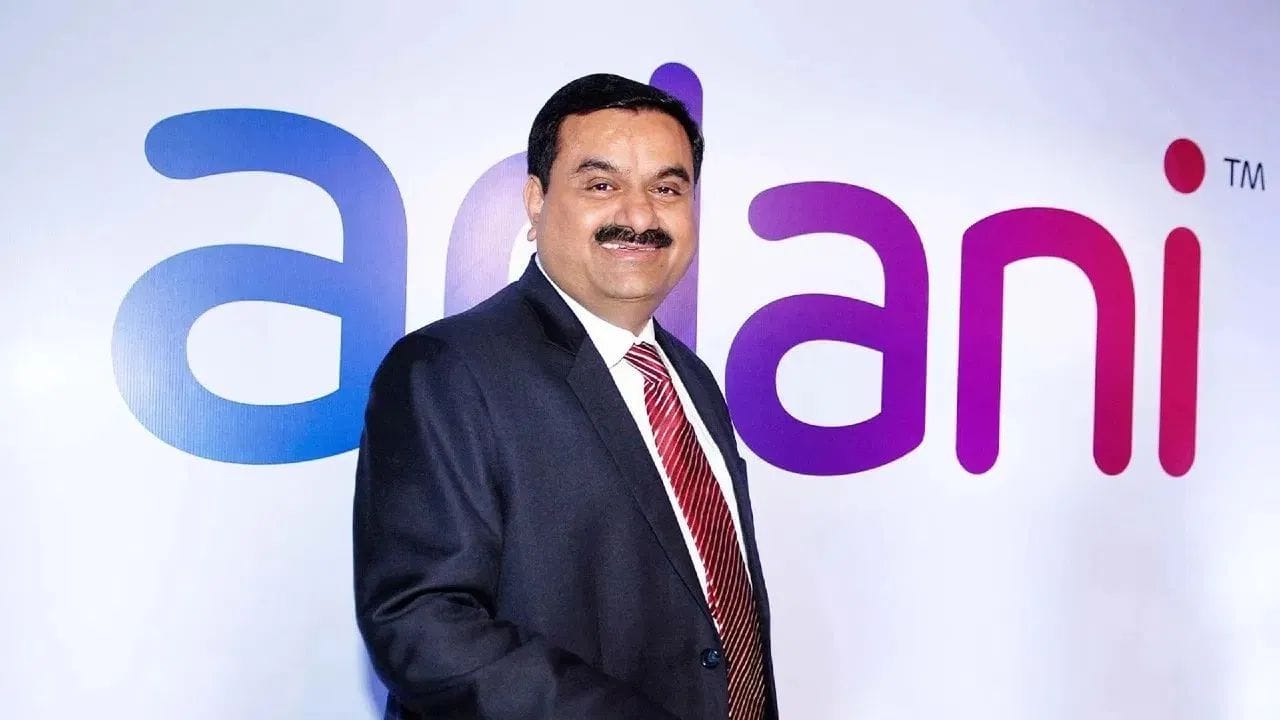
Adani Group Chairman Gautam Adani
After Israel and Sri Lanka, now India’s Gautam Adani is going to enter Britain’s port sector. Adani Ports and Special Economic Zone (APSEZ), India’s largest private port operator, is considering bidding for Associated British Ports (ABP), the largest operator of such facilities in the UK, people with knowledge of the matter said in an ET report.
Veteran businessman Gautam Adani wants to expand his port business with the aim of becoming the world’s largest transport utility company by 2031. Currently, about 63.9 percent stake (controlling stake) in ABP is available for sale, which is held by two Canadian pension funds. Both these funds have appointed bankers to sell their stake. Canada Pension Plan Investment Board (CPPIB) holds 30 per cent stake and Ontario Municipal Employees’ Retirement System (OMERS) holds 33.88 per cent stake in ABP.
ABP is the owner of 21 ports
According to the ET report, ABP owns and operates 21 strategically important ports in England, Scotland and Wales. These include the UK’s largest port ‘Immingham’ in terms of tonnage and the country’s number one export port ‘Southampton’. Every year 40 billion pounds are exported from Southampton. ABP is also a partner in the offshore wind industry and provides operations and maintenance (O&M) facilities for more than 50 percent of the sector’s activities. An APSEZ spokesperson said that we continuously assess opportunities that align with our long-term strategy and create sustainable value for all stakeholders.
Good earning from pilotage
A company spokesperson said that as a policy, we do not comment on market speculations or rumors. Other shareholders of ABP include Singapore’s sovereign wealth fund GIC (20 percent), Kuwait Investment Authority-owned Rain House Infrastructure (10 percent) and Anchorage Ports LLP, owned by asset manager Hermes Infrastructure Fund. The ports run by ABP handle about one-fourth of the country’s maritime trade.
According to the ET report, in 2025, these 21 ports handled 42.5 million tonnes (MT) of bulk cargo and 3.1 million units of unitized cargo (like containers and roll-on, roll-off), generating revenue of £819.8 million and operating profit of £586.5 million. A large portion of ABP’s revenue comes from customer contracts, which provide a fixed level of revenue regardless of traffic or volume. ABP is the statutory harbor and river authority for most of its ports. As a result, it earns significant income from pilotage and conservancy services, which is also an area of focus for APSEZ.
Adani’s port network
This company of Adani runs a network of 15 multi-commodity ports in India, which have a cargo handling capacity of 653 million tonnes (mt). Apart from this, it also operates four international ports namely Haifa in Israel, Dar es Salaam in Tanzania, Colombo West International Terminal in Colombo and North Queensland Export Terminal in Australia with a capacity of 144 mt. In FY26, APSEZ handled 501 mt of cargo. The port operator aims to increase cargo handling capacity to 1 billion tonnes by 2030, and expects to handle 850 MT of cargo by then. It also plans to expand its marine services business by increasing its fleet of tugs and offshore support vessels from the current 136 to over 200.
Investment of Rs 1 lakh crore in five years
APSEZ has said it plans to invest up to Rs 1 lakh crore over the next five years to expand capacity, of which Rs 63,000 crore has been earmarked to expand the domestic ports business. The capital expenditure (capex) for the international port expansion has been fixed at Rs 7,000 crore, which is mainly for the construction of the second phase of the Colombo Terminal. This capital expenditure does not include strategic mergers and acquisitions. Although the port operator had cash and cash equivalent assets of Rs 12,193 crore at the end of March, it has a total debt of Rs 55,103 crore.