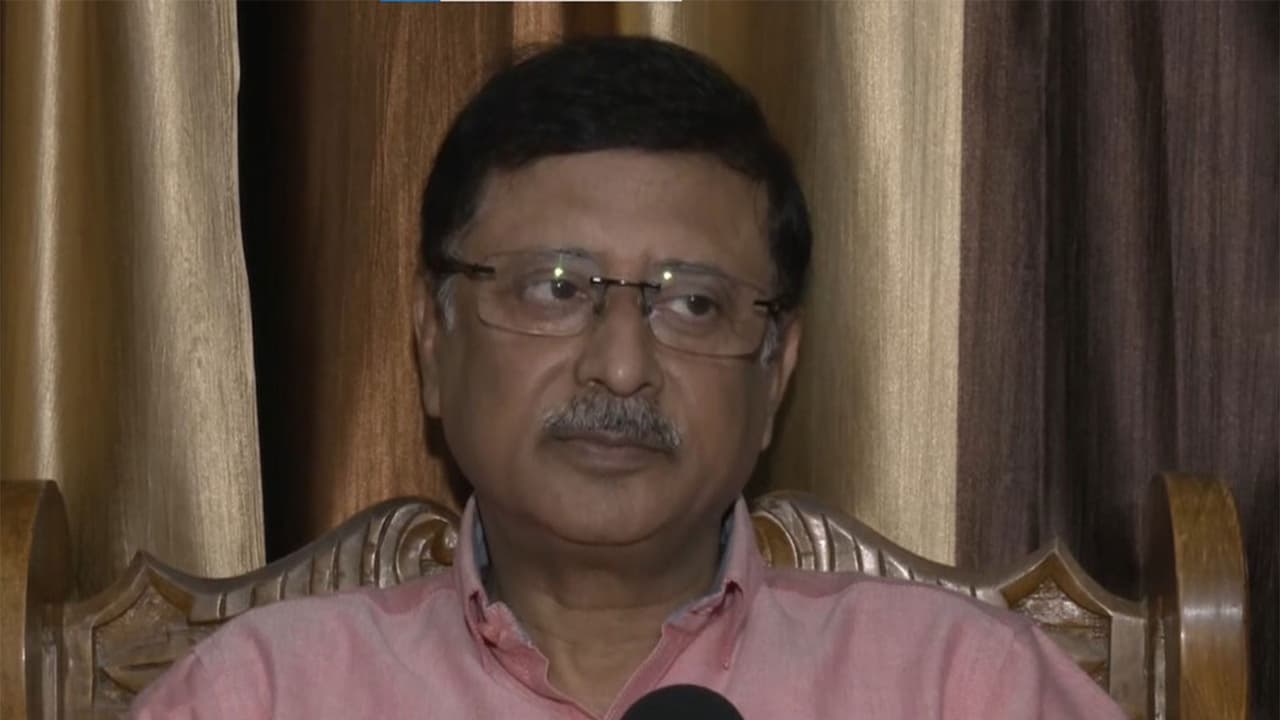
Former High Commissioner of India to Canada Sanjay Kumar Verma has proposed two mechanisms to save India-Canada relations. He said relations are now normalizing and talks have improved trust. India is strongly against international organized crimes.
Patna (Bihar) [भारत]July 18 (ANI): India’s former High Commissioner to Canada Sanjay Kumar Verma has proposed two institutional mechanisms to “save” India-Canada relations and help prevent diplomatic disputes in the future. He stressed that relations are now moving towards normalcy. Speaking to ANI, the former envoy said the dialogue is important to ensure that isolated incidents do not derail the broader bilateral ties. Verma said, “Relations are moving towards normalcy and they need to move further. Communication is very important. Whenever tension arises in communication and both parties stop talking to each other, even the best of relationships get ruined.”
Two tips to save relationships
Verma suggested two structural changes to protect the partnership. The first he called “ring-fencing”, which involves creating boundaries so that outside events do not affect the relationship without prior negotiation. The second is an “Advance Warning System”, which is an institutionalized platform between the two countries so that potential issues can be raised early.
He said, “Whenever such issues are going to arise, there should be some forum, some institutional mechanism between the two countries, through which it can be said: ‘Look, this is being heard; can we consider this further?'”.
He further said, “If we implement these two things, we can largely separate our bilateral affairs and bilateral relations from other things so that they can continue to move towards new dimensions.”
India’s stance on Nijjar massacre and international crime
Addressing the earlier diplomatic standoff over the killing of Hardeep Singh Nijjar, Verma highlighted India’s commitment to the rule of law and opposition to cross-border crime. He said, “To date, India is strongly against transnational organized crimes and cross-border crimes. India is a member of all global organizations where cross-border crime is discussed.”
The former envoy said India has always maintained that it cannot engage in such activities and has never refused cooperation when presented with legally credible evidence. He said, “But if it is just about investigating a fictitious story, it becomes very difficult; our resources get wasted. Our country is based on the rule of law.”
On the state of relations, Verma admitted that there was a lack of trust earlier, but highlighted its improvement since Prime Minister Narendra Modi’s visit to Canada last year. “Relations improve only when what you call ‘trust’ improves. So, as of today, I would say that trust is better now than when I and my colleagues returned to India,” he said.
India’s cooperation in ‘Operation Hard Ball’
Referring to the US-led “Operation Hard Ball” against Indian crime syndicates, Verma said India had cooperated with the US, Canada and several European countries in that international investigation. He termed the allegations of Indian non-cooperation as “baseless and false”.
According to the US Attorney’s Office, “Operation Hard Ball” is the result of the FBI’s years-long federal investigation into Indian crime syndicates involved in racketeering, targeted killings, shootings, extortion, smuggling of large quantities of narcotics across international borders and other crimes around the world, the impact of which is particularly felt in the Indian diaspora.”
The US Justice Department recently accused gangsters Lawrence Bishnoi and Goldie Brar of ordering the murder of Nijjar in Surrey, British Columbia in June 2023, and also announced charges against 37 defendants linked to a cross-border organized crime network as part of “Operation Hard Ball.” (ANI)
(Except for the headline, this story has not been edited by Asianetnews Editorial staff and is published from a syndicated feed.)