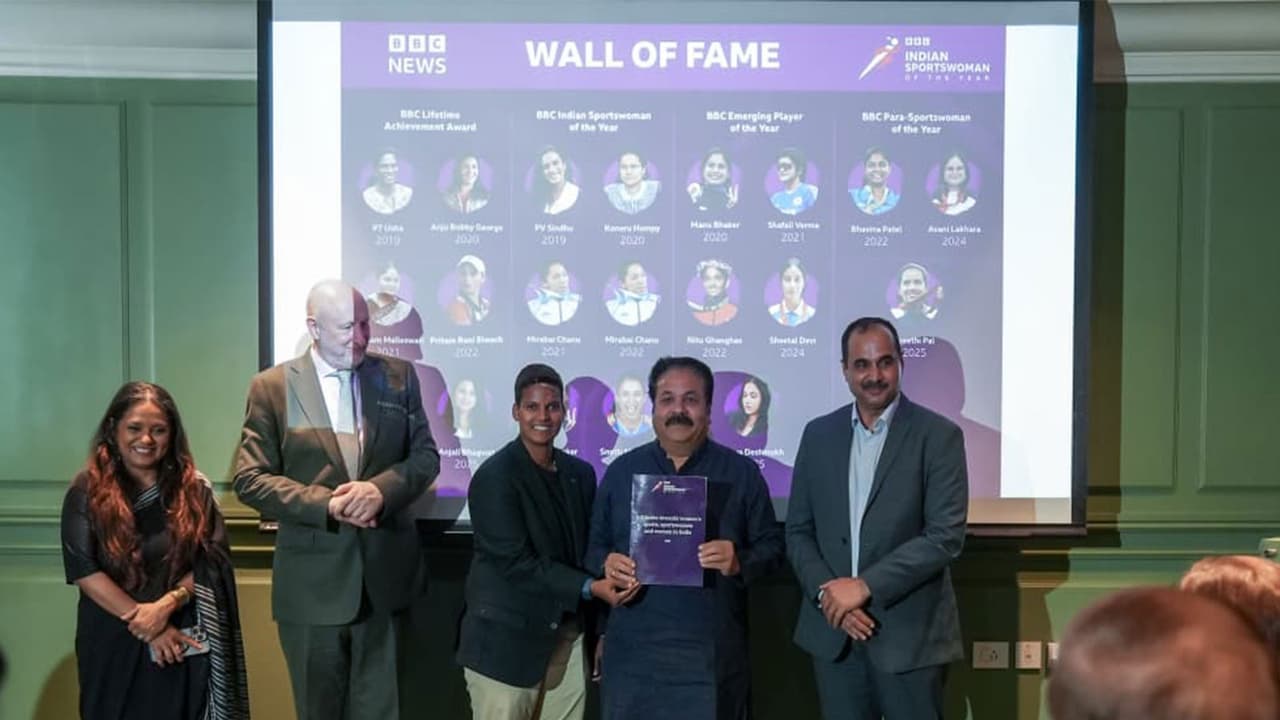
A BBC study finds women’s cricket participation doubled in 14 Indian states since 2020. 16% of women aged 15-24 now play, up from 6%. 1 in 4 young women have considered a sports career, and viewership for women’s sports is rising.
A new large-scale study commissioned by the BBC and Collective Newsroom suggests that women’s participation in cricket has doubled across the 14 Indian states surveyed since 2020, according to a press release.
Significant Growth in Participation
The research also finds that one in four young women aged 15 to 24 has considered sport as a career option.
Across the states included in the study, the proportion of women who say they play cricket has risen from 5 per cent in 2020 to 10 per cent.
Participation among young women has grown even more sharply. Sixteen per cent of women aged 15 to 24 now say they play cricket, compared with six per cent in 2020.
Cricket has also strengthened its position as the most played sport among women in the states surveyed. In 2020, it only narrowly edged past kabaddi, but the new figures suggest it is now firmly ahead.
Participation has increased across most regions. All but two of the states surveyed report a rise in the number of women playing cricket. In Uttar Pradesh, levels of participation have increased tenfold, from one per cent to ten per cent.
The gender gap in cricket participation across the states covered has also narrowed. The study indicates that for every woman who plays cricket, three men play the sport. In 2020, the ratio was one to five.
Impact on Career Aspirations and Viewership
The study suggests wider changes too: Twenty-six per cent of the young women surveyed, aged 15 to 24, say they have considered a career in sport, up from 16 per cent in 2020.
The highest levels are in Tamil Nadu (27 per cent), Madhya Pradesh (19 per cent) and Meghalaya (19 per cent).
Fifty-one per cent of respondents report following coverage of women’s sports in the past six months. This is now within 10 percentage points of men’s sports coverage.
Viewership levels for the precursor to the Women’s Premier League, the T20 Challenge, rose from 15 per cent in 2020 to 28 per cent watching the WPL now, across the states surveyed. These levels are approaching those for the men’s league.
The research suggests recent successes by Indian sportswomen may have contributed to this growth.
Support for the national team is now the main reason people say they follow or attend women’s sport, followed by support for individual sportswomen. In 2020, audiences were primarily motivated by a general interest in sport.
Participation in badminton has also risen among women surveyed, particularly in Punjab, Andhra Pradesh and Telangana.
Persistent Challenges and Barriers
The study identifies continuing challenges, too: 13 per cent of women who do not play any sport cite safety concerns as a barrier.
43 per cent of respondents say women’s sport is less entertaining than men’s.
Nearly half (46 per cent) believe sportswomen should be attractive, up from 37 per cent in 2020. Women are more likely than men to hold this view, the study suggests.
65 per cent of respondents who do not play sport cite lack of time as the main reason.
Rupa Jha, Editor-in-Chief and Co-founder of Collective Newsroom, said, “The findings show both progress and continuing barriers. While participation and viewership are rising fast, stereotypes and practical challenges remain. We hope this data will prompt further discussion and action to support women athletes.”
About the Study
The study builds upon the findings of a survey administered by global research and insights company Kantar between December 2025 and January 2026. Researchers interviewed more than 10,000 people, aged 15 and over, face-to-face (CAPI) across 14 Indian states.
Results were compared with a similar survey conducted in 2020 as part of the BBC’s Indian Sportswoman of the Year (ISWOTY) initiative, which honours and celebrates Indian sportswomen’s achievements. (ANI)
(Except for the headline, this story has not been edited by Asianet Newsable English staff and is published from a syndicated feed.)