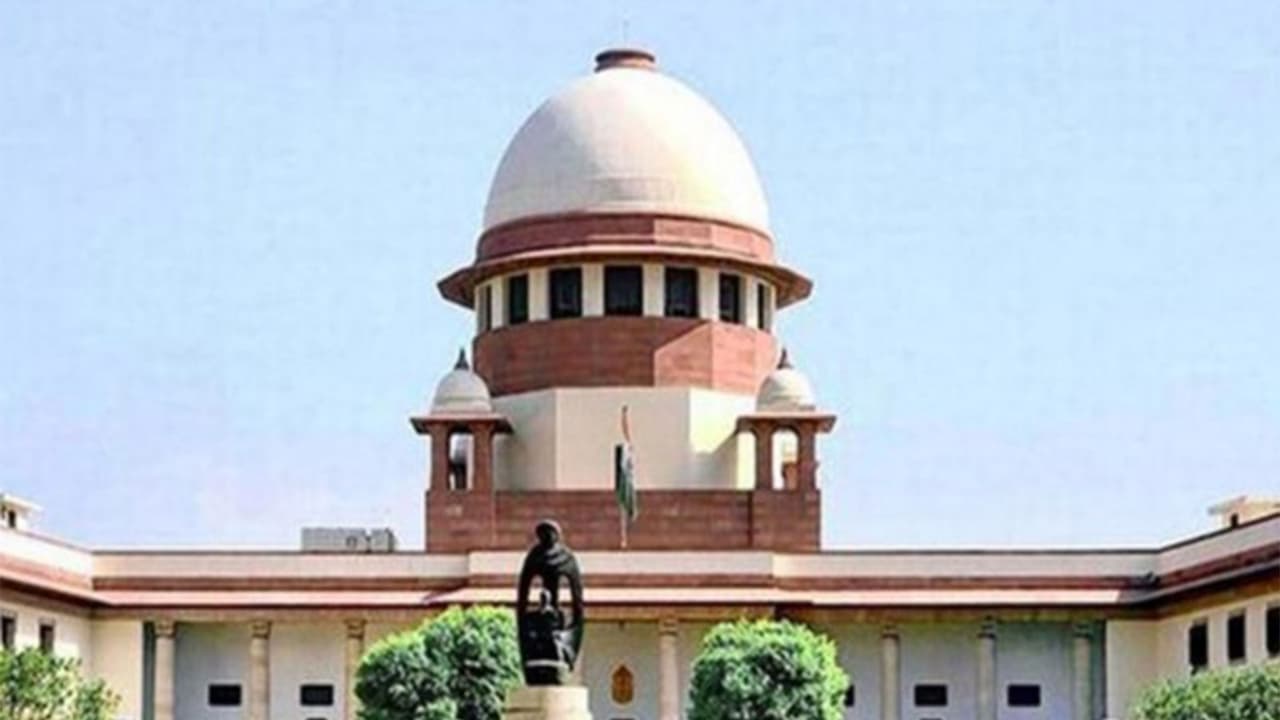
The Supreme Court held that OBC creamy layer status cannot be determined solely by parental income. It clarified that the parents’ post and status must also be considered, dismissing central government appeals on the matter.
A bench of Justices R Mahadevan and Pamidighantam Sri Narasimha delivered the ruling while dismissing civil appeals filed by the Central government – Ministry of Personnel and Training (MoPT) challenging judgments which had granted relief to certain OBC candidates in the Civil Services Examination.
The Legal Dispute
The Court was hearing appeals filed by the Union government against decisions of the CAT (the Central Administrative Tribunal) and High Courts, which had held that OBC candidates could not be excluded from reservation benefits solely because their parents’ salary income crossed the prescribed limit.
At the centre of the dispute was the interpretation of the Office Memorandum (OM) dated September 8, 1993, which laid down the framework for identifying the creamy layer among OBCs and a clarificatory government letter issued on October 14, 2004.
The 1993 OM created a structured scheme to identify socially advanced sections within OBCs. It excluded from reservation children of persons holding high-ranking government posts, such as Class I/Group A and certain Class II/Group B positions, treating such advancement in the service hierarchy as an indicator of social progression. The OM also introduced an Income/Wealth Test as an additional criterion of exclusion, particularly for categories where the equivalence of posts had not been formally determined.
The subsequent clarificatory letter of 2004 explained how the income test should operate in cases where parents were employed in organisations where equivalence with government posts had not been assessed. It stated that income from salary and other sources should be examined separately, and that children of parents whose income from either category crossed the prescribed threshold for three consecutive years could be treated as falling within the creamy layer.
According to the Union government, a combined reading of the 1993 OM and the 2004 clarification justified treating candidates as part of the creamy layer solely based on the salary income of their parents, particularly where those parents were employed outside the government service structure.
Supreme Court’s Verdict
Rejecting this approach, the Supreme Court held that the framework established by the 1993 policy cannot be reduced to a purely income-based test. The Court explained that the scheme of exclusion under the 1993 OM was primarily status-based, with income functioning only as a supplementary measure in limited circumstances.
“It is also evident from a comprehensive reading of the 1993 OM along with the clarificatory letter dated 14.10.2004 that income from salaries alone cannot be the sole criterion to decide whether a candidate falls within the creamy layer. The status as well as the category of post to which a candidate’s parent or parents belong is essential. The exclusion under Categories I to III of the Schedule is status-based rather than purely income-based… Mere determination of the status of a candidate as to whether he/she falls within the creamy layer or the non-creamy layer of the OBCs cannot be decided solely on the basis of the income,” it said.
Clarification Cannot Alter Parent Policy
The bench also emphasised that a clarificatory letter cannot alter the original policy framework laid down in the 1993 OM. “It is settled law that a clarificatory instruction cannot introduce a substantive condition that does not exist in the parent policy. If it travels beyond explanation and alters rights or liabilities, it ceases to be clarificatory and assumes the character of an amendment”, it said.
Warning against overreliance on income thresholds, the Court said interpreting the 2004 letter in isolation would distort the scheme of exclusion envisaged under the original policy. “Overemphasis on the 2004 Letter to the extent of making income alone determinative without regard to parental status or category of service would defeat the structural framework of exclusion envisaged under the 1993 OM. Thus, determination of creamy layer status solely on the basis of income brackets, without reference to the categories of posts and status parameters enunciated in the 1993 OM is clearly unsustainable in law,” the Court noted in its judgement.
The Court further observed that excluding candidates solely because their parents in PSUs or private employment earned higher salaries, while not applying the same logic to similarly placed government employees, would amount to unconstitutional discrimination. “Treating the children of those employed in PSUs or private employment… as being excluded from the benefit of reservation only on the basis of their income derived from salaries, and without reference to their posts… would certainly lead to hostile discrimination between parties who are similarly placed and would amount to equals being treated unequally,” the Court noted in its judgement.
Final Directives
Dismissing the appeals, the Supreme Court directed authorities to reconsider the claims of the affected candidates in accordance with the principles laid down in the judgment within six months. It also permitted the creation of supernumerary posts to accommodate candidates who qualify as non-creamy layer under the clarified framework. (ANI)
(Except for the headline, this story has not been edited by Asianet Newsable English staff and is published from a syndicated feed.)