New Delhi: The United Arab Emirates and other Gulf nations have found themselves drawn into the growing conflict in West Asia after the United States and Israel carried out strikes in Tehran that reportedly killed Iran’s Supreme Leader Ayatollah Ali Khamenei.
Iran responded by launching attacks on US bases in Qatar, Bahrain, Oman and Saudi Arabia. Explosions were later reported in several Gulf cities including Dubai and Abu Dhabi.
Tensions have increased further after an attack targeted the US consulate in Dubai. Flight delays and cancellations have also affected the region as airlines respond to missile threats. Tourists from several countries remain stranded in the UAE due to the uncertain security situation.
UAE considers defensive response
According to a report by Axios, the UAE has faced more than 800 projectiles during the escalation. Officials in the country are evaluating possible steps to protect against incoming drones and missiles.
The report cited two sources familiar with the matter who said the UAE is considering “defensive meaures” against Iran.
“The view in the UAE is that no country in the world would fail to evaluate its defensive posture under such circumstances,” the source was quoted as saying.
UAE stance on military operations
Despite the security concerns, the UAE government has said its territory will not be used for military action against Iran.
Minister of State for International Cooperation Reem bint Ebrahim Al Hashimy made the statement during a press briefing. According to the Emirates News Agency, she said the country respects international law and the United Nations Charter.
At the same time, she said the UAE retains the right to defend itself if necessary under international law.
Missile strikes hit Gulf cities
Iran’s missile attacks across the Gulf region have continued since the weekend. On Tuesday night, loud explosions were heard in Doha, Dubai and Abu Dhabi, according to AFP.
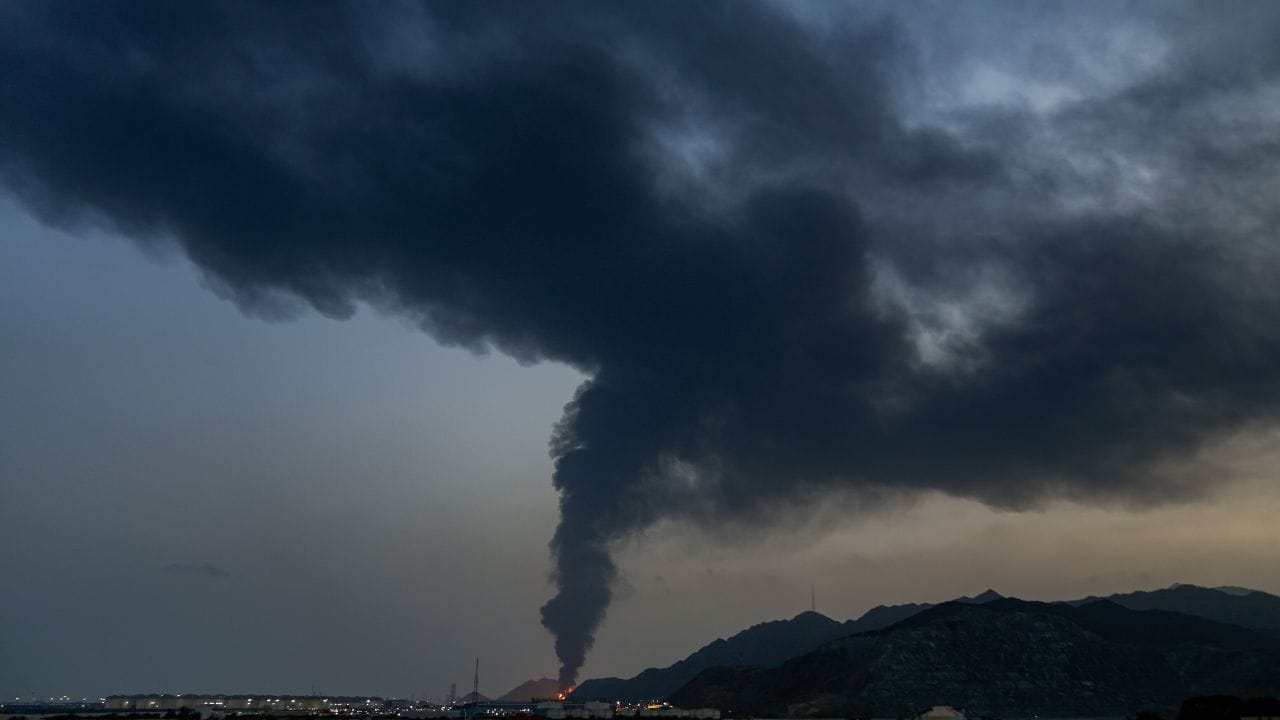
Some key locations in Dubai and Abu Dhabi suffered damage after the attacks. Satellite images showed smoke rising from parts of Dubai after a missile strike on March 2.
The UAE defence ministry said it had intercepted or dealt with 165 ballistic missiles, two cruise missiles and 541 drones during the attacks.
The Indian mission in Abu Dhabi said one Indian national working in the UAE was among those injured in the strikes.
Gulf nations condemn Iran strikes
Several Arab countries in the Gulf have strongly criticised Iran’s attacks. Some governments have warned that Tehran has crossed serious limits.
Qatar condemned Iran’s “crossing of all red lines” and warned that retaliation remained an option.
“But we have to make it very clear that attacks like these will not go unanswered and cannot go unanswered,” Qatar foreign ministry spokesperson Majed al Ansari said in comments reported by the BBC.
Meanwhile, fighting between Iran, Israel and the United States has intensified. The United States said it struck nearly 2,000 targets inside Iran. Explosions were also reported in Tehran and parts of Lebanon where Israel said it had targeted Hezbollah militants.