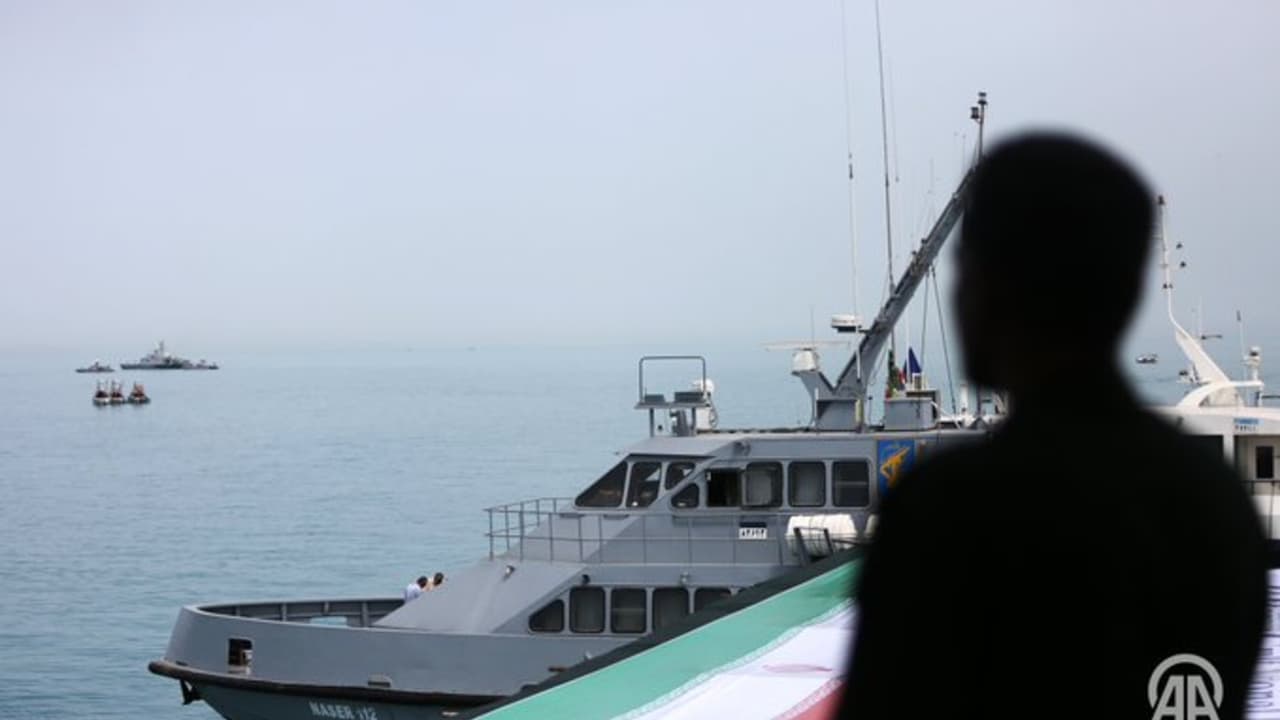
Indian sailors killed after Iranian missile attack in the Strait of Hormuz! DGMA issued red alert. Will this bloody path of the sea swallow more innocent lives? Know the whole horrifying reality.
New Delhi: When the ocean waves are filled with the smell of gunpowder and merchant ships turn into battlefields, tough and unexpected decisions have to be taken. A naked dance of death is currently going on in the ‘Strait of Hormuz’, which is called the lifeline of global maritime trade. The Gulf region is sitting on a powder keg due to the increasing conflict between America and Israel. Meanwhile, the Directorate General of Maritime Administration (DGMA), Government of India, in a very shocking and big step, has issued a high-level advisory to all the shipping owners and recruitment companies in the country. This decision of the government is enough to create a stir in the international sea lanes.
Codename ‘Circular 36/2026’: That order issued at midnight
This story starts from the confidential government file dated Wednesday, July 15, on which DGMA Circular No. 36/2026 was recorded. Through this circular, the Directorate General of Maritime Administration gave a tough decision which the shipping industry had not imagined. The order clearly states that till further orders, no ship owner, ship manager or companies having Recruitment and Placement Service License (RPSL) will deploy Indian seafarers on any commercial ship passing through the Strait of Hormuz. This advisory has not been issued as a suggestion, but as a strict warning.
Why did this advisory have to be issued?
According to the DGMA, risks in the Gulf region have increased significantly due to military tensions involving the US-Israel and Iran. In recent days, several commercial ships passing through the Strait of Hormuz have come under attack. It is in this background that India has taken this precautionary step, giving top priority to the safety of its sailors. The advisory clearly states that until the situation becomes normal, Indian sailors should be avoided on ships passing through this sensitive sea route.
That bloody Tuesday in the sea of Oman: When a missile took the life of an Indian
Why did the government have to take this extremely drastic step suddenly? The answer lies in a soul-shattering incident that took place in Oman’s territorial waters on Tuesday. Two large United Arab Emirates (UAE) tankers, Mombasa and Al Bahia, were passing through the southern shipping lane of the Strait of Hormuz. Then suddenly two Iranian cruise missiles came from the sky and hit these ships.
According to a statement issued by the UAE Defense Ministry, in this horrific missile attack, an Indian crew member aboard the Mombasa ship died on the spot, while eight other sailors were seriously injured. The injured include six Indians and two Ukrainian nationals, four of whom are in critical condition. This incident raised alarm bells in the corridors of power in New Delhi.
Suspense of the most dangerous shipping route: Why are Indians the target?
In fact, since the beginning of the US-Iran conflict on February 28, 2026, the Strait of Hormuz has become the world’s most unsafe and dangerous commercial shipping route. Innocent commercial ships are bearing the brunt of the ongoing fierce exchange of fire between the Iranian Army and the United States on this strategically important waterway. The saddest aspect of this entire bloody game is that Indian seafarers constitute one of the largest workforce in the global merchant shipping industry. This is the reason why Indian sailors are becoming the easiest and biggest victims in this fire of international tension.
Emergency at sea: Indian Navy’s impenetrable armor
DGMA has not only banned the sending of sailors, but has also asked captains of ships already in the Persian Gulf and surrounding waters to remain on ‘high alert’. Instructions have been given to strictly implement the International Ship and Port Facility Security (ISPS) Code. In the advisory, a secret security cover has also been given to the sailors. The government has made it clear that if there is any emergency or attack on any ship at sea, the sailors can directly seek help from the Indian Navy’s Information Fusion Center-Indian Ocean Region (IFC-IOR) or DG Communication Center (MMDAC) without wasting a moment. Indian Navy teams are keeping a close watch on every changing situation in the Gulf so that the life of any Indian citizen can be saved from being endangered.
What instructions were given to captains and shipowners?
The DGMA not only advised on the deployment of Indian sailors, but also directed captains of all vessels operating in the Persian Gulf, Strait of Hormuz and surrounding waters to remain on high alert. Ship owners are asked to keep a constant eye on all navigational warnings and safety advisories issued by competent international agencies. Also ensure full compliance with the International Ship and Port Facility Security (ISPS) Code and company security procedures.
Who will get immediate contact in case of emergency?
DGMA has directed that if any ship faces an emergency, Indian sailors and ships should immediately report to the Indian Navy’s Information Fusion Centre.
‘Do not send Indian sailors on ships transiting Hormuz’: Centre’s new advisory for ship owners Contact Indian Ocean Region (IFC-IOR) or DG Communication Center (MMDAC). These agencies have been asked to be ready for assistance round the clock.
Why did Hormuz become the world’s most sensitive sea route?
The Strait of Hormuz is counted among the most important maritime trade routes in the world. A large part of the global oil supply passes through this route. But as regional conflict intensifies after February 2026, it has turned into the world’s most risky commercial shipping corridor. The ever-increasing military operations, missile attacks and maritime security crisis have created new challenges for international shipping companies.
Government keeps a close eye on the safety of Indian sailors
India has one of the largest maritime workforce in the world and thousands of Indian seafarers are employed on international merchant ships. In such a situation, this step of the Central Government is not just an advisory but is being considered as part of a broader strategy to ensure the safety of Indian citizens. At present DGMA has clarified that it is continuously keeping an eye on the changing circumstances of the Gulf region. This advisory will remain effective until the security situation becomes normal and new instructions can be issued if necessary.