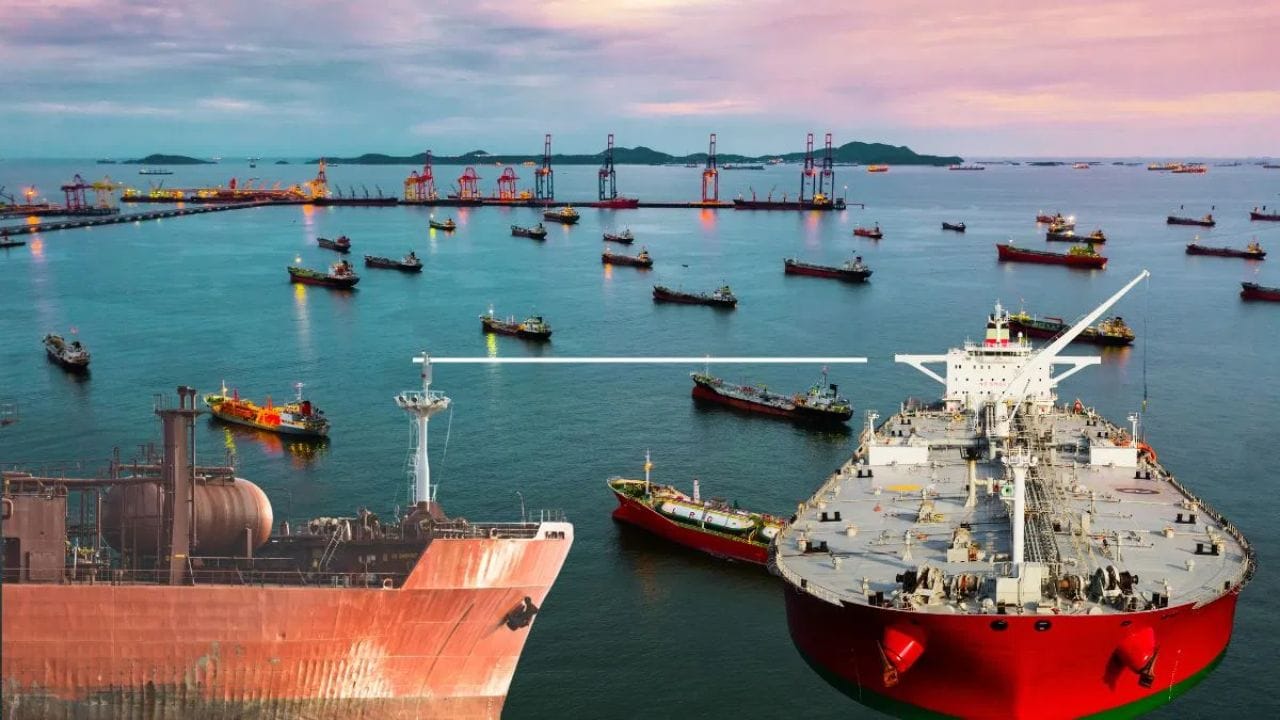
Companies are preparing buffer stock for the festive season.
Before the start of the upcoming festive season, the Indian corporate world (India Inc) is going through a period of great confusion and potential challenges. In view of the increasing uncertainties on the global front, logistics (freight) crisis and huge demand during festivals, major companies of the country have already started stockpiling huge stocks of raw materials and finished products. Companies do not want to take any kind of risk and have started filling their warehouses even before the crisis arrives. Let us understand in detail what Indian companies are afraid of and what strategy they are adopting.
Companies in ‘war-room mode’
As the crisis in West Asia flares up again and the rupee weakens, consumer goods and electronics manufacturers are in ‘war-room mode’ to secure supply chains ahead of the festive season. Companies are rushing shipments from China and increasing buffer stocks of imported parts and raw materials (including petrochemical-based packaging materials) by 20 percent to minimize production disruptions.
The ET report quoted executives as saying that this new tension has increased at a time when factories had just started increasing production for the festive season. The festival season starts with Onam in Kerala and Ganesh Chaturthi in Maharashtra, and the main season runs from Navratri in October to Diwali in November. This season is considered to be the peak shopping season in India, accounting for up to 30 percent of annual sales in many categories.
Companies are doing this planning
Amid new tensions in West Asia, consumer companies are ordering early shipments ahead of the festive season and stockpiling imported components and raw materials. Mayank Shah, vice president of biscuit manufacturing company Parle Products, said in an ET report that we are monitoring the situation, but we have ordered 10-15 percent more buffer of plastic packaging material and are making an additional 8-10 percent buffer of finished goods, so that if there is a halt in production due to LPG or other reasons, the stock does not run out.
The West Asia crisis, triggered by US-Iran tensions in February, disrupted supply chains, created shortages of industrial LPG, raised prices of petrochemical-based raw materials and freight, and delayed shipments due to the closure of the Strait of Hormuz. A ceasefire in mid-June temporarily eased pressures, and crude oil, plastic packaging and freight rates softened before new tensions escalated.
Tarun Arora, chief executive of Zydus Wellness, the company selling Complan and Glucon-D, said that the company will create additional inventory of plastic for 1-2 months. He said that the new round of tension was completely unexpected. The prices of plastic had started to stabilize, but the sudden increase in tension has increased the prices again.
Transit time increased
Shipping companies have warned of longer transit times following renewed tensions between the US and Iran and the closure of the strait, while crude prices hit a four-week high and the rupee weakened below 96 against the US dollar. Industry officials say that this could have the biggest impact on Indian companies that import goods from China.
Blockages in this strait often cause congestion at other ports, causing delays in ship schedules and longer delivery times. Many ships coming to India, after unloading their cargo, proceed to the ports of the Middle East or Europe.
Super Plastronics, which makes and sells televisions under the Blaupunkt, Kodak and Thomson brands, on Monday received a consignment of components sent from China’s Shenzhen port on May 11. Due to crowding, the ship was diverted to Karachi instead of its normal route and then returned to Mundra Port in Gujarat, making the journey time much longer than the normal 22–30 days.
The company fears that if the crisis worsens, there will be further delays in shipping times. Super Plastronics Chief Executive Avneet Singh Marwah said that as a precaution, we have asked our component suppliers to immediately send 15-20 percent additional stock. The situation has become very chaotic, so it is important to plan in advance to avoid shortage during the festival season.
Companies are also doing this
Electronics contract manufacturer PG Electroplast, which makes components for more than 60 brands including LG, Voltas, Whirlpool and Daikin, is also seeking early shipments from China to ensure adequate inventory for production during the festive season. Kamal Nandi, business head of appliances at Godrej Enterprises Group, said in a media report that the prolonged disruption will have an impact at many levels.
He said that orders for the components to be imported have already been placed. Production is running at full capacity during the festive season, so any disruption in supply may impact production and inventory availability. Some companies are also renting additional warehouse space to hold more inventory of raw materials and finished goods. Officials say this move will increase operating costs.