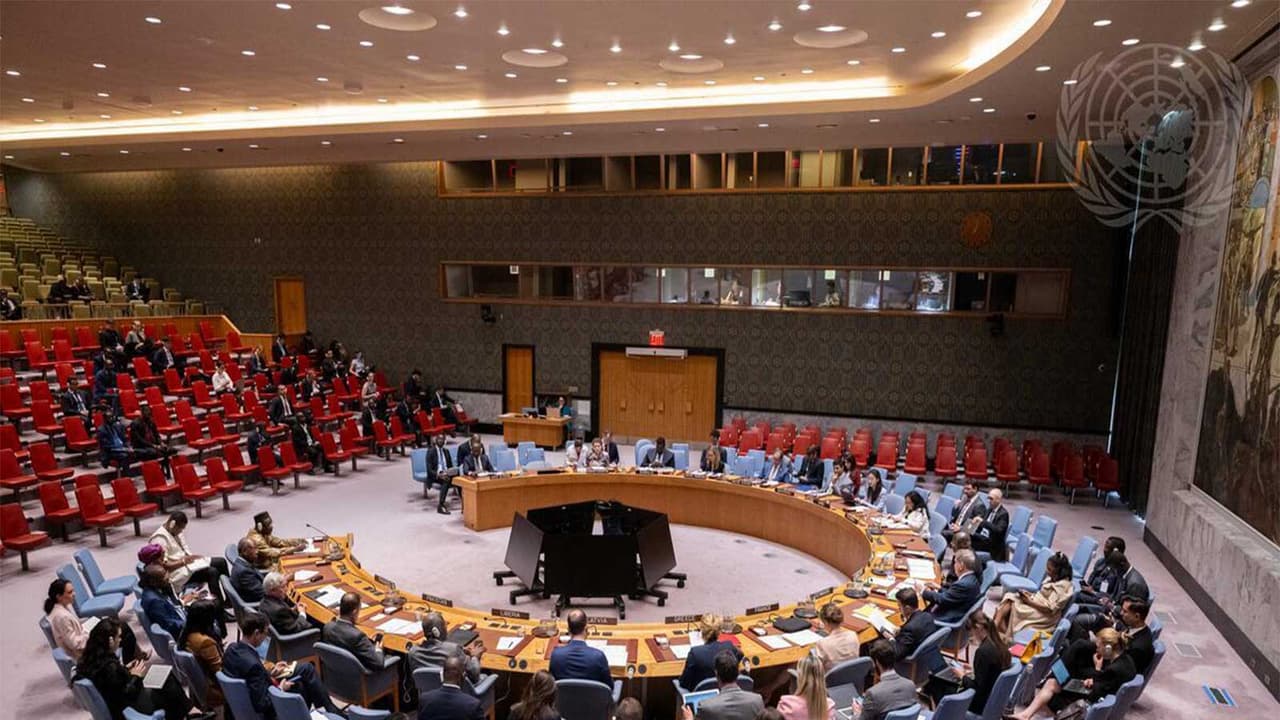
The UN Security Council has extended the mandate for intelligence reporting on Houthi attacks in the Red Sea by six months. The US warned the Houthis, calling them allies of Iran, while Iran rejected the allegations.
Intelligence reporting period extended
new york [अमेरिका]July 15 (ANI): The United Nations Security Council (UNSC) in a vote on Tuesday (local time) extended for another six months the mandate of the Secretary-General to provide monthly intelligence briefings on Houthi offensive operations in the Red Sea. This extension will ensure continuous monitoring till January 15, 2027.
13 votes were cast in favor of Resolution 2826 (2026), while no votes were cast against it. China and Russia did not take part in the voting. Council members stressed that this continuous reporting mechanism is vital to the security of global trade corridors, vital maritime shipping routes and international supply chains passing through the highly volatile Red Sea corridor.
America targets Iran and Houthis
While defending the renewal of the reporting framework, US Ambassador to the UN Mike Waltz offered a scathing assessment of the regional security framework and stressed that freedom of navigation is a cornerstone of international stability. He said freedom of navigation remains central to international peace and security. “Yet, ‘some regimes’ are bent on crushing that freedom to protect themselves from the consequences of their aggression,” Waltz said.
Referring to the Houthis and Iran, he argued, “The Houthis, which is a declared terrorist organization, are followers of Tehran.” He added, “When Iran kidnaps civilians or hides behind human shields, the Houthis do the same.” He warned, “If Iran is willing to threaten the Strait of Hormuz, how long will it take for the Houthis to imitate their patron Tehran and decide to close the Red Sea?”
UN report on dual-use goods
The UN Panel of Experts’ report dated June 30, 2026, details how international arms embargoes are increasingly being circumvented. According to the report, the Houthis in Yemen exploit global supply chains by purchasing unregulated, commercial dual-use components and technologies to fuel and advance their drone, missile and surveillance programs.
Taking direct aim at the axis between the Yemeni rebel group and their regional supporters, Waltz commented, “The Houthis, a declared terrorist organization, are followers of Tehran. When Iran kidnaps civilians or hides behind human shields, the Houthis do the same.” The US envoy warned that the current crisis could turn into a total stranglehold on global waterways.
Waltz asked, “If Iran is willing to threaten the Strait of Hormuz, how long will it take for the Houthis to copy their Tehran patron and decide to close the Red Sea?” He reported that the Houthis’ operations had extended to targeting Saudi Arabia’s civilian airport Abha and threatening commercial airlines operating inside Saudi airspace.
“This reporting mechanism cannot and must not become just another UN paper exercise,” Waltz said, calling for concrete enforcement rather than bureaucratic lethargy, as he urged the Council to immediately implement the arms and technology sanctions outlined in the June 30 report of the UN experts on dual-use items.
Iran rejects American allegations
This Security Council vote came at a time when Iran has rejected US allegations linking Tehran to Houthi actions. In a letter addressed to UN Secretary-General Antonio Guterres and the President of the Security Council, Iran’s Permanent Representative to the UN, Ambassador Amir Saeed Iravani, said, “The claims that Ansar Allah (Houthi) is acting on behalf of Iran are completely baseless.”
He added, “The authorities in Sanaa represent a significant portion of the Yemeni people and they make their decisions independently and in accordance with the interests of the Yemeni people. Attempts to portray their actions as being at the behest of Iran are misleading, politically motivated, and without any evidence.”
The Presidency of the Security Council is held by the Democratic Republic of the Congo in July, represented by Ambassador Zenon Mukongo Nge, while Antonio Guterres serves as Secretary-General. The Houthis began attacking commercial shipping in the Red Sea in late 2023, saying they were targeting ships linked to Israel in response to Israel’s war in Gaza. The UN’s continuous reporting mandate aims to keep the Security Council informed about developments affecting maritime security in one of the world’s busiest shipping lanes. (ANI)
(Except for the headline, this story has not been edited by Asianetnews Editorial staff and is published from a syndicated feed.)