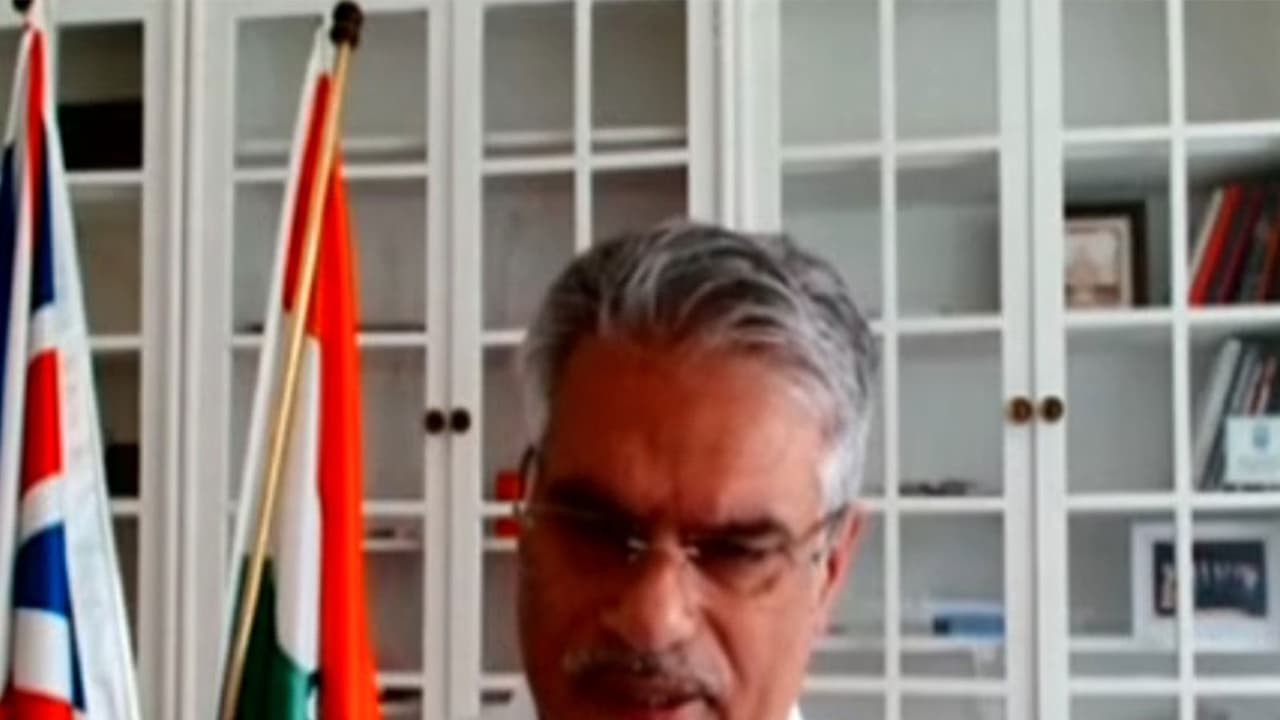
A proposed India-UK Bilateral Investment Treaty could unlock higher FDI by giving investors greater confidence and legal protection, says UK’s Trade Commissioner Harjinder Kang, calling India a major growth opportunity for global companies.
A proposed Bilateral Investment Treaty (BIT) between India and the United Kingdom could play a crucial role in unlocking higher foreign direct investment (FDI) flows into India by giving investors greater confidence and legal protection, according to Harjinder Kang, UK’s Trade Commissioner for South Asia, who was also the Chief Negotiator for the India-UK Free Trade Agreement (FTA).
Speaking to ANI, Kang said India remains one of the world’s biggest investment opportunities, with global companies increasingly viewing the country as a high-growth market despite evaluating investment decisions through a risk-return lens. “People are making their judgments on India based on return on risk. It’s a huge growth opportunity,” Kang said, noting that multinational corporations weigh growth prospects alongside investment risks before committing capital.
Notably, the India-UK Comprehensive Economic and Trade Agreement (CETA) officially came into effect today. Signed in London, the landmark pact unlocks zero-duty access for 90.2% of Indian exports to the UK and slashes India’s import duties on key British products.
BIT to Strengthen Investor Confidence
He said the India-UK Free Trade Agreement, which has now come into force, was expected to be accompanied by a Bilateral Investment Treaty that would have further strengthened investor confidence. “What we were hoping for was to do in parallel with the FTA was a Bilateral Investment Treaty… that would have provided some degree of protection for future investments,” Kang said.
According to him, investment protection was among the top priorities flagged by British businesses during consultations before the FTA negotiations began. At the time, companies were seeking greater certainty over long-term investments and a framework that could provide confidence in the event of disputes.
Although the investment treaty could not be concluded alongside the trade agreement, Kang said discussions remain alive and both sides continue to view it as an important next step in the economic relationship.
“It will make a big difference that companies that have a little bit of reservation might then be feeling a bit more secure,” he said.
Two-Way Investment Growth
Kang noted that India has already emerged as a preferred destination for several British companies. He cited the example of a major UK healthcare company that recently established a manufacturing facility in Madhya Pradesh after assessing India’s long-term growth potential.
At the same time, he pointed out that investment ties are increasingly becoming two-way. Around 1,000 Indian companies have invested in the UK, making India the second-largest source of investment projects in the country after the United States over the past four to five years. He said a future Bilateral Investment Treaty would benefit investors from both countries by providing greater certainty and encouraging additional cross-border investments.
FTA a Stepping Stone for Broader Partnership
Kang stressed that the recently implemented FTA should be viewed as the beginning of a broader economic partnership rather than its culmination. While the trade agreement is expected to boost bilateral commerce, he said deeper cooperation in investment, technology, defence, education and climate will shape the next phase of India-UK relations, with a bilateral investment treaty remaining an important element in strengthening long-term investor confidence. (ANI)
(Except for the headline, this story has not been edited by Asianet Newsable English staff and is published from a syndicated feed.)