An Indian sailor was killed after an Iranian strike on a UAE oil tanker in the Strait of Hormuz. India lodged a strong protest. A West Asia expert denounced the attack but blamed the US for violating an MoU signed between Tehran and Washington.
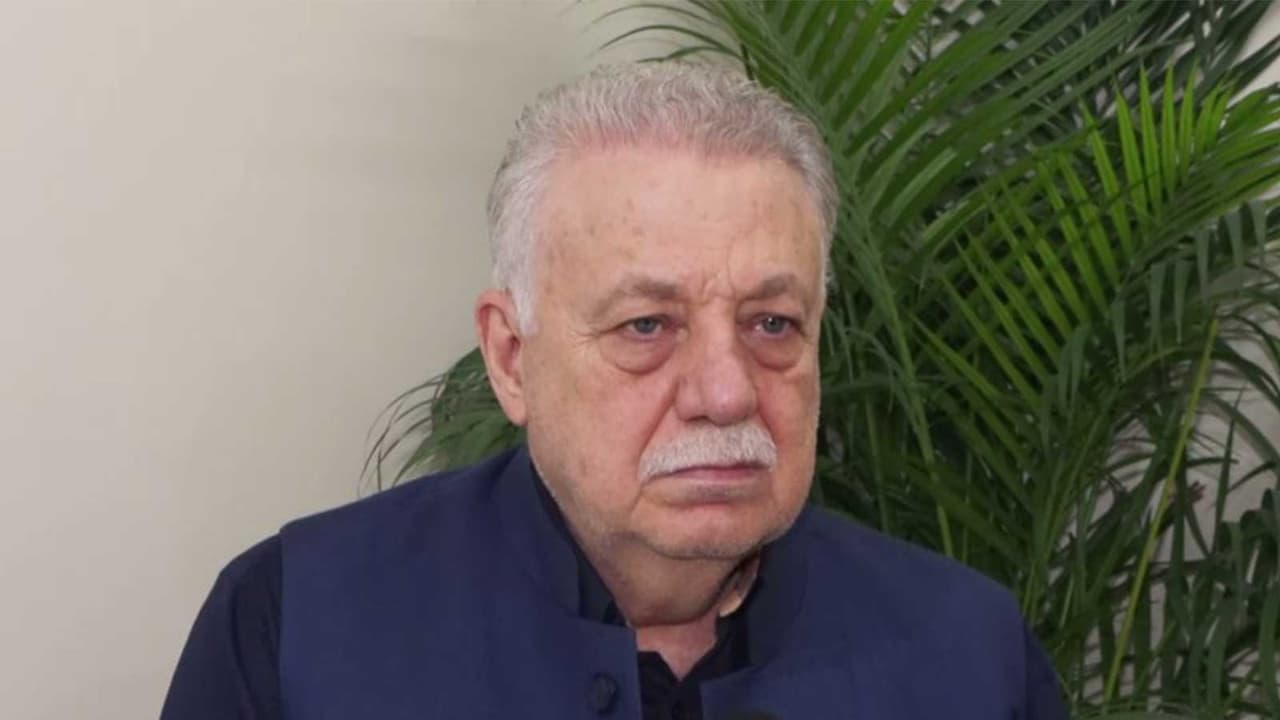
West Asia expert Waiel Awwad on Tuesday denounced the Iranian strike on a UAE oil tanker in the Strait of Hormuz, which claimed the life of an Indian crew member, calling the attack against civilian and commercial ships “unfortunate,” while blaming the US for violating the MoU signed between Tehran and Washington.
India Lodges Strong Protest
An Indian sailor was killed, and six others were injured after a strike by Iran on the UAE oil tankers in the Strait of Hormuz on Tuesday. Following the incident, India lodged a strong protest with Iran. The Ministry of External Affairs (MEA) summoned the Iranian envoys, including Deputy Chief of Mission (DCM) Mohammad Javad Hosseini, to convey New Delhi’s serious concerns.
Expert Blames US for MoU Violation
Speaking with ANI, Awwad expressed his condolences and disappointment over the incident while slamming the US for violating the Memorandum of Understanding (MoU) signed with Iran. Pointing out that the MoU authorised Iran to monitor the passage of ships through the Strait of Hormuz, he questioned Washington’s move to manoeuvre through the route of Muscat and Oman. “This is the most unfortunate that there is, they are targeting civilian ships, commercial ships. But having said that, I would say it is the United States who violated the MoU signed between Iran and the United States, which clearly says that Iran will monitor the passage of the ships through the Strait of Hormuz and bring it back to its normalcy prior to the war on Iran. Right? So when they decided to follow that suit, what did the United States try to do? Maneuvering, using the route of Muscat, Oman, and avoiding the Iranian side. Which Iran said, we are at a time of a war. So being at a time of a war, you need to control. And they know that the United States intention is to go for a war, is not to have a peaceful solution. That’s what they have done,” he said.
Details of the US-Iran MoU
As part of the 14-point memorandum of understanding (MoU) between the US and Iran, signed last month, the two sides agreed to immediate cessation of military operations, and committed both countries to pursuing a final agreement within 60 days. It also includes provisions for the removal of the US naval blockade, safe passage of commercial vessels through the Strait of Hormuz, phased sanctions relief, the release of frozen Iranian assets and a US-backed economic development programme for Iran worth at least USD 300 billion.
Iran’s Stance on Passage
Awwad further argued that the Islamic Republic’s move to disallow the passage of ships through the critical chokehold without due permission comes in response to the US’ repeated attacks against Iranian infrastructure, military sites and radar areas. Defending Iran, he asserted that Tehran has been targeting the ships violating its consent, and not the ones transiting with due permission. He further called the violation an “American strategy,” and its way of asserting control. “They have been targeting now new places in Iran and why? Because they have been doing for the last three months after the ceasefire that they have noticed that the American, there are still many sites in Iran, infrastructures, military sites, and radar areas. They are bombing it. So that gives you also an indication that Iran is right in its position not to allow any ship without being taking a consent,” he stated.
“They are not targeting a ship with the consent from the Iranian, they are targeting ships which are violating. And I think violation is a part of the American strategy to tell to the rest of the world that this is, we are in control. Which they are not in control at all,” he added.
Expert Questions Trump’s Intentions
He further criticised US President Donald Trump for the American military actions against Iran and Venezuela, arguing that Washington revealed its true intention: to gain control over the oil and the Strait of Hormuz. “This is to give you a clear indication that the United States’ intention, even President Trump, when he met with the billionaire tank club in the United States, to catch the Venezuelan oil, to catch the Iranian oil, and also the Strait of Hormuz and any passage of the oil. So anything related to energy, he has been having the lust of taking it. So by exposing himself that he wanted to take control of the Strait of Hormuz, he forgot about the nuclear issue of Iran, he forgot about the obliteration of the civilization of Iran. He’s been attacking many places of Iran. So that’s a clear indication that his intention and he made it very clear to the rest of the world about what the Pentagon is deciding,” he stated.
Concerns Over Potential Global Crisis
While expressing concerns over the ongoing tensions centring on the Strait of Hormuz, he painted the US as guilty for the blockade. He raised alarms over potential global crisis regarding food security, oil security and humanitarian issues, should the war extend. “So I think this is a matter of concern because most of the ships in the Strait of Hormuz used to pass earlier without any fee, without any restriction. So what happened in the Strait of Hormuz, the blockage currently is because of the consequences of the war that the United States and Israel have created. And that is why we are reaching to a stage where there will be a global crisis, not only a global crisis in terms of the food security, oil security, but also in terms of the humanitarian crisis that he’s been creating by continuing the war and bombing Iran’s infrastructure,” he added.
Strike Details Emerge
Providing operational details of the strike, maritime reports indicated that two UAE tankers were hit by two Iranian cruise missiles in the Strait of Hormuz in Omani territorial waters. The tankers, Mombasa and Al Bahiyah, were struck while transiting the southern passage of the Strait of Hormuz.
UAE Condemns Attack
Condemning the aggression, the UAE’s Ministry of Defence strongly condemned the attack, describing it as a serious violation of international law that threatens regional security and stability. Asserting its sovereignty, the ministry said the UAE reserves the full right to respond to the escalation and will take all necessary measures to protect its territory, people, residents, national interests and strategic assets. (ANI)
(Except for the headline, this story has not been edited by Asianet Newsable English staff and is published from a syndicated feed.)