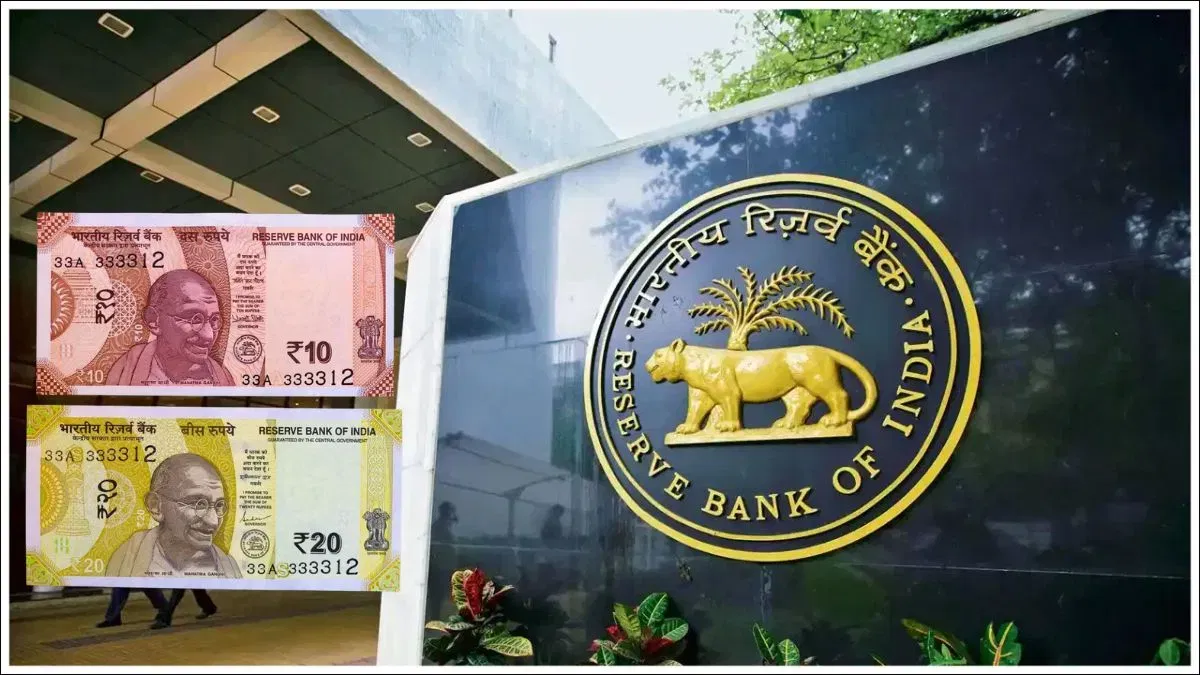
Now Indian notes will be made of plastic!
Reserve Bank of India (RBI) is considering introducing plastic (polymer) notes in the country. This has been seriously discussed in the recent Central Bank Board meetings held in Patna and Mumbai. This decision is being taken in view of the huge demand for cash in the last few years, the increasing cost of printing paper notes and the problem of their quick spoilage. A pilot project of plastic notes for the general public is expected to start soon.
Efforts to reduce the huge expense of printing notes
Data from the recent annual report (FY25) of the Reserve Bank of India show that Rs 6,372.8 crore was spent on printing paper notes. This is much more than Rs 5,101.4 crore of the last financial year. This printing expense has increased mainly due to the increasing demand for notes. Sources having knowledge of the matter say that printing plastic notes is more economical in the long run than paper notes. The best thing is that our ATMs have now become so advanced that they can easily identify and take out these polymer notes.
You will get relief from the hassle of mutilated and soiled notes
Often the notes in your pocket are dirty or torn. Destroying these bad notes is also a big task for RBI. In the financial year 2025, 23.8 billion bad notes were taken out of circulation. This figure is 12.3 percent more than last year’s 21.24 billion notes. Among these, the maximum were Rs 500 notes, followed by Rs 100 notes. Despite the increase in digital payments in the country, the craze for cash has not reduced. As of May 15, the total currency in circulation (CiC) has increased by 11.5 percent on an annual basis to a record level of Rs 42.86 lakh crore. In such a situation, since the lifespan of plastic notes is much longer than paper notes, the pressure of repeatedly printing new notes will be significantly reduced.
There is full focus on the increasing demand for small notes
There is always a demand for small notes like Rs 10, Rs 20 in the market. However, their share in the total currency is less than one percent. The Central Bank had tried hard to increase the circulation of coins, but did not get the desired result. In 2012, the then government had started a field trial of one billion plastic notes of Rs 10 in five cities. At that time its purpose was to increase the lifespan of the notes. Then that project was stopped due to technical challenges. Now, after a decade, the situation has completely changed. Technology has advanced a lot, due to which all the old obstacles have been removed.
This system is running in 60 countries of the world
The idea of plastic notes is not new globally. Currently about 60 countries around the world are using polymer banknotes. This initiative was started by Australia in the year 1988 by printing a 10 dollar note. After this, countries from Singapore, Indonesia, Thailand to Malaysia adopted it. In Europe, Romania first introduced plastic notes in 1998, while Canada implemented it in its system in 2011. At the same time, American dollars are not completely made of plastic, rather they are made from a special mixture of cotton-linen.