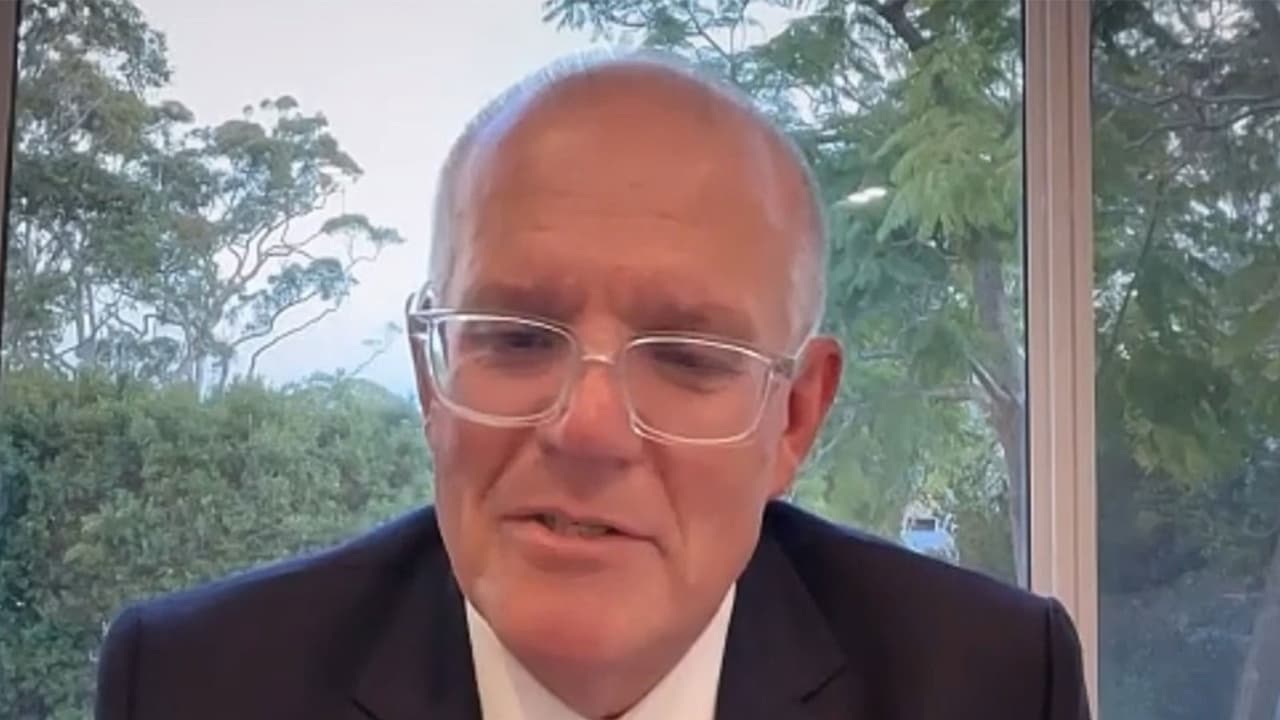
Former Australian PM Scott Morrison welcomed uranium exports to India under the 2015 agreement. He said it was no longer controversial in Australia and would strengthen the bilateral partnership. Both countries also expressed commitment regarding energy security.
Morrison welcomes uranium exports
Former Australian Prime Minister Scott Morrison on Thursday welcomed the confirmation of an arrangement enabling uranium exports to India for peaceful purposes under the 2015 Civil Nuclear Cooperation Agreement. He said India’s growing emphasis on nuclear energy will strengthen its long-term energy security while deepening the bilateral partnership.
Speaking to ANI, Morrison said uranium exports to India now have bipartisan political support in Australia and are no longer a controversial issue. “This was already the case, and it happened under the Abbott government at the beginning of the last decade when the Civil Nuclear Partnership Agreement was implemented. It is now a bipartisan position of both major parties of Australian politics that support the sale of uranium to India. This is no longer a controversial issue in Australia. I am pleased to take forward the partnership we have announced today,” he said.
Appreciation of India’s energy strategy
Highlighting India’s energy strategy, Morrison said, “I think what is perhaps more important is that India is making it very clear that nuclear energy is a big part of its energy future. Prime Minister Modi is leading the way in announcing a nuclear energy future for India, and that is an example for others as well, including Australia.” He further stated that “Energy security is closely linked to economic security and indeed national security.”
Joint statement on energy security
India and Australia on Thursday reaffirmed their commitment to strengthen energy security and resilient energy supply chains, while expressing deep concern over the ongoing situation in West Asia and its impact on global energy markets. In a joint statement on energy security, the two countries said they “shared deep concern over the situation in the Middle East and its consequences for our region, including the lingering impact of disruptions on supply chains and prices of energy, resources and other critical commodities.”
Export will be under the supervision of IAEA
In a significant development, the two sides announced that they have finalized the necessary administrative arrangements to enable the export to India of Australian uranium “exclusively for peaceful purposes and under International Atomic Energy Agency (IAEA) safeguards” under the Australia-India Nuclear Cooperation Agreement signed in 2015.
The statement said the two countries are committed to strengthening the resilience of energy supply chains through deep regional cooperation, accelerating the energy transition, promoting the adoption of renewable energy, and maintaining an open trading system for energy products.
Australia and India also stressed the growing importance of electrification, saying “increased electrification of related energy systems will be a valuable source of energy security in the future.”
Both countries acknowledged the energy security challenges faced by Pacific Island countries and stressed the importance of reliable energy supplies for the region’s resilience and economic prosperity.
Against this backdrop, India and Australia reaffirmed their commitment to “maintain a stable, secure and reliable supply of energy products such as coal, diesel, other liquid fuels and natural gas”. They also reiterated their commitment to accelerate the energy transition and strengthen cooperation on low-carbon fuels. In this context, Australia welcomed India’s Global Biofuels Alliance initiative.
Calling for broader regional cooperation, the joint statement said, “Australia and India call on regional partners to join in ensuring that global energy resource supply chains are kept open for the benefit of the security and prosperity of our people.” (ANI)
(Except for the headline, this story has not been edited by Asianetnews Editorial staff and is published from a syndicated feed.)