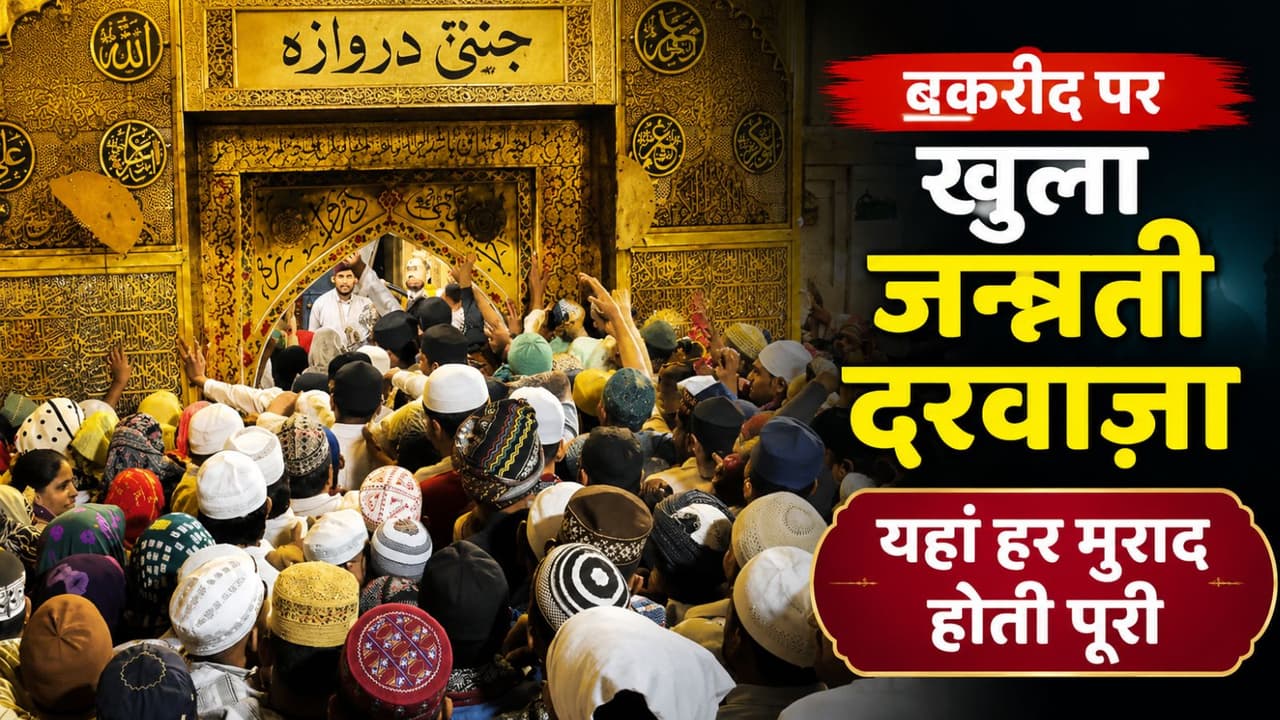
Ajmer Sharif Dargah: What happened in the Dargah of Khwaja Garib Nawaz of Ajmer on Bakrid that long queues started forming from 4 am in the morning? Why did those praying say – every wish is fulfilled here? What is the secret of Jannati Darwaza of Ajmer Dargah, which people even come from abroad to see?
Eid al-Adha Prayers IN Jannati Darwaza: On the special occasion of Eid-ul-Azha, the famous Jannati Darwaza of the Dargah of Khwaja Garib Nawaz in Ajmer, Rajasthan was opened at 4 am on Thursday morning. Passing through this door, thousands of devotees from all over India reached the Dargah to pray. A huge crowd gathered at Ajmer Sharif Dargah since morning. People offered namaz and gave the message of peace and brotherhood.
People even come from abroad to see the door of heaven
Speaking to ANI, Khadim Daulat Chishti of Ajmer Sharif Dargah said that on this occasion people from all over the country and abroad come here with deep faith.
Chishti said, “Pilgrims from far and wide, from every corner of India and even from abroad, come here with great devotion. They pass through this door and offer their prayers and prostrate themselves.”
Thousands of Muslims come from Kashmir on Eid
Another Khadim of the Dargah, Zeeshan Chishti, said that people from border areas like Barmer, Jaisalmer and Kashmir have also reached the Dargah to participate in the celebrations. He said, “On this day of Eid, people especially from Barmer, Jaisalmer and the border areas of Kashmir come to the Dargah of Garib Nawaz with their deep devotion. Just as the rituals of Haj were completed yesterday, similarly today there is a gathering of devotees bound by love and brotherhood here.”
Why is Bakrid celebrated?
Eid-ul-Azha, also known as the Festival of Sacrifice, is celebrated to commemorate Prophet Ibrahim’s willingness to sacrifice himself at the command of Allah. It is celebrated on the 10th day of Zul-Hijjah, the last month of the Islamic lunar calendar.