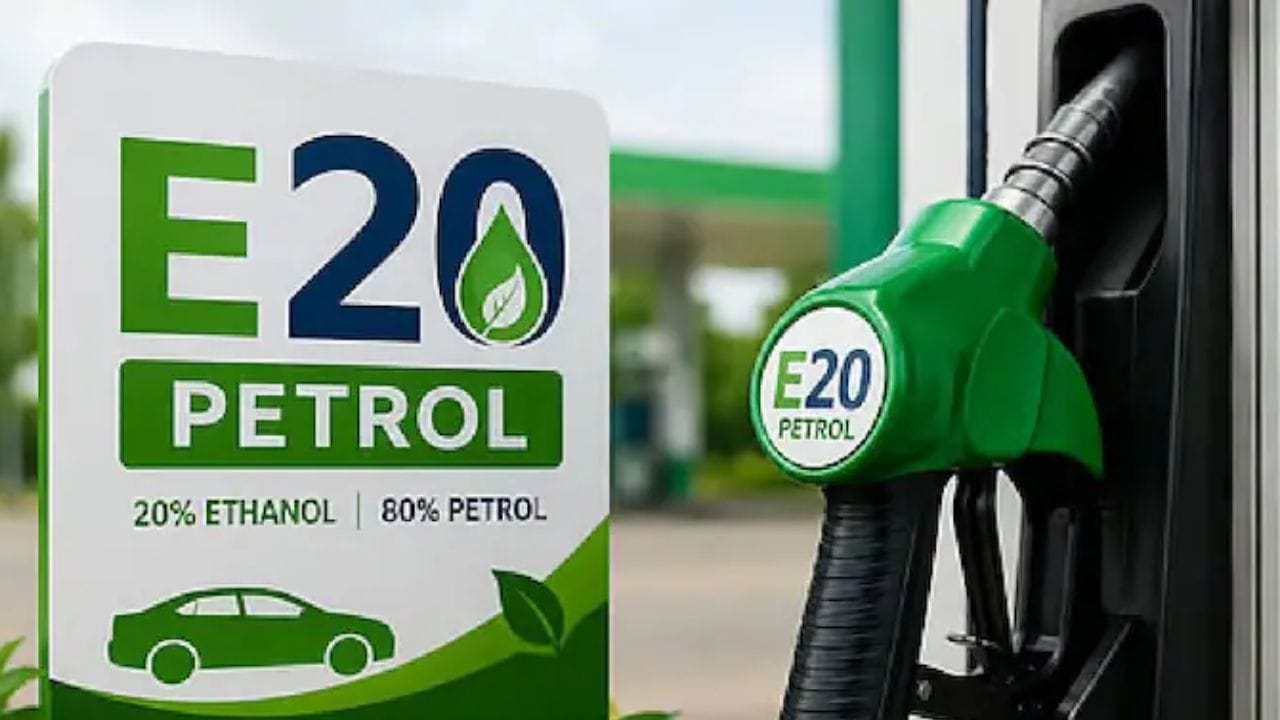
symbolic photo
In view of the ongoing controversy regarding E-20 petrol in the country, the Central Government will not be in any hurry to move ahead with the policy of high ethanol blending in petrol. Even though the standards for mixtures from E-22 to E-30 have been set by the Bureau of Indian Standards (BIS), now the government will first fully reassure the public on this issue. Whereas by the time the standards were set, the government was going to move ahead with the entire program of high ethanol blending.
In view of the questions being raised on E-20, experts from auto companies were also brought forward to give clarification. Despite this, the debate on this issue continues across the country. Due to this, the authorities moving forward on standard, legal and tax related preparations for high ethanol blend fuels have slowed down. Whereas earlier consultation was started with the automobile industry sector on the plan to increase to high ethanol blend fuel i.e. E-22, E-25. In such a situation, it is clear that in view of people’s concerns and increasing opposition, the government can postpone this decision for some time.
From social media to roads, many vehicle owners expressed complaints about E-20 petrol reducing mileage, bad effects on old vehicles including the engine and parts of the vehicle, after which the government will conduct investigation, technical study and detailed discussion before moving forward in this direction.
Four aspects will be considered
Prices and tax relief- Industry analysts believe that if the full benefit of excise duty waiver is passed on to the consumers, then the high ethanol blend fuel will be cheaper than the existing normal petrol. The government will consider this aspect.
Vehicle Compatibility and Challenges- Experts in the automobile sector believe that most of the existing vehicles are engineered for E-20 only. Using fuels containing E22 or higher (up to E30) ethanol requires special hardware upgrades and software calibrations to the engine and fuel system. The government will hold detailed discussions especially on this technical aspect and after assuring itself, public opinion will be taken.
Concerns regarding mileage- There are also concerns regarding the aspect of reduction in mileage from E-20. Automobile industry sector says that the problem of low mileage can be fixed by some technical methods. The government will move forward after taking opinion from experts on this.
Agriculture and bio-energy industry response – Sugar and bio-energy manufacturers (such as ISMA and AIDA) have welcomed this excise duty exemption. Experts estimate that the implementation of E22 and E25 will create additional demand for ethanol, which will utilize the additional production capacity of sugar mills and increase the income of farmers.
What will happen to high ethanol blended petrol?
From E-20 onwards, petrol from E-22 to 30 is such fuel in which more ethanol will be mixed in petrol. In the future, high ethanol blend fuels like E22, E25, E27 and E30 can be implemented in the country, but it is clear that even the burnt buttermilk of milk is worth drinking. The situation is similar with the government in the matter of ethanol blending, because the debate regarding E-20 is going on across the country. In such a situation, before moving ahead, the government will examine every aspect and take the public into confidence.
Important responsibility assigned to ARAI
The government has given the responsibility to the Automotive Research Association of India (ARAI) to investigate the impact of high ethanol blend fuel on existing vehicles. Aspects such as mileage, engine condition, maintenance costs and vehicle performance will be reviewed in the study. This report is expected to come by the end of next year.