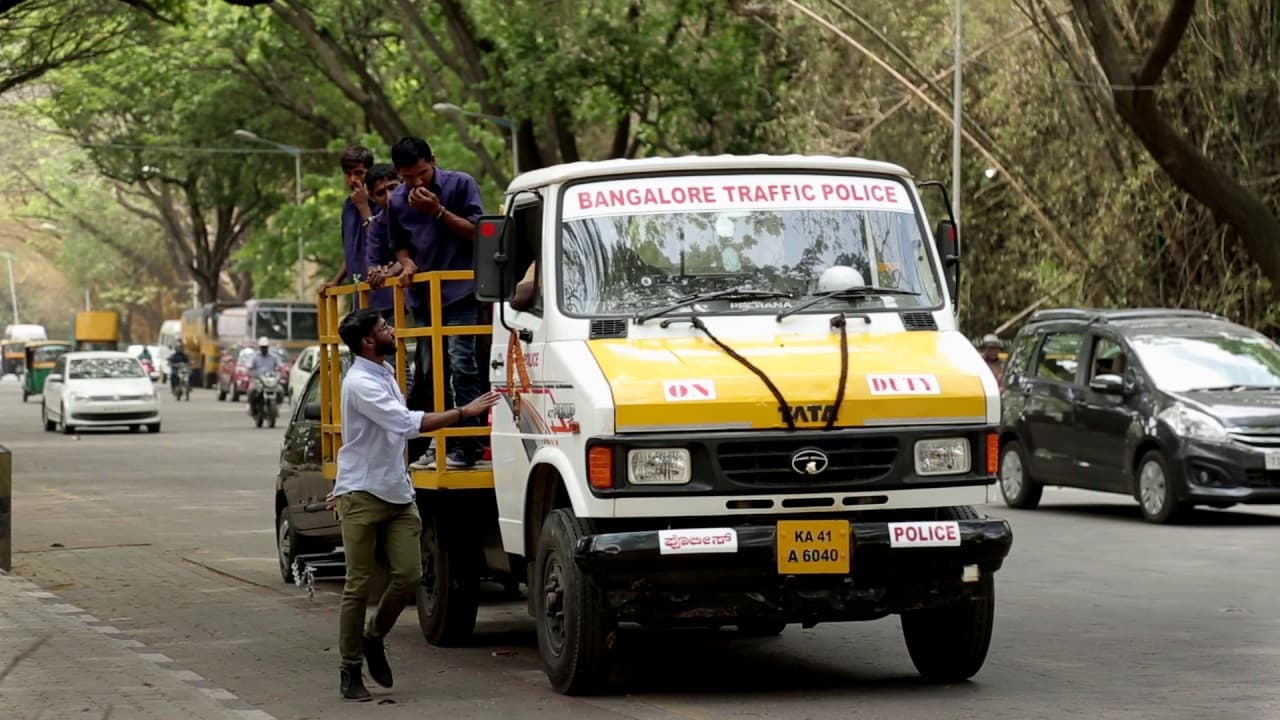
Three months after vehicle towing resumed in Bengaluru, motorists are demanding a revision of the steep towing charges, arguing they exceed traffic fines. Citizens have also questioned the lack of adequate parking facilities despite stricter enforcement.
Three months after vehicle towing resumed in Bengaluru, the policy has come under increasing criticism from motorists and residents. Many commuters have expressed concern over the steep towing charges imposed on vehicles parked in no-parking zones, arguing that the fees are disproportionately high compared with the traffic fines. The issue has reignited the debate over parking infrastructure in the city, with citizens demanding that the Karnataka government and civic authorities revise the towing charges.
Many vehicle owners have also questioned the fairness of imposing hefty penalties when adequate public parking facilities remain unavailable in several parts of the city.
Steep Increase in Towing Charges
Under the revised rules, owners of two-wheelers parked in no-parking zones must pay a total of ₹1,150, comprising a ₹500 traffic fine and a ₹650 towing charge.
For cars, the total penalty is ₹2,000, including a ₹1,000 traffic fine and a ₹1,000 towing charge.
Previously, the towing charge was ₹200 for two-wheelers and ₹300 for cars, making the latest revision a significant increase.
“The traffic fine is ₹500, but the towing charge is ₹650. It feels as though the towing charge is a bigger punishment than the actual offence,” said a two-wheeler rider from Rajajinagar.
Citizens Raise Concerns Over Parking Infrastructure
Residents have argued that the authorities should prioritise creating adequate parking facilities before enforcing stricter towing measures.
“We have no objection to paying a fine if we violate traffic rules. But it is unfair to impose such high towing charges when the city lacks sufficient parking spaces. The government should first improve parking infrastructure before introducing stricter enforcement,” said a vehicle owner.
Several commuters have also questioned the pricing structure. They pointed out that a single towing vehicle often transports multiple two-wheelers at the same time, yet each owner is charged ₹650. By comparison, towing a car, which occupies significantly more space on the recovery vehicle, attracts a towing charge of ₹1,000, only ₹350 more.
“This pricing system appears unfair and seems designed primarily to generate revenue,” said Anand, a college student.
Civic Body Struggles Despite Higher Charges
Despite the increase in towing charges, the Greater Bengaluru Authority (GBA) is reportedly facing challenges in making the towing operations financially sustainable.
According to a senior official from the Bengaluru Central City Corporation, the maintenance costs of towing vehicles exceed the revenue generated through towing charges. While the civic body receives the towing charges, the traffic fines are credited to the Bengaluru Traffic Police, limiting the corporation’s revenue.
West Zone Reports Lower Revenue
Between April 3 and June 23, the Bengaluru West City Corporation collected ₹11.62 lakh in towing charges. The zone currently operates two towing vehicles, with maintenance costs amounting to ₹1.91 lakh per month under the existing contract.
“We are hopeful that revenue will improve in the coming months. A majority of the vehicles towed between April and June were abandoned vehicles left on roadsides. Since many owners did not claim them, the towing charges could not be recovered. As a result, the revenue collected during this period was insufficient even to cover payments to contractors,” said West Commissioner Rajendra KV
Fixed Payments to Contractors Raise Questions
In other city corporations, approximately ₹12.54 lakh is paid every three months for the maintenance of two towing vehicles. This works out to an average of ₹2.09 lakh per vehicle per month.
Under the current arrangement, contractors receive a fixed monthly payment regardless of the number of vehicles towed. Whether the towing vehicles are deployed frequently or remain idle, the civic authorities are required to pay the agreed contractual amount.
The arrangement has drawn criticism from residents, with many questioning whether public funds are being used efficiently. The controversy has intensified calls for a review of Bengaluru’s vehicle towing policy, including both the fee structure and the operational model.