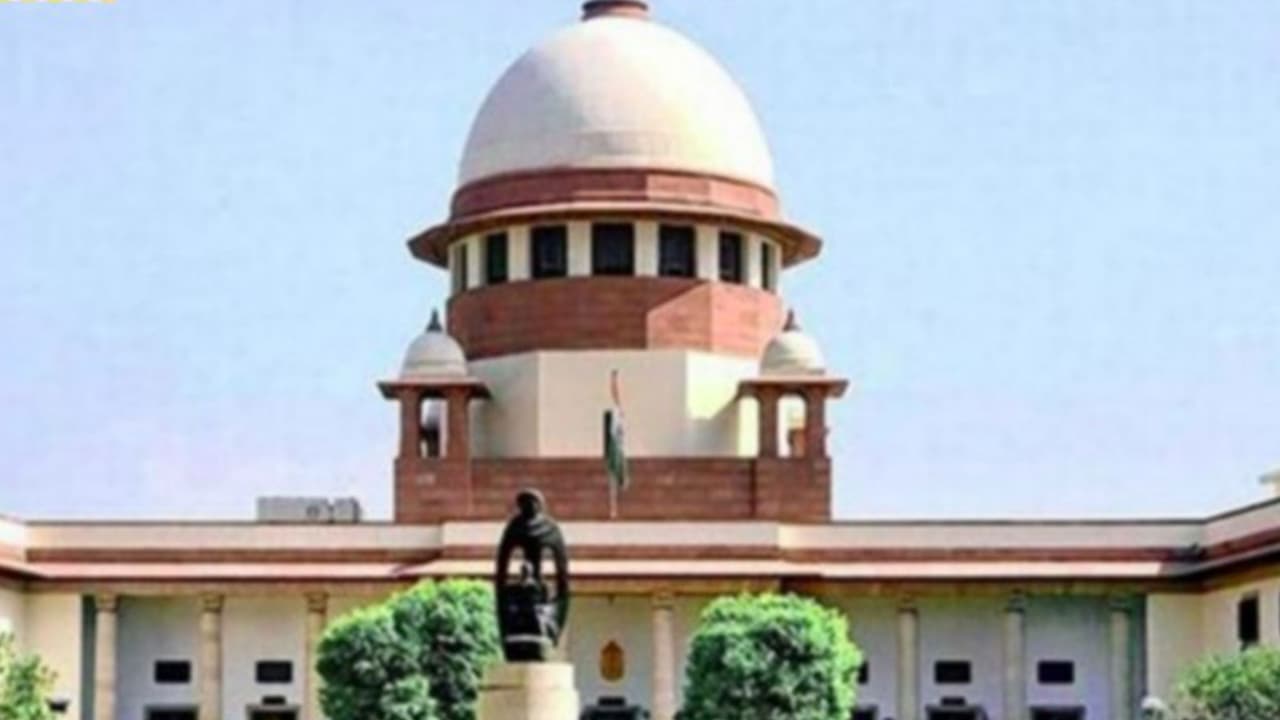
The Supreme Court set aside NCLT/NCLAT orders that used fake AI-generated precedents, declaring a “zero-tolerance approach” for citing such material. It held that doing so is professional misconduct for lawyers and a serious lapse for judges.
The Supreme Court on Thursday set aside a National Company Law Tribunal (NCLT) and National Company Law Appellate Tribunal (NCLAT) orders after finding that the tribunal, while deciding an insolvency dispute, had relied on non-existent, fake and hallucinated precedents generated through artificial intelligence (AI) tools.
Zero-Tolerance for AI Hallucinations
A bench of Justices PS Narasimha and Alok Aradhe said that courts must adopt a “zero-tolerance approach” towards the production, citation or use of AI-generated precedents without verification. It held that an advocate commits professional misconduct by citing AI-generated judgments without first verifying their authenticity.
The bench further said that it would be an equally serious lapse if a judge were to rely on fake or hallucinated AI-generated material as precedent while deciding a case. “…Such decisions are to be set aside even if an iota of fake or hallucinated material enters the decision-making process, as it would violate the sanctity of adjudication. It is necessary to maintain integrity in decision- making, and we reiterate and declare zero tolerance for the Bar as well as the Bench to cite, refer to, or rely on such material. It is also clarified that our judgment shall have no bearing on the rightful use of AI, but on the presentation or reliance on fake or hallucinated material as if it were a court precedent,” it added.
The apex court also held that while AI can be used to assist adjudication, it can never replace human reasoning, and stressed that adjudication must remain under “total and absolute control” of humans at every stage. “There is again a case where the tribunal relied on non-existent fake and hallucinated material generated through artificial intelligence as if they were precedents in support of its judgment. For the reasons to follow, we have set aside the judgment of NCLT as well as the judgment in appeal to affirm and maintain the integrity of the adjudication and its processes,” stated the top court.
Maintaining Human Control Over AI in Law
The case presented an opportunity to define the judiciary’s approach towards artificial intelligence, the bench said. It further observed, “More than the inevitable consequence of setting aside such judgment, what is significant for our decision-making is our resolve to adopt artificial intelligence technology in aid of adjudication while at the same time asserting and declaring total and absolute control over adjudications with a human in the loop at every stage.”
Bar Council to Formulate Guidelines
The apex court also directed the Bar Council of India to constitute a committee of experts to examine the issues arising from the use of artificial intelligence in adjudication. It said that the Bar Council of India must take up this issue with utmost seriousness, deliberate earnestly, and prescribe a guiding principle to prevent such occurrences, along with the disciplinary action that will follow a violation of the norms.
Case Background
The appeal stemmed from insolvency proceedings initiated by Jammu and Kashmir Bank Ltd. against Essel Infraprojects Ltd. (EIL) under Section 7 of the Insolvency and Bankruptcy Code in relation to a corporate guarantee executed by EIL for credit facilities extended to Pan India Utilities Distribution Company Ltd. The NCLT admitted the application on August 28, 2024, noting a default of Rs 87.43 crore, and the order was subsequently upheld by the NCLAT on September 11, 2025. (ANI)
(Except for the headline, this story has not been edited by Asianet Newsable English staff and is published from a syndicated feed.)