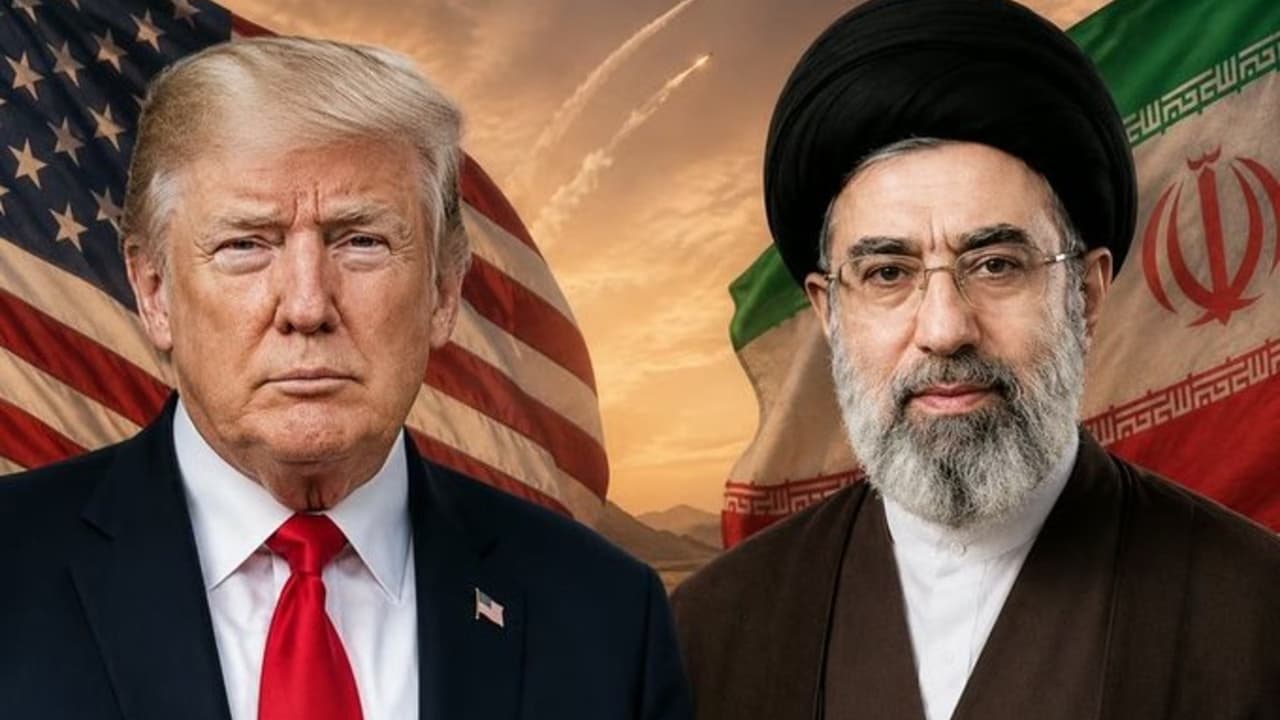
US-Iran indirect talks in Doha discussed $3 billion frozen fund, nuclear inspection, Strait of Hormuz and implementation of MoU. Direct talks did not take place, but further talks were agreed upon.
US Iran Doha Talks: A game is being played behind the scenes on the soil of Qatar and Pakistan, which can decide the direction of the entire world economy and the great war. A new round of very sensitive and indirect diplomatic talks has started between America and Iran in Doha. The surprising thing is that despite being under the same roof, the delegations of both the countries did not sit face to face; The whole matter was carried forward secretly through mediators. On one hand, the 60-day deadline to implement the Memorandum of Understanding (MoU) is looming, while on the other hand, claims of billions of dollars of frozen funds and nuclear bombing have made this entire conversation a suspense thriller.
What happened behind closed doors in Doha?
The talks, which started on Tuesday night under the mediation of Qatar and Pakistan, continued in several phases till Wednesday. In this, senior negotiators and technical experts participated in different sessions. According to Iran’s state news agency IRNA, Deputy Foreign Minister Kazem Gharibabadi clarified that there was no direct communication between the US and Iranian representatives. Every message and proposal was shared through intermediary countries.
Scroll to load tweet…
Bombing of Nuclear Sites: “No-Entry to the Site of Devastation!”
Amidst this conversation, the most sensational statement came from Iran’s Parliament Speaker and Chief Negotiator Mohammad Bagher Ghalibaf. By giving a clear warning, he has shocked the international investigating agencies. Ghalibaf said that checking will not be allowed at any cost at Iranian nuclear sites that have been damaged or bombed in recent attacks. The International Atomic Energy Agency ($IAEA$) is allowed to visit only two selected sites, including the Bushehr Nuclear Power Plant. After all, what is Iran hiding in the damaged nuclear sites, which is being prevented from being revealed to the world? This mystery remains intact.
Scroll to load tweet…
The Battle of Billions of Dollars: The Mathematics of 3 Billion vs 6 Billion!
One of the main focal points of this secret meeting was the huge frozen assets of Iran. A preliminary agreement has been reached to release $3 billion ($3 billion) of Iran’s frozen funds stuck in Qatar, Al Arabiya reports. It has been decided that with this money, essential items for Iran’s needs will be purchased and delivered. But the real problem lies in other assets worth $6 billion. Iran wants the entire amount to be given to it in one instalment, whereas America wants to give it gradually and in pieces by linking it to Iran’s nuclear concessions. This war of money can stall this deal at any time.
Strait of Hormuz: Who will have control over the sea route?
The talks were not limited to just money and nuclear plants, but there was also heated debate on the Lebanon crisis and the world’s most sensitive sea route – the Strait of Hormuz. Iran reiterated in strong words at the Doha table that only Iran and Oman have sovereignty over the Strait of Hormuz. Iran accused Israel of deliberately creating obstacles to this peace agreement by maintaining its military power in Lebanon. Oman has made a new proposal to keep this sea route safe, on which teams from both the countries will now return to their respective countries and hold high-level consultations.
Scroll to load tweet…
Why is emergency communication channel most important?
Both sides agreed to create an emergency communication channel for reporting and resolving potential violations of the Memorandum of Understanding (MoU). This system can become a medium to resolve any future dispute through dialogue before turning it into a direct conflict.
Midnight decision: Will the emergency communication channel work?
Despite all the deadlocks, an important agreement was reached between the two sides on Wednesday night. Iran’s Deputy Foreign Minister Kazem Gharibabadi has confirmed that the two countries have agreed to create an ’emergency communication system’ to prevent violations of the agreement. This channel will be activated within 24 hours. According to Qatar’s Foreign Ministry, ‘positive progress’ has been made in the talks, but the suspense is not over yet. The next General Assembly will be convened immediately after the funeral of Iran’s former Supreme Leader. Will this communication channel be able to avert the threat of World War III, or will it prove to be just another failed attempt? The eyes of the whole world are now fixed on the next phase.
Have expectations of a big deal increased now?
Qatar’s Foreign Ministry has confirmed there has been “positive progress” in the talks. Both sides have agreed to continue the talks in future and the next meeting is likely to be held soon. Although final agreement has not yet been reached on issues like nuclear inspection, sanctions relief and complete release of frozen funds, the Doha talks have definitely indicated that efforts to break the deadlock that has been stuck for years have again intensified.