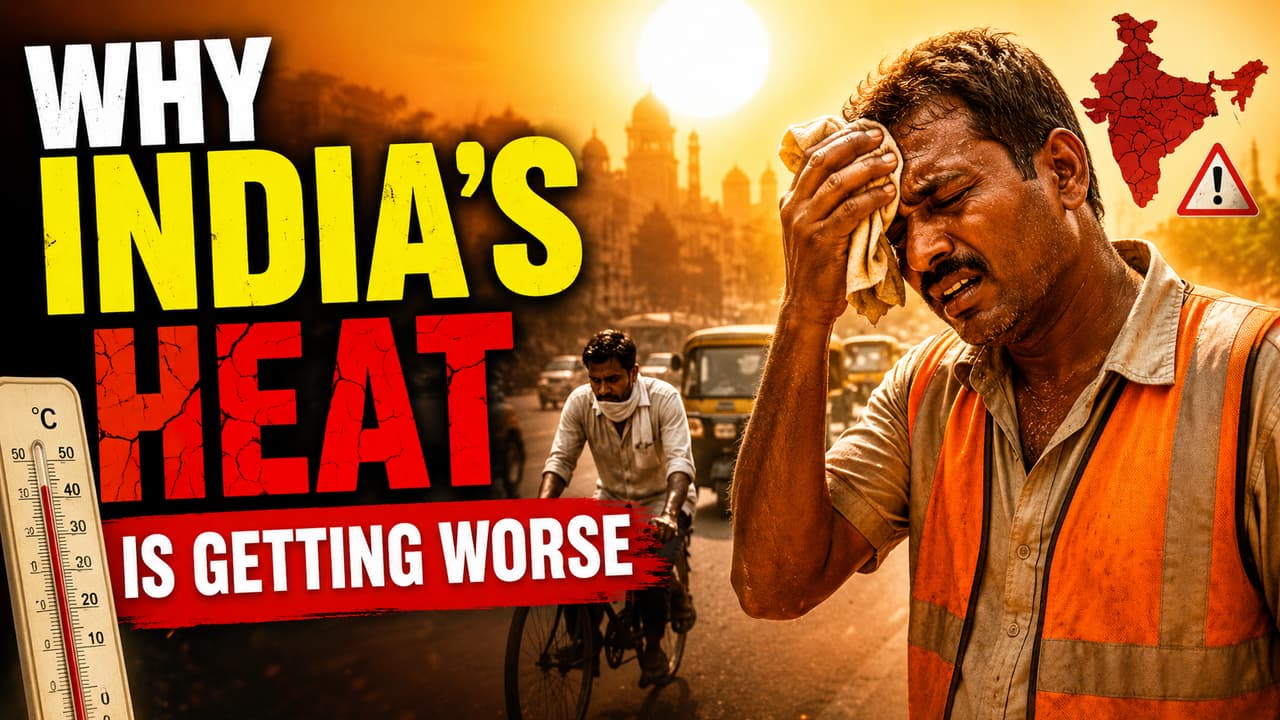
India is facing a dangerous heatwave crisis as rising temperatures, humid nights, and climate change make summers harsher than ever. Experts warn that prolonged extreme heat and limited nighttime cooling are increasing health risks, especially across urban and densely populated regions.
India is witnessing an intense summer this year, but experts say the bigger concern is not just daytime heat, it is the dangerously warm nights. Across north-west and central India, temperatures are staying unusually high even after sunset, giving people very little relief from the scorching conditions.
According to the India Meteorological Department (IMD), heatwaves in India have steadily increased over the decades. The frequency of heatwave days in the country’s core heatwave zone has risen consistently between 1961 and 2020. Severe heatwaves are also lasting longer and affecting larger regions than before.
Meteorologists say the current weather pattern is being driven by continuous hot north-westerly winds flowing from Rajasthan, Punjab, Haryana and nearby desert regions into central India. At the same time, low soil moisture and reduced rainfall are making the land heat up even faster.
Why Nights Are No Longer Cooling Down
One of the biggest reasons for concern is the rise in night-time temperatures. Normally, cooler nights help the human body recover from daytime heat. But this recovery window is shrinking rapidly.
Many cities and towns are now recording night temperatures in the late 20s, while some places are touching 30°C even after dark. According to available climate data, India’s average night-time temperature has increased by around 0.21°C every decade between 2010 and 2024.
States like West Bengal, Karnataka, Bihar, Andhra Pradesh, Goa, Uttarakhand and Sikkim have shown particularly strong warming trends during the night. Experts warn that hot nights increase heat stress, especially for children, elderly people and outdoor workers.
Rising Humidity Making Heat Feel Worse
Humidity is making the crisis even more uncomfortable. India’s average humidity levels have increased significantly over the past decade. Hot and humid days in the country have also risen sharply, making it harder for the body to cool naturally through sweating.
Experts explain that when humidity is high, the body struggles to release heat efficiently. This increases the risk of dehydration, exhaustion and heatstroke, even when temperatures are not at record highs.
Climate Change And Urban Heat Traps
Scientists say climate change is acting as a “stress multiplier.” Global temperatures continue to rise, which means heatwaves now begin from a much hotter baseline. According to global weather agencies, recent years have been among the warmest ever recorded worldwide.
Urbanisation is adding to the problem. Indian cities are increasingly behaving like “Urban Heat Islands,” where concrete buildings, roads and construction materials absorb heat during the day and release it slowly at night. This keeps cities warmer for longer periods and worsens night-time discomfort.
Experts warn that unless cities improve green cover, water management and heat action planning, extreme heat events could become even more severe in the coming years.