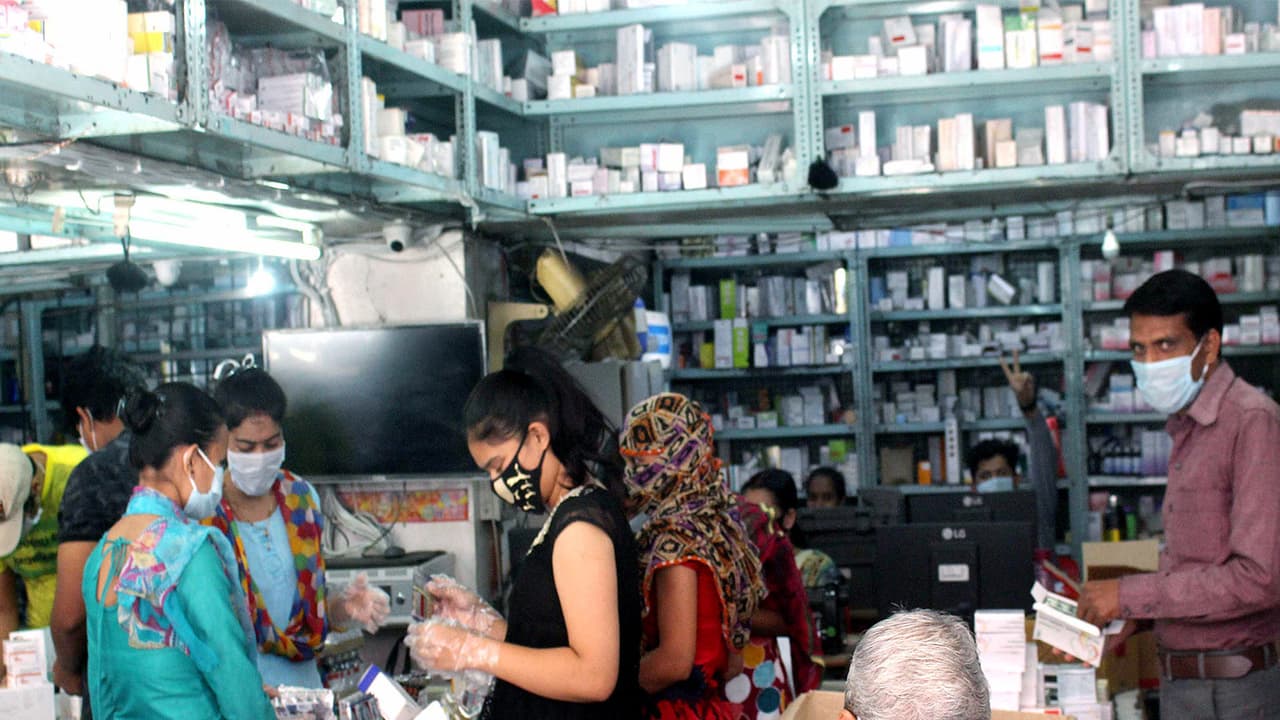
India, the ‘Pharmacy of the World,’ has produced only 8 indigenous drug innovations since 2021, far behind the US and China. The lag is attributed to a poor innovation ecosystem, not a lack of scientific capability, with a call for new policies.
A Tale of Two Industries: Manufacturing Prowess vs. Innovation Deficit
India has rightfully earned its reputation as the “Pharmacy of the World.” We manufacture nearly one in every five generic medicines consumed globally, supply vaccines to over 150 countries and have become one of the world’s largest pharmaceutical manufacturing hubs.
But there is one question that deserves far greater attention- How many truly indigenous pharmaceutical innovations has India produced since 2021? The answer is just eight. These innovations have emerged from only a handful of Indian companies–Zydus Lifesciences, Wockhardt, Orchid Pharma, Biocon, ImmunoACT and ENTOD Pharmaceuticals–covering new chemical entities, biologics, immunotherapies, cell therapies and novel drug formulations. They prove beyond doubt that Indian scientists and pharmaceutical companies possess the capability to innovate at the highest global standards.
Yet the comparison with other innovation economies is striking. Since 2021, the United States has produced nearly 500 meaningful pharmaceutical innovations, including around 160 new chemical entities (NCEs). China has delivered approximately 150 pharmaceutical innovations, including nearly 95 indigenous NCEs. India’s tally, despite its scientific talent and manufacturing prowess, remains in single digits.
The Missing Piece: Clinical Data Exclusivity
The challenge is no longer scientific capability. It is the ecosystem that surrounds innovation. Developing a novel medicine demands years of research, clinical trials, regulatory scrutiny and enormous financial investment, with no guarantee of success.
Unfortunately, India continues to avoid discussing what may be the elephant in the room–clinical data exclusivity. Every major pharmaceutical innovation ecosystem–including the United States, the European Union and China–provides innovators with a period of regulatory data exclusivity. During this period, competitors cannot simply rely on the originator’s clinical trial data to obtain marketing approval.
This protection is distinct from patents and exists because innovators often spend 8-12 years generating the clinical evidence required for approval, by which time a significant portion of their patent life has already been exhausted. India, however, provides no comparable framework for most indigenous pharmaceutical innovations.
In my view, a carefully designed clinical data exclusivity framework would have little impact on long-term affordability or patient access. Competition would still emerge after a defined period, just as it does in other major pharmaceutical markets. What it would do is encourage companies to invest in addressing unmet medical needs, fill important therapeutic gaps, accelerate indigenous drug discovery, improve health outcomes for our population and create a stronger, higher-value pharmaceutical industry.
It is therefore no coincidence that the strongest voices advocating for such a framework are the very Indian companies investing in indigenous pharmaceutical research. They understand that unless innovation is rewarded, innovation will remain the exception rather than the norm.
The Next Chapter: From Reverse to Forward Engineering
India has already mastered the art of reverse engineering, and that achievement transformed our nation into the Pharmacy of the World. The next chapter of India’s pharmaceutical journey must be about forward engineering–discovering new molecules, developing breakthrough biologics and advanced therapies, and creating medicines that originate in Indian laboratories before reaching patients across the world.
India should not only be recognised as the nation that manufactures the world’s medicines. It is time for India to become the nation that invents them. Disclaimer: The author is CEO- ENTOD Pharmaceuticals. Views shared here are personal.
(Except for the headline, this story has not been edited by Asianetnews Editorial staff and is published from a syndicated feed.)