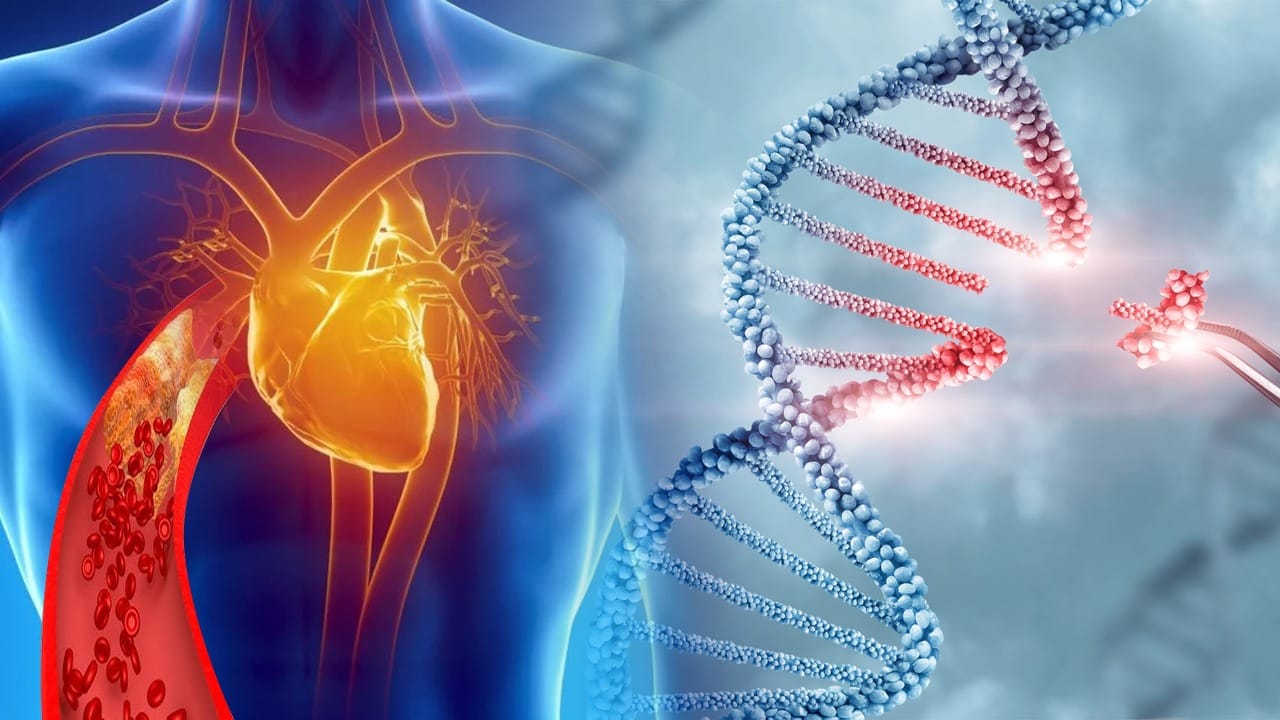
Gene therapy for people struggling with cholesterol
Cholesterol related cases are continuously increasing across the world. But in the meantime, a new ray of hope has emerged for millions of heart patients suffering from increased cholesterol levels. Scientists have achieved great success and proved that a single gene therapy can reduce ‘bad’ cholesterol to a great extent for at least a year. In the future, it may also happen that some heart patients will get relief from taking cholesterol medicines for the rest of their life.
A single dose of the drug codenamed VERVE-102, tested by the reputed pharmaceutical company Eli Lilly, has shown a significant reduction in the levels of a protein called PCSK9 produced in the liver. VERVE-102 is an early-stage ‘in vivo’ gene editing drug designed to make a precise and specific change in a DNA base pair in the PCSK9 gene. It is designed to work like a naturally occurring cardio protective PCSK9 variant and reduce LDL-C or ‘bad’ cholesterol levels over time with just one dose.
PCSK9 level reduction with one dose
The US Food and Drug Administration has also granted ‘fast-track’ approval to VERVE-102 to lower LDL-C levels in patients who have hyperlipidemia (high lipids in the blood) and who are at highest risk of heart disease throughout life. As far as India is concerned, 6 to 8 crore people are living with heart related diseases, while according to reports, 30 lakh cases of heart attacks are reported every year.
English newspaper ET quoted a spokesperson for drug company Eli Lilly India as saying, “In a preliminary assessment of 35 patients, just one dose of VERVE-102 has shown a dose-dependent average reduction in PCSK9 levels. At doses of 0.3 mg/kg and 1.0 mg/kg, this reduction ranged from 51% to 88%. Similarly, LDL-C levels were also reduced by 0.3 mg/kg and 1.0 mg/kg, respectively. At doses of mg/kg, reductions ranging from 9% to 62% were recorded.”
Riyaz S Patel, a cardiologist at Barts Health NHS Trust and professor of cardiology at University College London, said: “These early data are very encouraging. Many patients who have elevated LDL-C levels struggle to control them. They also have a significantly increased risk of heart disease. Coronary artery disease is still one of the leading causes of death worldwide, so this problem There is a dire need for new methods to deal with it.”
Indianapolis-based Eli Lilly company, which is known worldwide for its unique weight loss drugs ‘Mounjaro’ and ‘Zepbound’, announced the preliminary results of VERVE-102 two days ago on May 25. This initial phase data was presented at the ‘European Atherosclerosis Society Congress’ and was also published in ‘The New England Journal of Medicine’.
What is VERVE-102?
VERVE-102 is an investigational in vivo gene editing medicine designed to make a single, precise DNA base pair change in the PCSK9 gene. VERVE-102 is designed to mimic naturally occurring cardioprotective PCSK9 variants and lower LDL-C long-term after a single infusion.
How does the medicine work?
VERVE-102 contains messenger RNA for an adenine base editor (a type of gene editing tool) (ribonucleic acid – which is responsible for making proteins and controlling genes) and a guide RNA that targets PCSK9.
All of these are enclosed in a lipid nanoparticle, which is designed to target the liver. Inside the liver cells, the PCSK9 gene is precisely edited with the help of this medicine and then switched off.
What is PCSK9, why was it created?
PCSK9 is a protein made by the liver that breaks down LDL receptors. These receptors clear bad cholesterol from the blood. People who are born with PCSK9 naturally inactivated have low LDL-C levels throughout life.
Additionally, the risk of Coronary Artery Disease in them also reduces by 88 percent for life, and no ill effects are seen. This suggests that the longer LDL-C levels remain low, the greater the protection.
Are there any other medicines for PCSK9?
Some drugs known as PCSK9 inhibitors include Praluent, Repatha, and Leqvio. But these are not gene editing medicines. These have to be taken every few weeks or twice a year.
Lilly has another drug named Lepodisiran which is in the advanced stage of clinical trials. This medicine requires infusion once a year. American company Merck is making an oral pill targeting PCSK9, named Enlicitide.
In this interim analysis of 35 patients, a single dose of VERVE-102 resulted in an average reduction in PCSK9 of 51 to 88% depending on the dose. As of the data cut-off date earlier this year, the average follow-up period was about 9 months, with 15 patients followed for at least a year. Its effect was seen for 18 months in the participants with the longest follow-up.
what will be the benefit
In India, 6 to 8 crore patients are living with heart diseases, while reports show that more than 30 lakh cases of heart attacks are reported every year. Treatment facilities already exist, but patients have great difficulty in following long-term treatment regimens for chronic cholesterol problems.
But VERVE-102 could be the first in vivo gene-editing drug that could transform the complex care process for heart disease into a one-time treatment. The larger trial of VERVE-102 is expected to support broader efforts to develop a one-time treatment for chronic diseases.