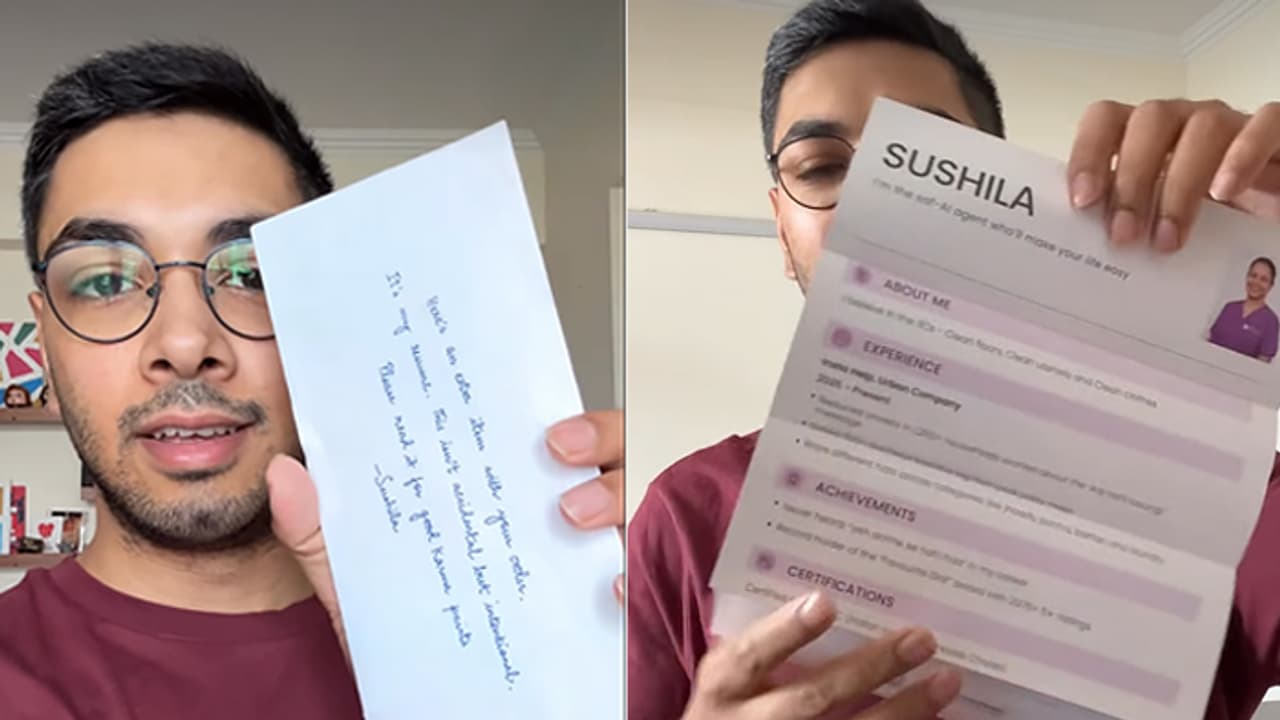
A Delhi man was surprised to find a CV inside his Blinkit grocery order, which he initially thought was a real job application. The document, presented as a resume for a domestic helper named “Sushila,” turned out to be a clever and unique marketing campaign for Urban Company’s InstaHelp service, which has since gone viral.
The majority of individuals anticipate that their Blinkit orders will include groceries, snacks, or household necessities. But something more stranger arrived in the envelope for a man from Delhi: a CV.
Ankit Bawa, a creative director in Delhi, highlighted the surprising discovery by sharing a video of the odd addition to his shopping delivery on Instagram. When he opened the order, he saw an envelope with a handwritten letter that caught his attention right away. “This isn’t accidental, it’s intentional. Please read it for good Karma points – Sushila,” the note read.
Bawa was first intrigued and thought the envelope may be a job application from someone looking for work. He opened it out of curiosity to see what appeared to be a professional CV. However, this was not your typical resume.
The document introduced “Sushila” and deftly showcased her qualifications in the style of a job résumé, emphasising attributes that many families seek in domestic assistants. At first glance, it appeared to be a legitimate application because it presented her experience, dependability, and household management skills in a professional and captivating manner.
As the video progresses, however, the real purpose behind the resume becomes clear. The paper was part of a unique marketing effort for InstaHelp, a service provided by Urban Company that allows customers to hire domestic workers and home help.
Watch Viral Video
Instead than depending on traditional commercials, the campaign leveraged curiosity as a hook. By inserting what looked to be a personal CV within a Blinkit order, it enticed recipients to open the envelope and read the message.
Social media users have taken notice of the unusual marketing strategy, and many have complimented the originality of the concept. Many viewers acknowledged that, like Bawa, they would have assumed someone was actually searching for job before learning it was an advertising.