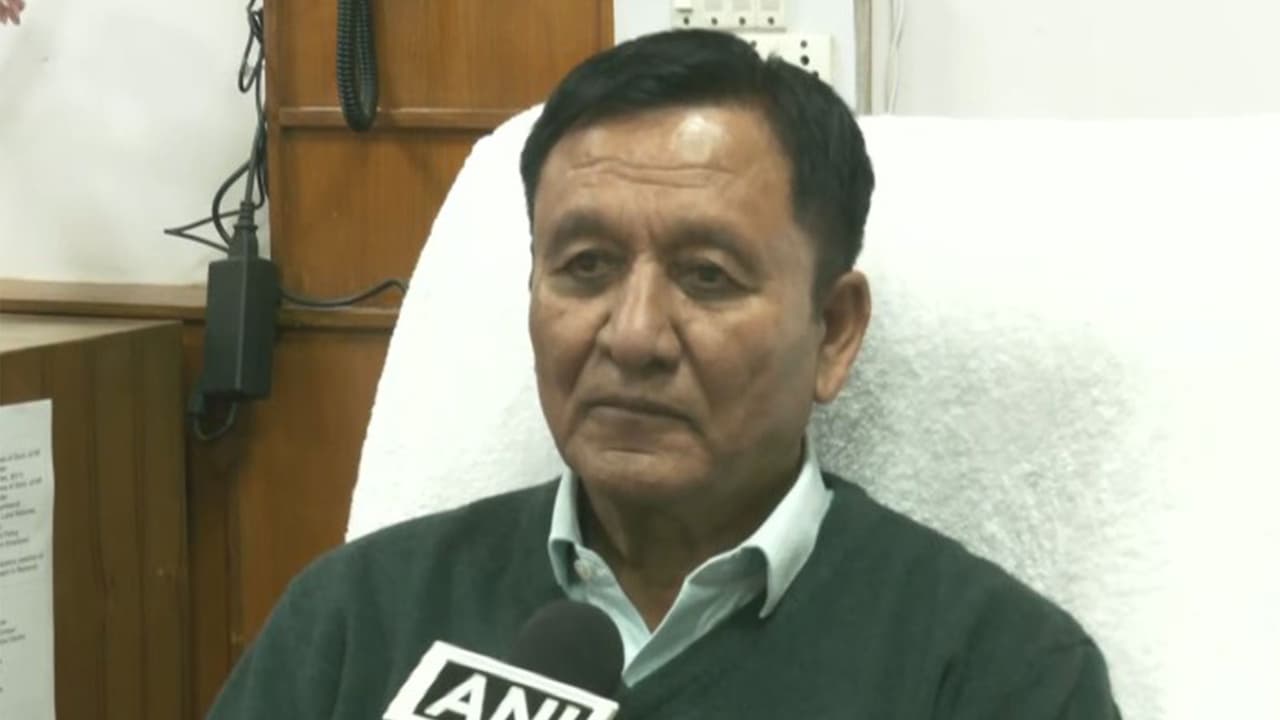
Himachal Pradesh minister Jagat Singh Negi has voiced strong opposition to the proposed India-US trade deal, warning that reduced import duties on foreign agricultural products could devastate the state’s apple economy and farmers’ livelihoods.
Shimla (Himachal Pradesh) [India], June 23 (ANI): The Revenue and Horticulture Minister of Himachal Pradesh, Jagat Singh Negi, on Tuesday expressed serious concerns over the proposed India-US trade arrangements, alleging that any reduction in import duties on foreign agricultural and horticultural products could severely impact the state’s apple economy and threaten the livelihoods of lakhs of farmers.
Speaking to ANI in Shimla, Negi accused the Central Government of compromising the interests of Indian farmers and horticulturists in its trade negotiations with foreign countries. He said Himachal Pradesh’s concerns were repeatedly conveyed to the Centre, but the interests of apple growers continued to be ignored.
Broken Promises on Import Duties
Referring to earlier trade agreements, Negi said that during the 2014 Lok Sabha elections, assurances were given that import duties on apples would be increased from 75 per cent to 100 per cent to protect domestic growers. “When Prime Minister Narendra Modi was contesting elections in 2014, support from Himachal Pradesh was important. At that time, assurances were given that the existing 75 per cent import duty on apples would be increased to 100 per cent. However, not only was that promise not fulfilled, the duty was later reduced to 50 per cent and subsequently brought down further under trade arrangements with New Zealand,” Negi alleged.
Concerns Over Economic Sovereignty
The minister claimed that the proposed trade arrangements with the United States were largely one-sided and could result in a surge of imported agricultural products into the Indian market. “This is not a bilateral arrangement in the true sense. The terms are being dictated by the United States. Whatever conditions are imposed, India appears to be accepting them without adequately safeguarding the interests of domestic producers,” he said.
Negi also questioned India’s trade and foreign policy decisions, alleging that external pressures were increasingly influencing domestic economic decisions. He cited restrictions related to crude oil imports from Russia and developments during the recent Iran-Israel conflict as examples of what he described as constraints on India’s economic sovereignty. “A serious question mark is being raised on our sovereignty. The people of the country need to understand what is happening. We attained independence to formulate our own policies and protect our own interests, not to function according to the dictates of any foreign country,” he said.
The minister further claimed that despite extensive diplomatic outreach over the last decade, India did not receive significant international support during recent security challenges.
Impact on Horticulture Sector
Expressing concern over the likely impact on the horticulture sector, Negi said Himachal Pradesh’s apple economy, estimated at around Rs 5,000 crore annually, could face severe disruption if cheaper imported apples enter Indian markets without adequate safeguards. “The biggest concern is for Himachal’s apple growers. Apples imported from countries such as the United States and New Zealand are produced on a much larger scale, graded professionally, transported through sophisticated cold-chain systems and backed by aggressive marketing networks. Our farmers will find it extremely difficult to compete,” he said.
According to Negi, the challenge is not limited to apple growers alone. He warned that horticulture and agricultural producers in Jammu and Kashmir, Uttarakhand and the Northeastern states could also face adverse consequences. “This is not just about apples. Agricultural produce, dairy products and several other commodities could be imported and dumped in Indian markets. Farmers in those countries receive substantial government support and subsidies, making it impossible for our farmers to compete on equal terms,” he said.
‘Farmers’ Income Has Reduced’
The minister alleged that instead of doubling farmers’ income as promised, the economic condition of cultivators had deteriorated over the past decade. “We were promised that farmers’ incomes would double. However, many farmers feel that their earnings have reduced substantially compared to what they were earlier,” he remarked.
Threat of Farmer Protests
Negi said the Himachal Pradesh Government, led by Chief Minister Sukhvinder Singh Sukhu, had consistently raised the issue before the Centre and highlighted the potential consequences for apple growers and farmers. “The state government has repeatedly brought this matter to the attention of the Central Government and explained the likely damage to the horticulture sector. However, if farmers’ concerns continue to be ignored, we may have to adopt democratic means of protest to protect their interests,” he said.
Drawing parallels with the farmers’ agitation against the now-repealed farm laws, Negi said farmers may once again be compelled to mobilise if their livelihoods come under threat. “More than 700 farmers lost their lives during the agitation against the farm laws. We do not want such a situation again, but if the interests of farmers are ignored, people will be forced to raise their voice democratically,” he added.
Fuel Restrictions Affecting Farmers
Negi also criticised recent restrictions on the sale and transportation of petrol and diesel in containers, saying such measures were creating difficulties for farmers, dairy operators and rural enterprises. He cited examples of dairy farms, irrigation systems and agricultural machinery that depend on fuel transported in containers to remote locations. “Many farming and dairy operations function in remote areas where fuel has to be transported for generators, pumps and machinery. Such restrictions create practical difficulties for farmers and rural entrepreneurs,” he said.
The minister questioned the rationale behind restrictions despite a decline in international crude oil prices and the easing of geopolitical tensions.
Monsoon Preparedness in Himachal
Asked about monsoon preparedness, Negi, who also holds the Revenue portfolio, said the state government had issued necessary instructions to all district administrations and disaster management authorities. “All departments have been directed to remain on alert during the monsoon season. Vulnerable areas have been identified, emergency response systems have been strengthened, and district administrations have been instructed to ensure preparedness for any eventuality,” he said.
Negi said the government was closely monitoring the weather situation and would take all necessary measures to protect lives, property and critical infrastructure during the monsoon season. He reiterated that safeguarding the interests of farmers, horticulturists and rural communities remained a priority for the state government and called upon the Centre to take the concerns of hill states seriously while negotiating international trade agreements. (ANI)
(Except for the headline, this story has not been edited by Asianet Newsable English staff and is published from a syndicated feed.)