Why did JD Vance’s statement on hiding information about Iran peace deal create controversy? Did America hide any big secret? What is the real strategy behind the US-Iran agreement? From Hormuz crisis to Iran deal, is the balance of power going to change in West Asia? Why did JD Vance’s statement raise questions on Pakistan and Qatar? Has press freedom become a new issue of debate?
Washington/Islamabad: A new and very shocking suspense has arisen in international politics regarding the historic and secret peace agreement between America and Iran. US Vice President JD Vance has given a statement on the delay in making public the terms of this very sensitive agreement, which has created a stir not only in Washington but also in Islamabad. Vice President Vance, while revealing the secret behind hiding the information about Iran deal, has directly taken a sharp dig at the system of Pakistan and Qatar.
The secret of hiding the Iran deal: Vance’s sharp attack on ‘First Amendment’!
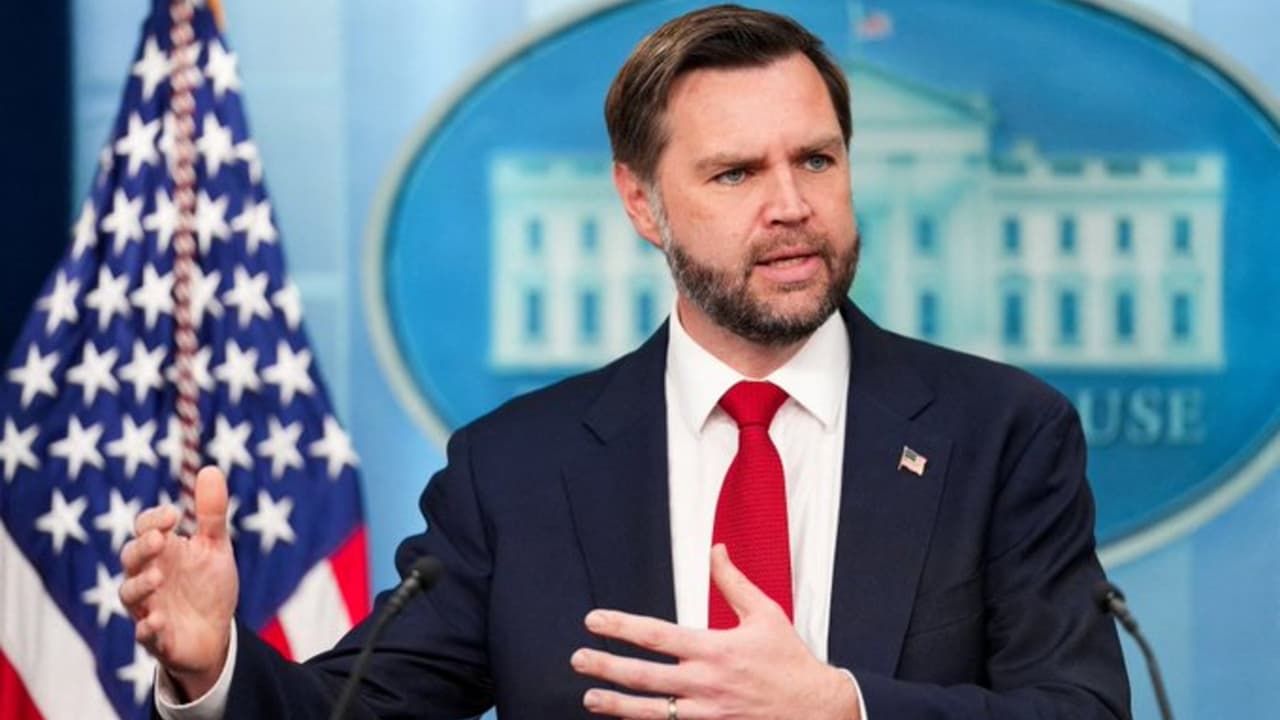
This entire diplomatic drama started when the media asked Vice President JD Vance why America maintained so much secrecy regarding the timing of the publication of this mega agreement? On this, Vance jokingly but very harshly made fun of the freedom of press in Pakistan and said, “There is no such thing as ‘First Amendment’ (freedom of expression) and freedom of press in the system of Pakistan and Qatar.” Vance made it clear that while America was working on the legal and constitutional processes to make this very sensitive information public, it could not be leaked immediately like other countries.
Scroll to load tweet…
American ambassador going to Switzerland: Last round of suspense on nuclear deal
Amidst this rhetoric, another major global movement has started behind the scenes. News agency ‘Axios’, quoting a top American official, has reported that US President Donald Trump’s special envoy Steve Witkoff is leaving for Switzerland in a hurry. Witkoff will lead the initial rounds of negotiations there on another possible and highly secretive ‘nuclear deal’ with Iran. This step is also full of suspense because just a day before this, JD Vance himself had canceled his visit to attend these talks due to the sudden outbreak of fighting in Lebanon.
Secret dinner at the Palace of Versailles: What is the 14-point US-Iran agreement?
The story of the main agreement over which this entire controversy has arisen is related to Paris, France. The 14-point memorandum of understanding (MoU) was signed by US President Donald Trump and Iranian President Massoud Pezeshkian during a dinner meeting with French President Emmanuel Macron at the Palace of Versailles soon after the G7 summit.
The main and highly confidential terms of this agreement are as follows:
- Uranium Reduction: Tehran has agreed to reduce the amount of its enriched uranium in exchange for relief from widespread economic sanctions.
- 60 days ceasefire: Fighting across the Middle East, including Lebanon, will be stopped “immediately” and the ceasefire will be extended for 60 days.
- $300 billion fund: Under this agreement, Washington has committed to provide a huge reconstruction fund of $300 billion to Tehran.
- Hormuz Waterway: The US will lift its naval blockade and safe passage for commercial traffic through the Strait of Hormuz will be restored.
That bloody flashback of February 28: When the global economy came to a standstill
This devastating war in West Asia started on February 28 this year, when America and Israel simultaneously launched massive attacks on Iran after talks on Tehran’s nuclear program stalled. In response, Iran targeted American bases in the Gulf region and completely closed the ‘Strait of Hormuz’, considered the lifeline of the world. Now that diplomatic talks are back on track, renewed tensions in Lebanon have cast fresh dark clouds over the peace deal. The eyes of the whole world are on whether Steve Witkoff’s visit to Switzerland will be able to end this diplomatic suspense.