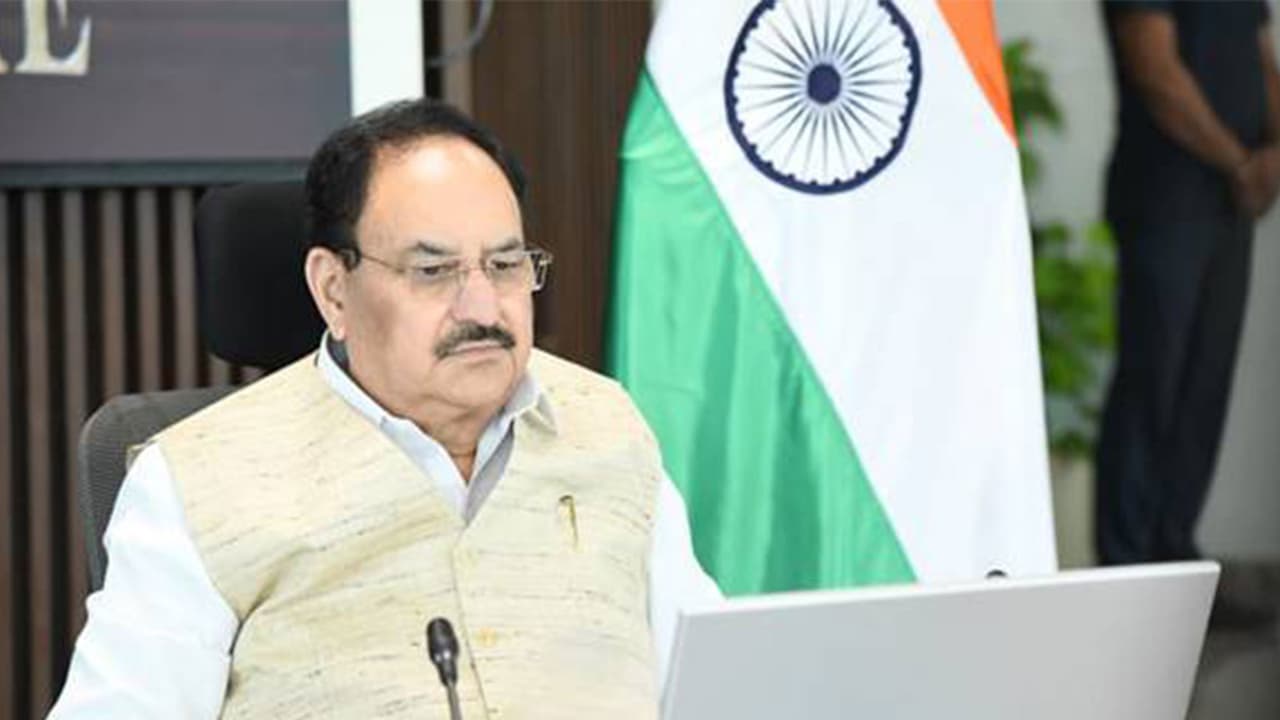
Union Health Minister JP Nadda chaired a high-level meeting to assess preparedness against dengue and malaria for the monsoon season, emphasizing vigilance, coordinated efforts, and strengthening surveillance systems for early detection and control.
Union Health Minister JP Nadda on Thursday chaired a high-level review meeting with senior officials of the Ministry of Health and Family Welfare to assess preparedness against dengue and malaria ahead of the forthcoming monsoon and post-monsoon season.
Emphasis on Preparedness and Patient Care
During the meeting, Nadda reviewed the current disease situation across the country and emphasised the need for maintaining a high level of vigilance to effectively prevent and control mosquito-borne diseases, according to the Health and Family Welfare. He stressed that coordinated efforts between the Central Government, States/UTs, local administrations and healthcare institutions are essential to minimise disease burden and ensure timely response to emerging public health challenges. The Union Health Minister said that the health ministry has already urged all States/UTs to strengthen surveillance systems for early detection of cases and outbreaks. He underscored the importance of prompt reporting, active monitoring and rapid response mechanisms to contain the spread of infections.
Nadda instructed hospitals and healthcare facilities across the country to remain fully prepared and ensure the adequate availability of medicines, diagnostic facilities, blood components, hospital beds and trained healthcare personnel, the ministry further said. He emphasised that patient care services should remain uninterrupted and healthcare institutions must be equipped to effectively manage any increase in case load. The Minister also highlighted the importance of strict adherence to standard treatment guidelines and clinical management protocols for dengue and malaria. He directed officials to ensure that all healthcare facilities are sensitised regarding the latest protocols for diagnosis, treatment and case management to improve patient outcomes and reduce complications.
Preventive Measures and Public Awareness
Emphasising the critical role of preventive measures, Nadda called for intensified vector control activities, including source reduction, elimination of mosquito breeding sites, fogging and other public health interventions in vulnerable areas. He urged States and local bodies to undertake sustained preventive actions in coordination with community stakeholders.
The Union Health Minister further stressed the need to enhance public awareness regarding preventive measures against mosquito-borne diseases. He called for widespread Information, Education and Communication (IEC) campaigns to educate citizens on maintaining cleanliness, preventing water stagnation, using personal protective measures and seeking timely medical attention in case of symptoms. He also called for active participation of Resident Welfare Associations, Panchayati Raj Institutions, educational institutions and community organisations in maintaining mosquito-free surroundings.
Comprehensive Review and Directives
Nadda reiterated that awareness, early diagnosis, timely treatment and community participation remain the key pillars in the fight against dengue and malaria. He assured that the Ministry of Health and Family Welfare is closely monitoring the situation and extending all necessary support to States and Union Territories for strengthening preparedness and response measures. The review assessed the current epidemiological situation, disease surveillance mechanisms, preparedness of health facilities, availability of diagnostics and drugs, vector control measures, and inter-sectoral coordination for prevention and management of Dengue and Malaria.
Furthermore, Nadda assessed the availability of diagnostic kits, medicines, laboratory infrastructure, trained manpower and financial resources across States and Union Territories for the upcoming transmission season. He directed officials to develop district-specific strategies and micro-plans, particularly for endemic and high-risk areas, and emphasised that effective surveillance, early diagnosis and prompt treatment are critical for reducing disease burden. States and Union Territories have been advised to undertake regular reviews at district and municipal levels, intensify source reduction and vector control activities, and strengthen public awareness campaigns. Special emphasis has been laid on hotspot mapping, anti-larval measures, rapid response mechanisms and enhanced monitoring during the high-transmission season.
India’s Progress Against Malaria
India has achieved significant gains in reducing the burden of malaria. Between 2015 and 2025, malaria cases and deaths declined by nearly 80 per cent. As acknowledged in the World Malaria Report 2025, India exited the WHO’s High Burden to High Impact (HBHI) group in 2024 and remains on track to achieve global malaria reduction targets, with more than 70 per cent reduction in both incidence and mortality. 160 districts reported zero indigenous malaria cases during 2022-2025, reflecting sustained interruption of local transmission and the success of focused public health interventions. (ANI)
(Except for the headline, this story has not been edited by Asianet Newsable English staff and is published from a syndicated feed.)