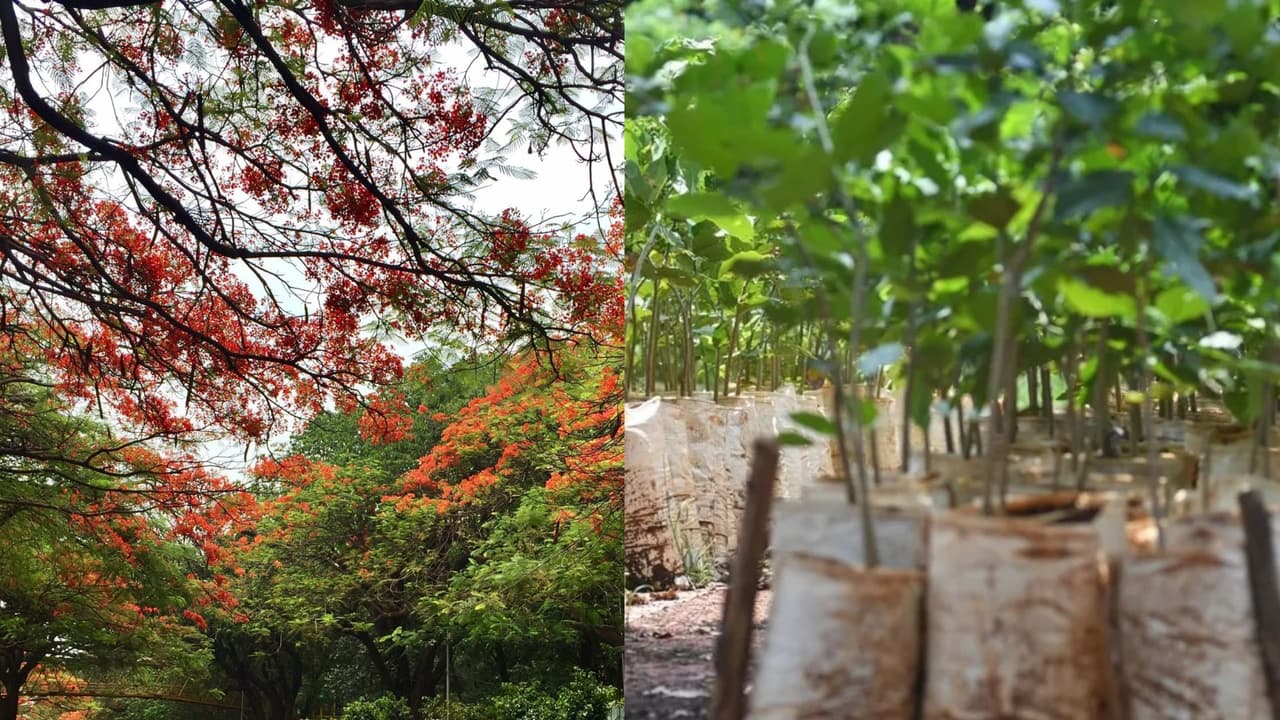
Bengaluru is set for a major plantation drive, with plans to plant up to one lakh fruit-bearing and medicinal trees across the city. Corporations have been directed to plant 30,000 saplings each as part of efforts to boost green cover.
Bengaluru residents may soon see a greener and more useful urban landscape, with plans underway to plant between 80,000 and one lakh saplings of fruit-bearing and medicinal tree species across the city. Under a major initiative by the GBA Forest Division, trees such as Jamun, Honge and Buguri will be planted in large numbers, replacing species that have proven vulnerable during heavy rains. Officials believe the move will not only strengthen the city’s green cover but also provide long-term benefits to residents, including access to fruit-bearing trees and species valued in traditional medicine.
The initiative comes in the wake of several incidents in which trees such as Gul Mohar, Spathodea and Subabul collapsed during heavy rainfall. According to officials, many of these trees were planted along roadsides and were unable to withstand adverse weather conditions.
To prevent similar incidents in the future, the Forest Department has decided to prioritise tree species that are both resilient and beneficial to the public. Instructions have already been issued to five corporations, and tenders are expected to be invited shortly to begin the large-scale plantation drive.
Massive Monsoon Plantation Drive Planned
Officials said the monsoon season offers ideal conditions for planting, helping saplings establish strong root systems and grow healthily. As part of the initiative, each corporation has been asked to plant around 30,000 saplings within its jurisdiction.
Forest Department officials said tenders would be floated within each corporation’s area to carry out the plantation work.
Useful Trees To Replace Vulnerable Species
The authorities have decided to stop planting Gul Mohar and Spathodea trees along roadsides. Instead, these species will be restricted to parks and other designated green spaces.
Roadsides across the city will now be lined with trees such as Jamun, Honge and Buguri. The Buguri tree is particularly valued in Ayurveda for its traditional use in treating various skin-related ailments.
Officials said these trees are expected to begin bearing fruit within 10 to 15 years. Once mature, they could provide residents with access to fruits and other benefits at no cost.
Forest Officials Confirm Plan
Sudarshan, Deputy Conservator of Forests for the GBA Forest Division, confirmed the proposal while speaking to Kannada Prabha.
“We will be calling for tenders soon to plant 80,000 to one lakh saplings. We have selected useful trees such as Jamun, Honge and Buguri for the city,” he said.
Action Planned For 900 Fallen Trees
The department is also taking steps to manage trees that have already fallen across the city.
According to officials, around 900 fallen trees will be moved to a single location, after which a tender will be floated for the disposal of the wood.
“Some of the wood may not be usable if it has been exposed to rain for a long period. We will sell only the wood that remains in good condition. The rest will be stored at the depot,” Sudarshan said.
Hotel Owners Show Little Interest In Firewood
Meanwhile, officials said efforts to distribute some of the fallen wood as firewood have received little response from hotel owners.
During the ongoing cooking gas shortage, the Chief Secretary directed the Forest Department to explore the possibility of supplying the wood to hotels. However, hotel owners have reportedly shown little interest in the proposal.
According to Sudarshan, many believe that wood from species such as Spathodea and Subabul produces excessive smoke when used for cooking, making it inconvenient and impractical for commercial use.
As Bengaluru prepares for a major plantation drive, officials hope the new selection of tree species will create a greener, safer and more beneficial urban environment for future generations.