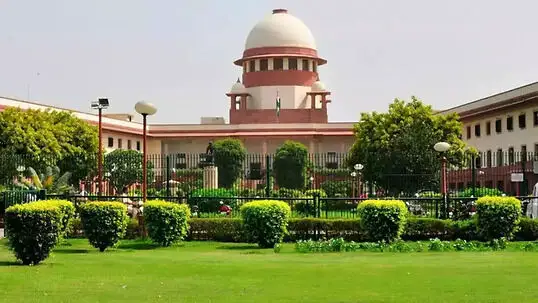
The Supreme Court on Wednesday dismissed a petition seeking rotation of Assembly constituencies reserved for Scheduled Castes (SCs) and Scheduled Tribes (STs) in Uttar Pradesh, observing that the issue falls within the domain of the legislature and should be taken up with Parliament rather than through judicial intervention.
A bench comprising Chief Justice of India (CJI) Surya Kant and Justices Joymalya Bagchi and V Mohana said the question of whether constituencies with a sizeable SC/ST population should continue to remain reserved for decades, and whether such a practice could lead to divisions along caste lines, was a matter for the legislature to consider.
During the hearing, CJI Surya Kant remarked that the issue could be a legitimate ground for public protest, encouraging the petitioner to mobilise support and seek a legislative review of the existing policy.
“This is a good season of protests. So this is also a good ground for protest,” the CJI observed.
The bench further suggested that the petitioner approach elected representatives and build support for reconsideration of the policy in Parliament.
“You are dialling the wrong number. Raise your voice; the time is right now that the legislature, the Parliament should revisit the issue,” the CJI said.
The court thus declined to intervene in the matter, indicating that any reconsideration of the policy governing reservation of Assembly constituencies would have to be pursued through the legislative process.
What did the petition demand?
The petition was filed by Jagdish Singh, an elector from the Kadipur Assembly constituency in Sultanpur district, which has remained reserved for Scheduled Caste candidates for nearly six decades. He had challenged the absence of a rotation mechanism for reserved Assembly seats, contending that voters in such constituencies were left with no option but to choose from candidates belonging to the reserved category.
Singh had also challenged Section 9(1)(c) of the Delimitation Act, 2002, which provides for identifying constituencies for SC/ST reservation in areas where the proportion of their population is comparatively high.
The petitioner had approached the Allahabad High Court, which rejected his challenge in June this year. The High Court held that Articles 330 and 332 of the Constitution prescribe the proportion of seats to be reserved for SC/ST communities but do not mandate rotation. It also held that providing for such a mechanism would fall within Parliament’s legislative domain.
Before the Supreme Court, counsel for the petitioner argued that the same constituencies had remained reserved for nearly seven decades and that the absence of rotation had restricted the electoral choices available to voters.
The bench, however, questioned how the continued reservation of a constituency could be said to take away a voter’s right to vote.
Justice Bagchi said the possible social consequences of the policy, including whether it could reinforce caste-based divisions, were issues for Parliament to examine and did not, by themselves, render the provision unconstitutional.
The bench also explained that Articles 330 and 332 deal with determining the number of seats to be reserved in proportion to the SC/ST population, while Section 9(1)(c) of the Delimitation Act provides the methodology for identifying the constituencies where such reservation would apply.